Sleep Reset-part - 8
TL;DR
🧘 Your nervous system has a reset button—you just need the right tools.
💤 From breathwork to magnesium and ambient light control, science supports simple solutions.
🔧 Learn what works, how it works, and how to build it into your nighttime routine.
🧪 Self-Check: Are You Using Tools That Truly Help?
👩⚕️ Expert Dialogue – "Not All Tools Are Worth Your Time"
Reader: "Dr. Hayes, I’ve tried everything—lavender oil, sleep apps, supplements. Nothing sticks."
Dr. Hayes (Functional Medicine Specialist): "The problem isn’t just the tool. It’s how and when we use it. Your nervous system doesn’t need more input—it needs consistency and cues."
Reader: "So it’s not about more hacks?"
Dr. Hayes: "It’s about fewer, better ones—used regularly. Breathwork, light regulation, magnesium, guided journaling… these tools work. But only when used predictably."
Reader: "How long does it take to notice a change?"
Dr. Hayes: "Some feel calmer within days. But for deeper nervous system rewiring, give it 21 nights. Your biology needs practice."
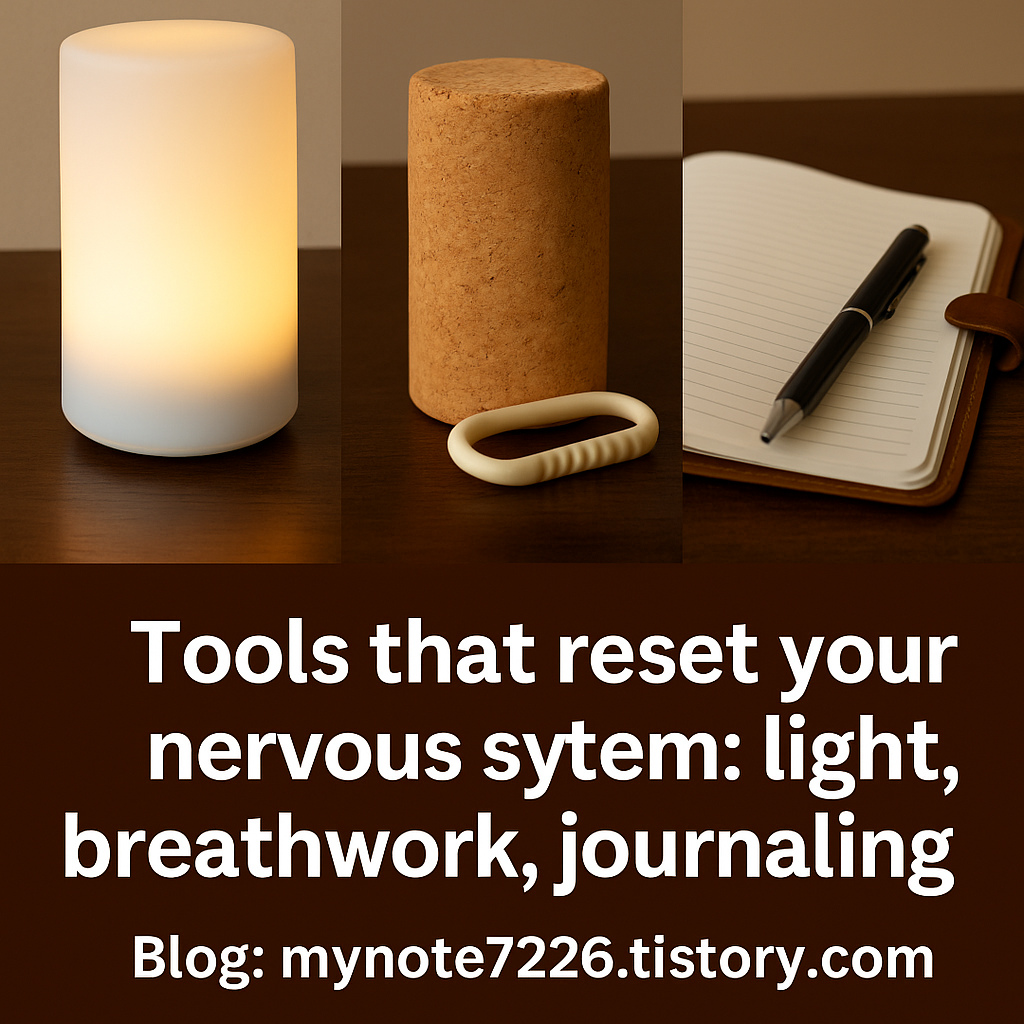
Alt Text: "Tools that reset your nervous system: light, breathwork, journaling – Blog: mynote7226.tistory.com"
🔬 Science-Backed Tools That Actually Work
1️⃣ Vagus Nerve Stimulation via Breathwork
Slow breathing activates the parasympathetic system. Studies show 6 breaths per minute can lower cortisol and heart rate variability (Frontiers in Psychology, 2017).
2️⃣ Magnesium Glycinate
This form of magnesium supports GABA function, helping reduce anxiety and improving sleep onset (Journal of Research in Medical Sciences, 2012).
3️⃣ Blue Light Blockers
Blue wavelengths suppress melatonin. Wearing amber glasses after 8 PM improves sleep latency and REM cycles (Chronobiology International, 2016).
4️⃣ Guided Journaling
Writing down worries or planning next-day tasks reduces bedtime overthinking. A 2018 study showed 37% faster sleep onset after journaling (Journal of Experimental Psychology).
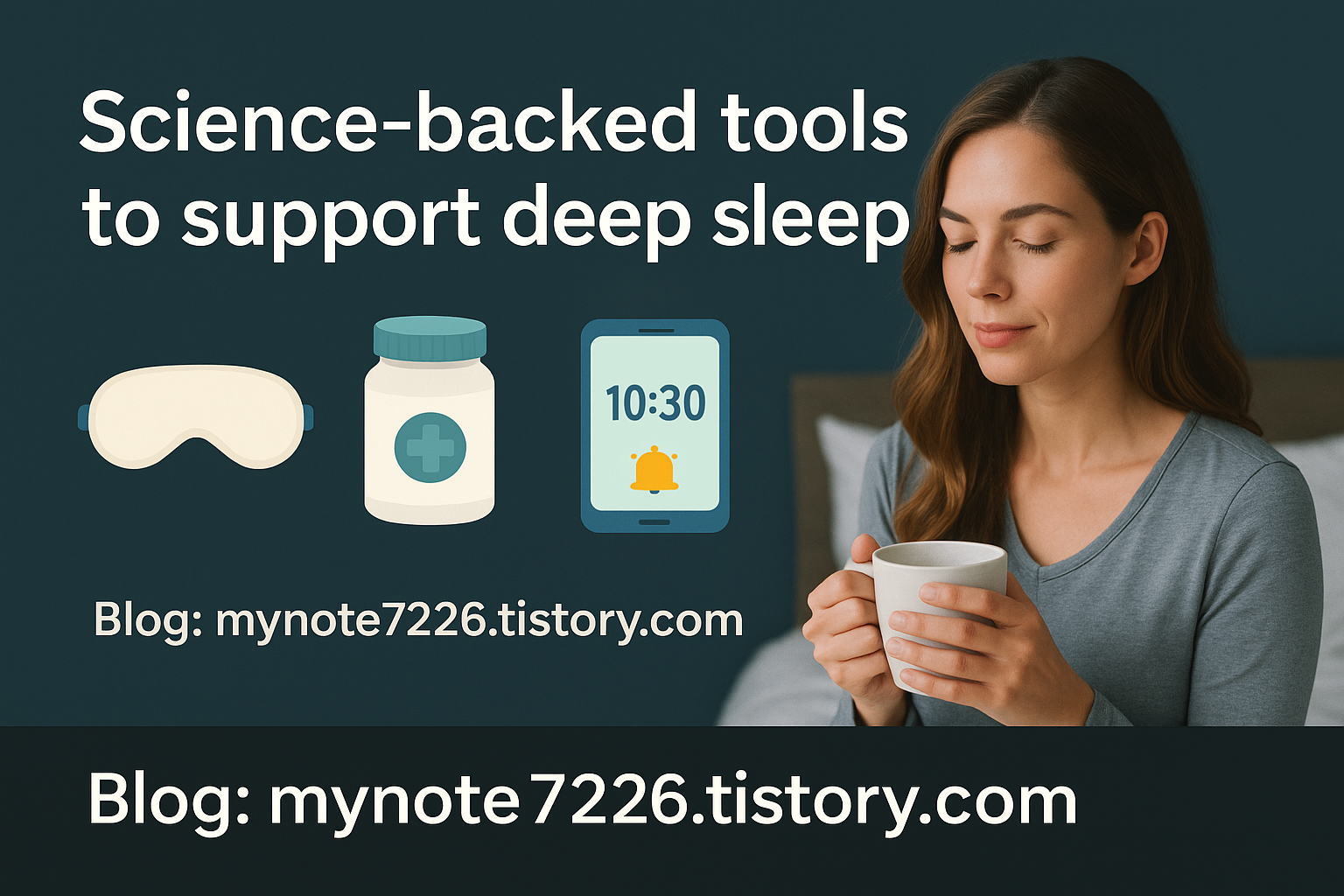
Alt Text: "Science-backed tools to support deep sleep – Blog: mynote7226.tistory.com"
📖 Reader Story – "The 4 Tools I’ll Never Sleep Without Again"
“I used to think good sleep came from supplements alone. Then I tried a 4-tool routine: amber glasses at 8 PM, 4-7-8 breathing for 2 minutes, magnesium at 9, and 5-minute journaling in bed. Within 5 days, I was falling asleep 30 minutes faster. Within 2 weeks, my mood changed. These tools became rituals—and they rewired my rest.”

Alt Text: "Nighttime nervous system support tools – Blog: mynote7226.tistory.com"
❓ FAQ – Sleep Tools & Nervous System Regulation Explained 🧘🔌💤
1. What’s the single most effective sleep tool?
Breathwork. It’s immediate, cost-free, and taps directly into your vagus nerve. Start with 4-7-8 breathing.
2. Can magnesium really help?
Yes. Magnesium glycinate is well absorbed and shown to support GABA—the brain’s main calming neurotransmitter.
3. Is journaling at night better than meditating?
If your thoughts feel jumbled, yes. Journaling gives your mind a place to go. Meditating afterward can deepen calm.
4. What tools actually change the nervous system long-term?
Daily breath practice, light regulation, and consistent sleep-wake times rewire the HPA axis and vagal tone over time.
5. I use sleep apps—is that enough?
Apps can help, but tools that engage your biology (breath, light, nutrients) work at a deeper level.
🔗 Links
Internal:
External:
🧭 Navigation
🔙 Previous: The Anxiety-Sleep Loop
🏠 Series Home
🔜 Next: Your 21-Night Nervous System Reset Plan
🌟 CTA – Reset Starts With Tools You Trust 🛠️💙
You don’t need 20 tricks. You need 3–4 powerful tools, used with rhythm and care.
Start tonight: choose one breath pattern. Unplug early. Write one thought. Swallow magnesium. Repeat tomorrow.
📥 What’s YOUR favorite tool that actually works? Share in the comments.
📚 Explore more at https://wellpal.blogspot.com


