✅ TL;DR (3-Line Summary)
- Digital overload is silently draining your brain's energy—leading to poor memory, decision fatigue, and mental burnout.
- Screen multitasking, nonstop notifications, and constant information inflow wear down your prefrontal cortex.
- In this post, we’ll uncover the neuroscience behind digital exhaustion—and how to reboot your cognitive clarity.
👥 Expert Dialogue: Dr. Sana (Cognitive Neuroscientist) & Leo (Startup Founder)
Leo: Dr. Sana, I’m exhausted. Not physically, but mentally. I wake up tired, forget things, and can’t focus for more than five minutes.
Dr. Sana: You’re describing classic signs of cognitive fatigue, Leo. It’s become a digital-era epidemic. Brains weren’t designed for this constant input.
Leo: I thought I was just burned out from work.
Dr. Sana: It’s more than just overwork. Every app, email, and ping taxes your brain’s executive function. Your prefrontal cortex is under siege, leading to poor memory, slow decision-making, and mental fog.
Leo: But I can’t quit screens. My job depends on it.
Dr. Sana: You don’t need to quit—just learn how to create recovery loops. Think of it like fitness: intense effort must be balanced with rest and regeneration.
Leo: So we need cognitive rest the way athletes need muscle recovery?
Dr. Sana: Exactly. And unlike muscles, your brain won’t ache until the damage is deeper. That’s why digital fatigue is so dangerous—it sneaks up on you.
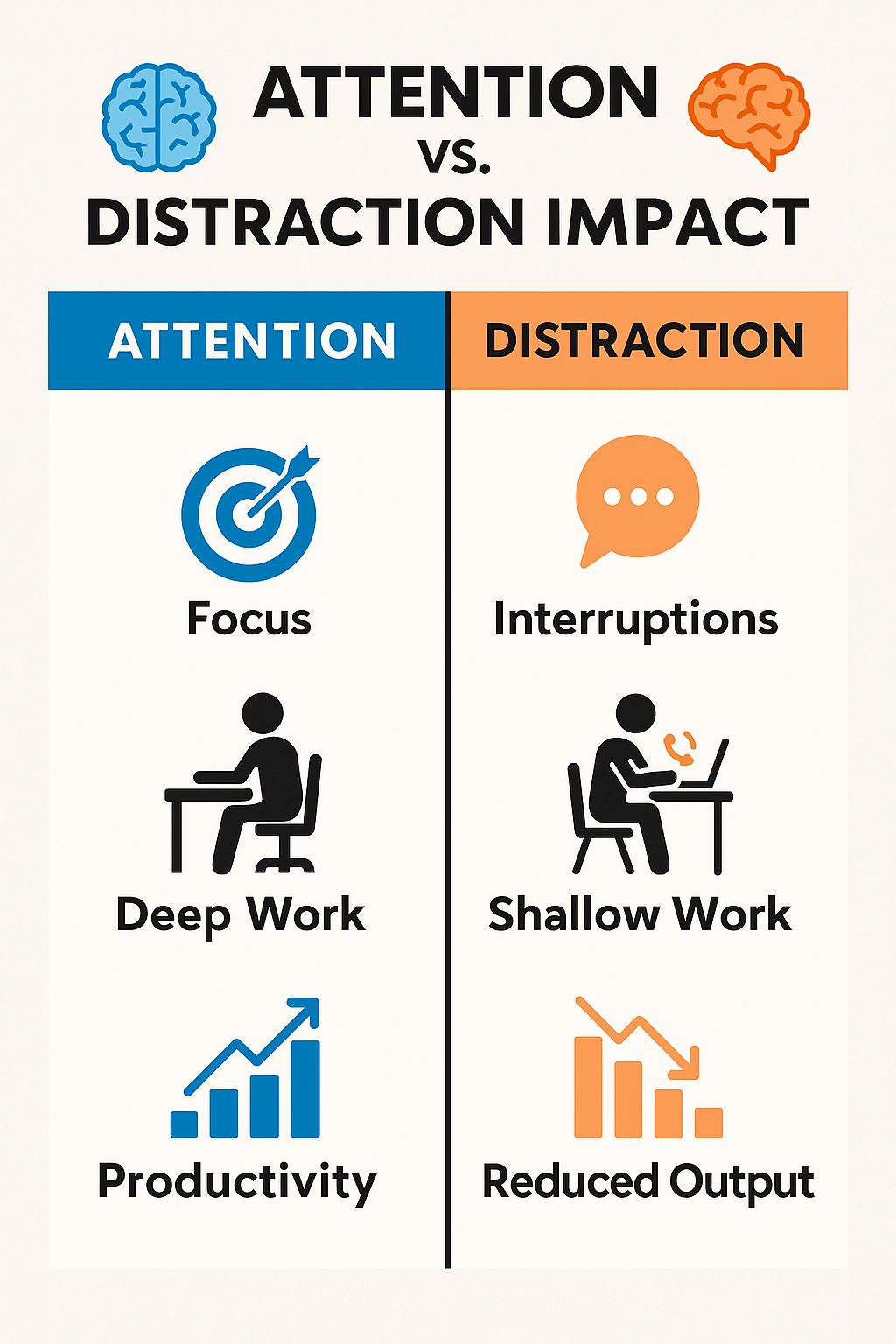
Image Prompt: "Infographic titled 'Is Your Brain Overloaded?' showing a tired brain surrounded by notification icons, email alerts, and multitasking visuals."
🔬 Topic Breakdown – Understanding Digital Cognitive Fatigue
1. Notification Flood and Attention Hijack
Every ping or alert triggers a "shift cost" in your brain. Research from UC Irvine shows it takes an average of 23 minutes and 15 seconds to regain full focus after an interruption.
2. Information Overload and Working Memory Collapse
Your prefrontal cortex can only hold 3–5 information chunks at once. Studies reveal that information overload from constant screen exposure reduces effective working memory by 32%.
3. Screen Multitasking and Decision Fatigue
Task-switching wears out your brain’s "mental energy" reserves. Stanford research found that heavy media multitaskers perform 30% worse on cognitive control tests compared to single-taskers.
4. Emotional Desensitization and Neurochemical Imbalance
Chronic screen exposure blunts dopamine and serotonin regulation. A Harvard study found that students who used devices over 6 hours/day had 18% higher cortisol levels and were 25% more prone to mood instability.
📊 Quick Poll: Do You Feel Mentally Drained After a Screen-Heavy Day?
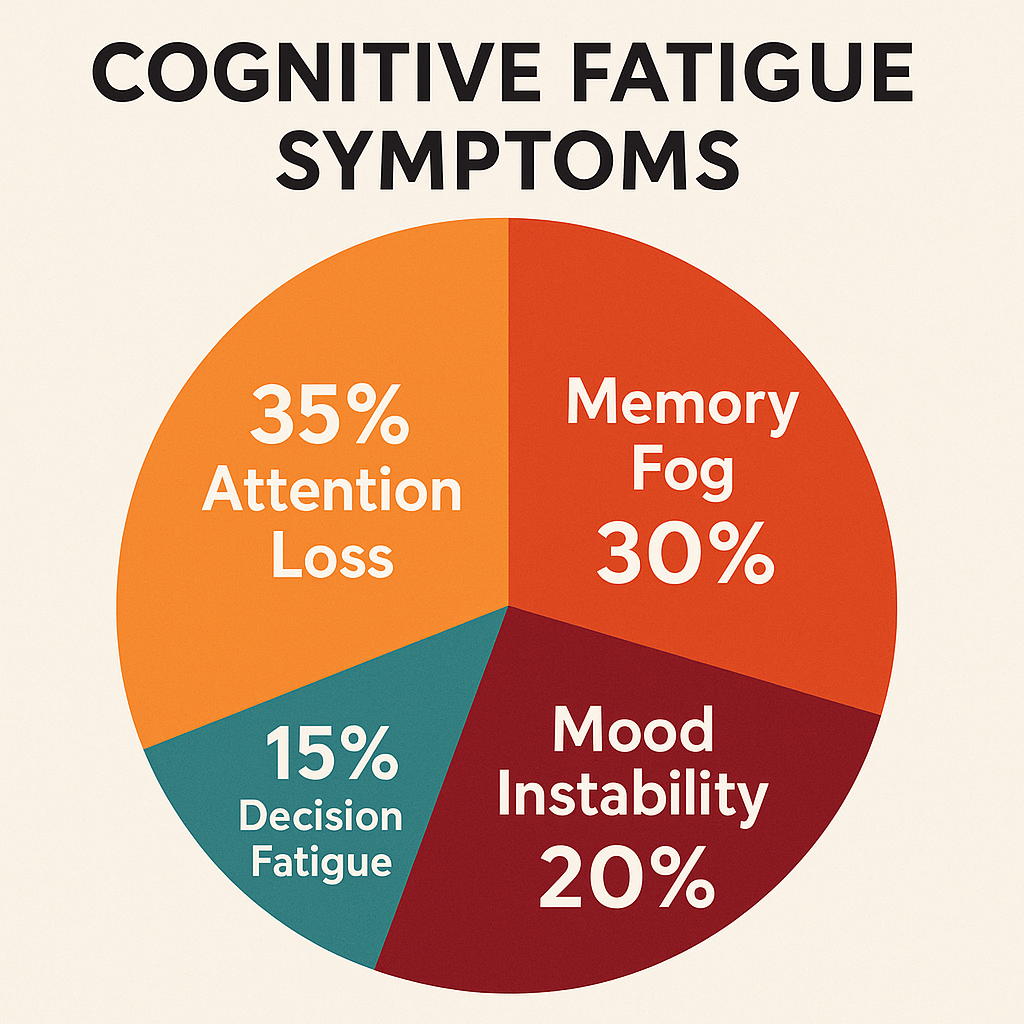
Image Prompt: "Pie chart infographic showing the distribution of cognitive fatigue symptoms: 35% attention loss, 30% memory fog, 20% mood instability, 15% decision fatigue."
❓ FAQ: Digital Cognitive Fatigue Explained
- How common is cognitive fatigue in the digital age?
Extremely common—affecting over 60% of working adults. A 2022 Gallup report found that 62% of office workers reported daily symptoms of mental exhaustion linked to digital screen exposure and multitasking.
2. Can digital multitasking permanently harm cognitive function?
Chronic multitasking can impair working memory by up to 32%. Stanford studies confirm that heavy media multitaskers not only perform worse on focus tasks but also show structural changes in brain areas linked to attention.
3. What’s the shortest screen break that actually helps?
Even 5-minute "micro-breaks" can reduce cognitive load by 19%. Short, regular pauses—especially away from screens—allow your brain’s executive network to reset and improve mental clarity.
4. Does nighttime screen use worsen cognitive fatigue?
Yes—nighttime screen exposure delays melatonin release by up to 90 minutes. Harvard research shows that using devices before bed fragments REM sleep, making next-day cognitive performance 25% worse.
5. Can certain habits protect the brain from digital exhaustion?
Absolutely—structured downtime boosts cognitive resilience. Practices like "tech-free mornings," focused work blocks, and controlled exposure to social media can lower digital fatigue markers by up to 30% according to neuroscience research.
👤 Reader Story: "Breaking the Cycle of Digital Fatigue"
"I used to pride myself on multitasking—managing three monitors, endless Slack messages, and back-to-back meetings. At first, it felt empowering. But over time, I noticed my memory slipping, my mood darkening, and my decision-making faltering. Burnout hit me like a wall. Only when I started practicing deep work blocks, tech-free mornings, and mindful screen use did I reclaim my clarity. Now, I work smarter—not harder—and my brain finally feels human again."
—Emma T., UX Designer, New York City
🧪 Self Check: How Digitally Fatigued Are You?
Answer these 7 questions:
1. Do you feel mentally tired after prolonged screen time?
Yes No2. Do you have trouble concentrating after multitasking online?
Yes No3. Do you forget small tasks or details more often?
Yes No4. Does your mood worsen after a screen-heavy day?
Yes No5. Do you check your phone unconsciously?
Yes No6. Do you find it hard to disconnect even during meals or breaks?
Yes No7. Do you feel refreshed after screen-free time?
Yes No🔚 Call to Action Ending
Your brain wasn’t built for a never-ending flood of notifications, tabs, and information.
But you have the power to change the rules.
Today is your chance to build a smarter relationship with technology—and protect the greatest tool you own: your mind.
🌟 Start your digital recovery today. Your brain will thank you tomorrow.


