✅ TL;DR (3-Line Summary)
- Your brain isn’t just overwhelmed by notifications—it’s being fed the wrong signals all day long.
- Just like unhealthy food, poor notification habits spike stress, fragment attention, and create cravings.
- In this post, we break down how to apply “digital nutrition” principles to curate a healthier, more focused mind.
👥 Expert Dialogue: Dr. Jules (Cognitive Neuroscientist) & Mia (Marketing Executive)
Mia: I get hundreds of pings a day. Slack, emails, news alerts—it’s constant. I mute one, and another one starts buzzing. What is this doing to my brain?
Dr. Jules: It’s like feeding your brain sugar every few minutes. Notifications aren’t just interruptions—they’re information calories. Most are empty, but your brain treats each as a survival cue. It reacts with cortisol, dopamine, and alertness—over and over.
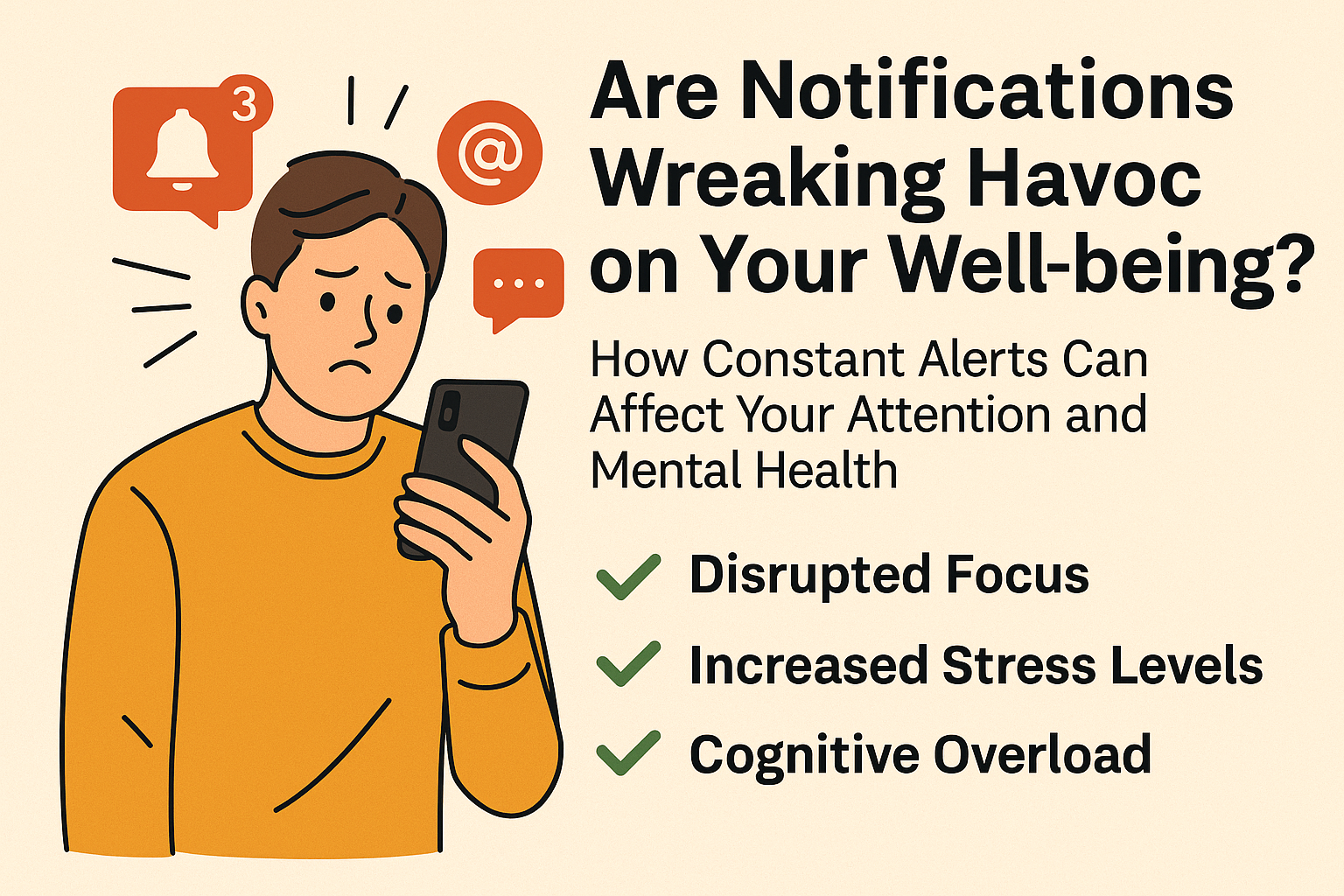
Mia: So, notifications are a kind of junk food?
Dr. Jules: Exactly. Some are necessary, like protein. Most are digital sugar. And too much digital sugar leads to cognitive inflammation: brain fog, low motivation, poor memory, and anxiety.
Mia: Can I fix this without quitting everything cold turkey?
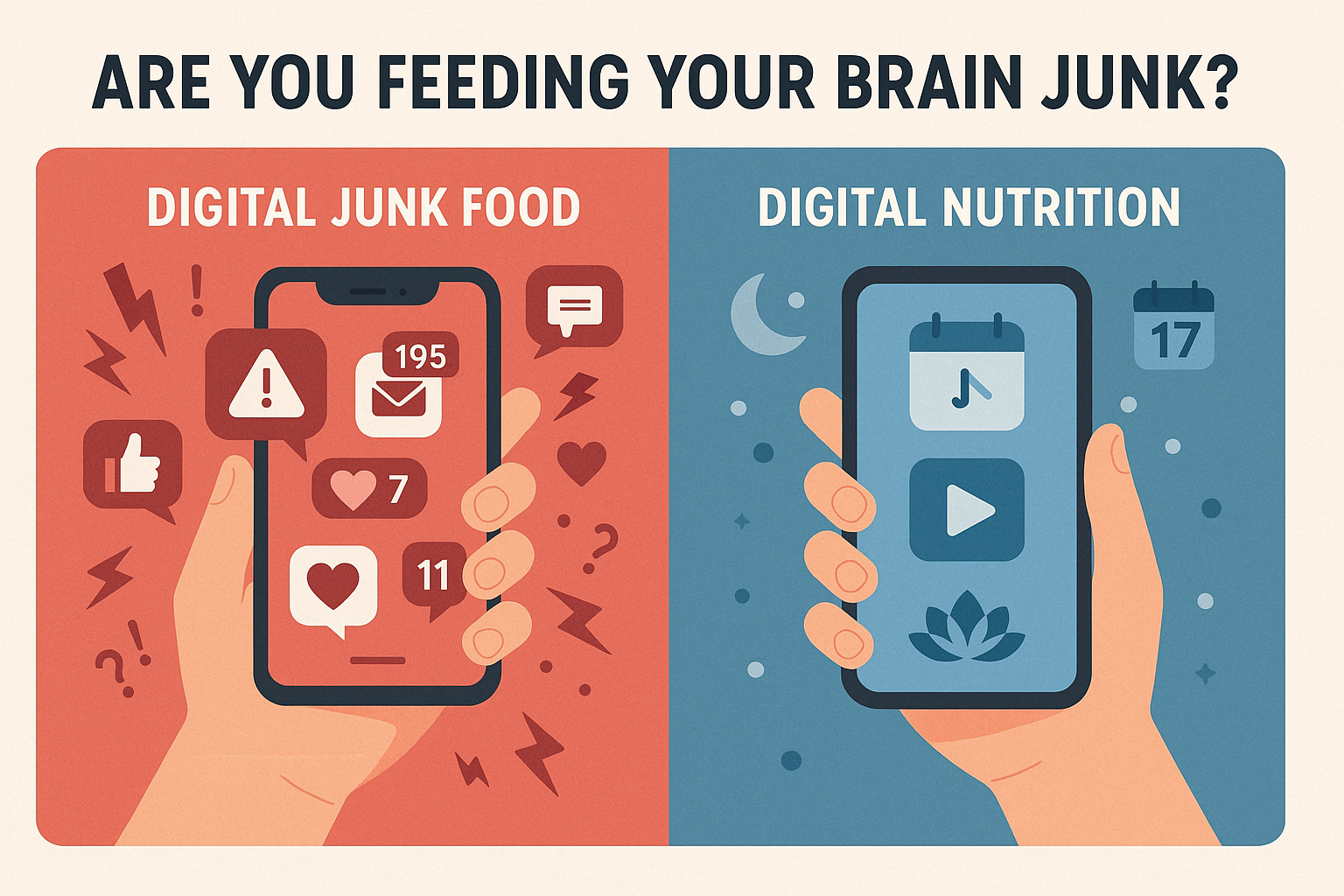
Dr. Jules: That’s where “notification nutrition” comes in. We build a digital diet—curating what your brain consumes. You’ll still get alerts, but only the ones that fuel, not drain, your mental energy.
alt text: "A flat digital illustration infographic titled 'Are You Feeding Your Brain Junk?'. The image shows two hands holding phones. One side has red warning icons and chaotic app notifications, symbolizing 'digital junk food'. The other side shows calming blue tones with focused apps like calendar and meditation, representing digital nutrition."
🔬 Topic Deep Dive: Rewiring Your Brain Through Notification Nutrition
1. Digital Glycemic Load: The Dopamine Effect
Just like sugar spikes insulin, frequent alerts spike dopamine. This leads to a crash, followed by craving more stimulation. Studies from Stanford show constant alert exposure reduces sustained attention span by 22%.
2. The Cognitive Cost of Micro-Interruptions
Each notification costs your brain time to reorient. It takes an average of 23 minutes to return to deep work after an interruption. Multiply that by 80–100 pings per day—and you’re never in flow.
3. Building a Smarter Notification Diet
- 🧠 Uninstall or disable all non-essential apps.
- 🔕 Use Do Not Disturb with curated allow lists.
- ⏱️ Schedule alert windows (e.g., only 3x/day).
- 📥 Batch process emails and messages.
alt text: "Infographic showing a digital diet plan titled 'Designing a Smart Notification Diet'. The layout contrasts a chaotic smartphone screen overloaded with red app badges on the left, and a minimalist phone with only essential apps on the right. Steps for creating a healthier notification system—mute, batch, filter—are listed in between".
4. Long-Term Brain Health Benefits
Notification reduction boosts sleep quality, emotional stability, and working memory. A 2023 trial from MIT found that users who followed a structured digital diet for 14 days had 31% less anxiety and 18% higher cognitive task scores.
📊 Quick Poll
👤 Reader Story: “Why I Deleted 14 Apps and Slept Better”
“I used to check my phone 200 times a day. I was tired, anxious, and irritable. A friend told me about digital nutrition. I started small—just turning off marketing push alerts. Then I removed social media from my phone. Within a week, I was sleeping better, my headaches stopped, and I could actually finish a task without switching apps. It changed everything.”
🧠 FAQ: Notification Nutrition Explained
1. Why do alerts feel so addictive? ✅ Because they hijack dopamine. 🔔 Every notification triggers the same brain circuit that evolved to scan for danger and reward. Frequent pings overstimulate your reward loop.
2. Can I just mute everything? ✅ Technically yes, but... 📴 A complete mute often creates more anxiety. Curated notification plans work better long-term.
3. What’s the biggest benefit of reducing notifications? ✅ Restored focus. 📈 The average person gains back 2.5 hours of focused time per day with a streamlined alert strategy.
4. How do I make the changes stick? ✅ Build habits in layers. 📊 Start with one app. Then one notification type. Anchor it to your daily routine. Use digital wellness tools like Focus Mode or screen time limits.
5. Is this just digital minimalism? ✅ It’s more like digital nutrition. 🥦 You’re not eliminating tech—you’re designing a healthy input system that supports your goals, not distracts from them.
🧪 Self Check: What’s Your Notification Dependency Score?
1. Do you feel anxious if you haven’t checked your phone in an hour?
📌 Sticky CTA:
Your phone shouldn’t control your mood. 🔔 Clean up your alert diet. Reclaim your brain.
🔚 Natural Call-to-Action
Notifications aren’t evil. But they are engineered to override your focus. Feed your brain what it truly needs: space, clarity, calm.


