Digital Overload Part - 9
🧠 TL;DR (Too Long; Didn't Read)
- Certain foods can enhance focus, repair cognitive damage, and reduce brain fog—especially after digital burnout.
- Nutrients like omega-3s, flavonoids, and choline are key to rebuilding cognitive resilience.
- This guide walks you through expert tips, real stories, and food-based strategies to protect and enhance brain performance.
👩⚕️ Expert Dialogue: "What Should I Eat to Repair My Focus?"
Emma (Reader): Lately, I’ve been struggling to concentrate—even simple tasks feel mentally exhausting. Could it be my diet?
Dr. Nolan (Neuroscientist): Absolutely, Emma. What you eat has a direct impact on how your brain functions. The brain is a high-energy organ—it consumes about 20% of your total calories. If it’s undernourished, focus, memory, and clarity all suffer.
Emma: So brain fog isn’t just from stress or screen time?
Dr. Nolan: Exactly. Chronic digital use worsens it, but without key nutrients, your brain lacks the raw materials it needs to rebuild. That’s why recovery nutrition is so essential—especially now, in the age of digital overload.
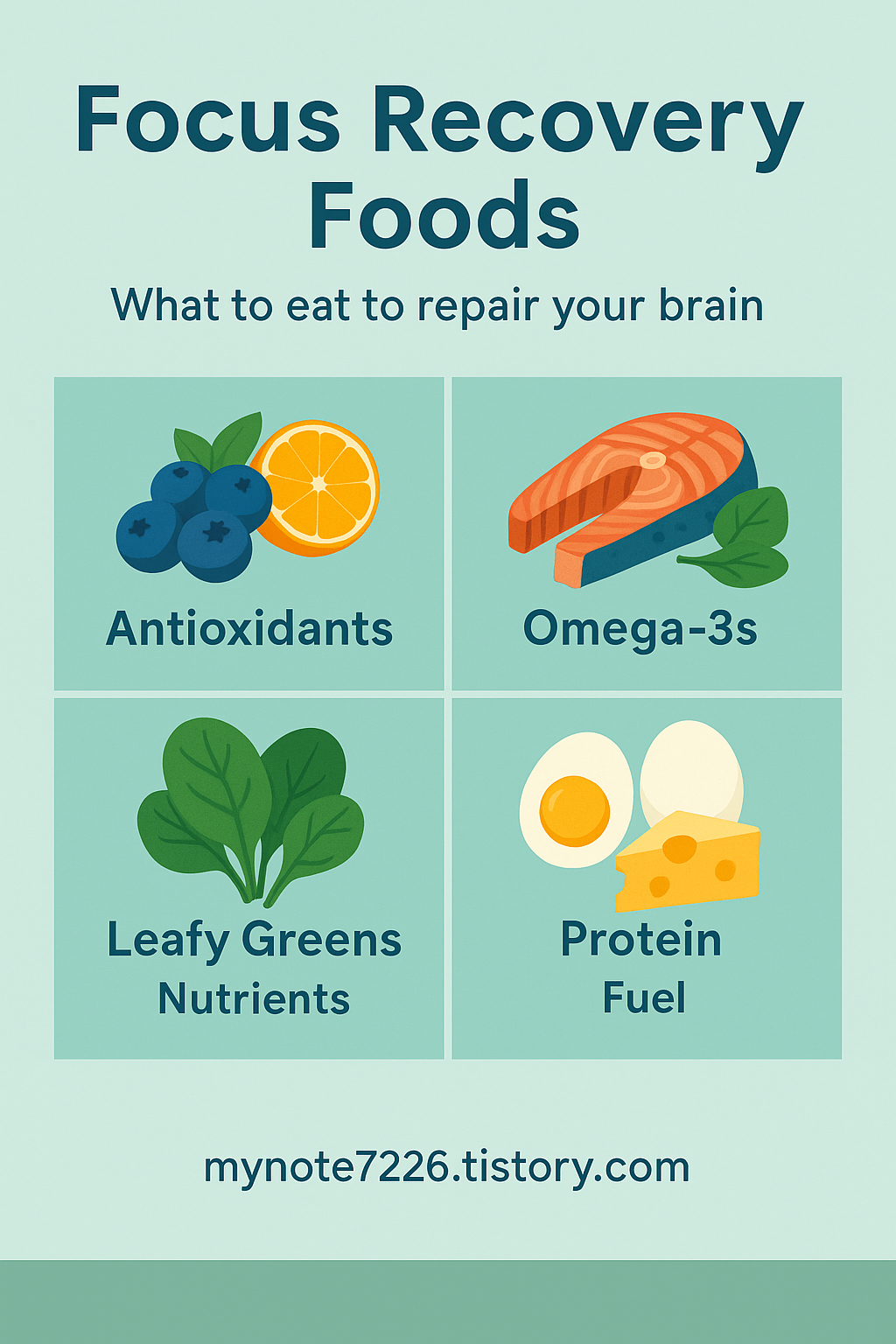
Alt Text: Infographic titled "Top Brain-Fueling Nutrients" shows illustrated icons for key brain-boosting nutrients—omega-3s, flavonoids, choline, and magnesium—surrounded by food visuals like salmon, blueberries, eggs, and leafy greens. Bottom includes source label: mynote7226.tistory.com for reference and further reading.
🍳 Focus Recovery Foods: What Science Says
1. Omega-3 Fatty Acids (EPA/DHA)
- Found in: Salmon, sardines, walnuts, flaxseeds
- Effect: Omega-3s improve cognitive flexibility, reduce inflammation, and rebuild myelin sheaths—critical for neuron function.
- Research: A meta-analysis of 15 studies showed improved memory and processing speed in adults supplementing omega-3s.¹
2. Blueberries and Dark Berries
- Rich in flavonoids, especially anthocyanins
- Protect neurons from oxidative stress and increase neuroplasticity
- Daily intake of 1 cup has been shown to enhance executive function in adults over 50.²
3. Eggs and Choline
- Choline is a precursor for acetylcholine, a neurotransmitter that supports focus and memory
- 1 large egg = ~150mg choline (adults need ~450–550mg/day)
- A deficiency in choline can impair brain signaling and focus
4. Leafy Greens (Spinach, Kale, Swiss Chard)
- Rich in folate, vitamin K, and lutein
- These nutrients slow cognitive decline and enhance visual processing, especially in the elderly
- A Rush University study showed 1.3 servings/day slowed brain aging by up to 11 years³
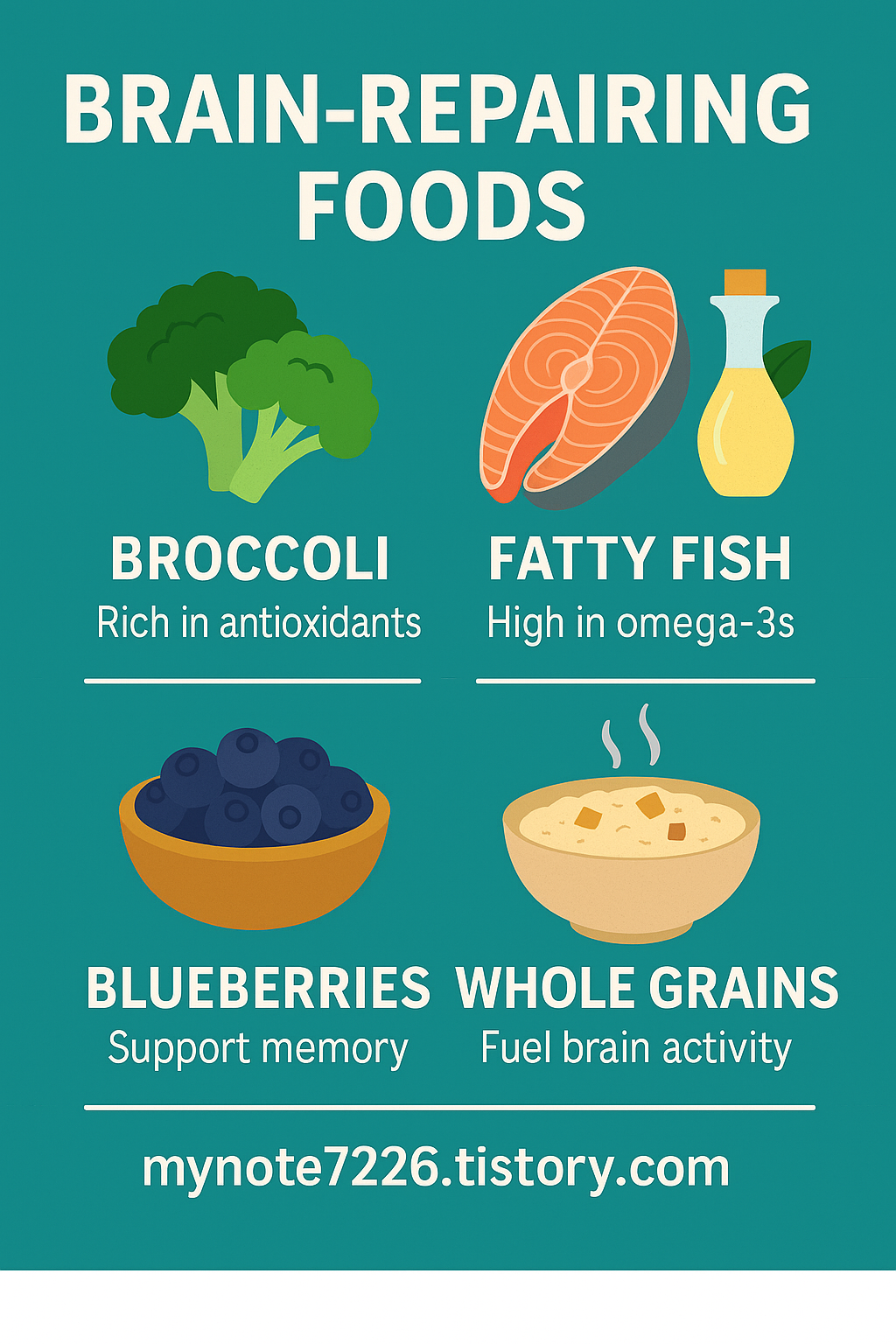
Alt Text: Table infographic comparing 4 brain-boosting foods. Columns include: Nutrient (e.g., Omega-3, Flavonoids, Choline, Folate), Food Source (Salmon, Blueberries, Eggs, Leafy Greens), Brain Benefit (e.g., neuroplasticity, memory boost), and Daily Target Amount. Footer includes blog address: https://mynote7226.tistory.com
💬 Reader Story: "I Changed My Diet, and My Brain Changed Too"
Name: Danielle, 32, UX Designer Location: San Diego, CA
"After a year of working remotely, I couldn’t concentrate. I’d reread the same line five times. A friend suggested adding omega-3s and berries to my breakfast. Within two weeks, my mental clarity improved. It was like cleaning a foggy windshield."
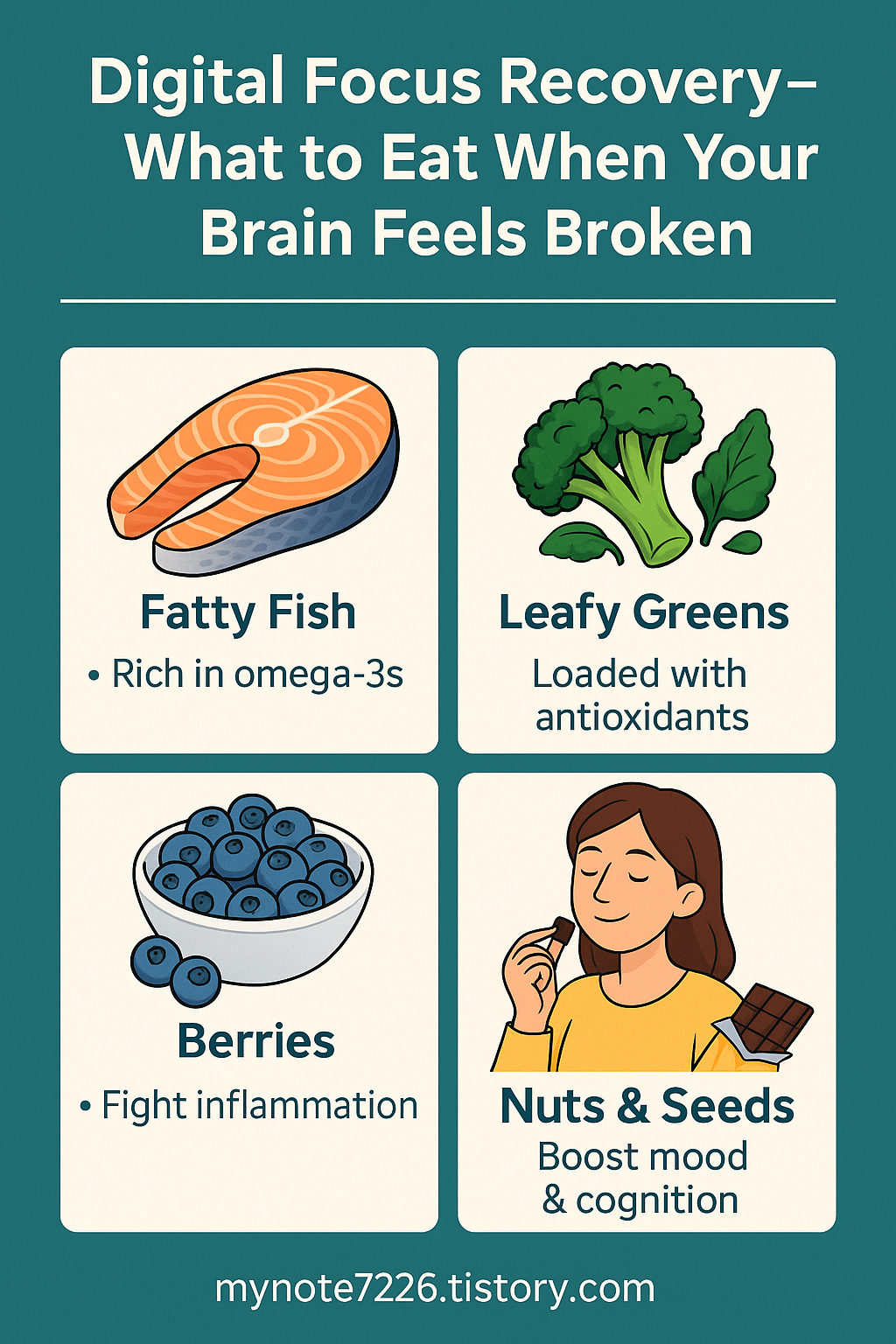
Alt Text: Flat-style digital visual showing a human brain with fog on the left side and clarity on the right. Surrounding elements include cartoon-style salmon, blueberries, eggs, and leafy greens. Blog address https://mynote7226.tistory.com is clearly displayed in the lower corner without overlapping any visuals or text.
❓ FAQ: Quick Answers to Common Questions
1. How soon can you feel mental clarity after changing your diet?
Most people report better focus within 2–3 weeks of consistent nutrient intake, especially omega-3s and antioxidants. Results vary based on baseline diet and digital habits.
2. Is caffeine helpful or harmful for focus recovery?
Caffeine boosts alertness short term but can impair deep focus when overused. Pairing it with L-theanine (in green tea) can smooth out the effects.
3. Can I get these nutrients from supplements?
Yes, but food-based nutrients offer better absorption and synergy. For example, EPA/DHA from fish is more bioavailable than flaxseed oil in many cases.
4. What’s the worst food for brain fog?
Refined sugar. It causes glucose spikes and crashes, triggering fatigue and attention issues. Ultra-processed foods high in sugar + additives are the worst combo.
5. Are these foods safe for kids?
Absolutely. Start small (e.g. berries with yogurt, scrambled eggs with spinach) and build nutrient-rich meals that kids will enjoy.
✅ Self-Check: Is Your Diet Helping or Hurting Your Focus?
Answer the questions to see how your nutrition supports your brain performance.
📌 Sticky CTA Banner
Want to build a brain-boosting meal plan?
👉 Explore Our 7-Day Digital Recovery Nutrition Plan
💬 Final Note
Your brain isn’t broken—it’s just underfed. By giving it the nutrients it needs, focus becomes a natural state again. Drop a comment: 🧠 What food made the biggest difference for you?
📌 Internal Link Suggestions:
📎 External Source References:
- Swanson D, Block R, Mousa SA. Omega-3 fatty acids EPA and DHA: health benefits throughout life. Adv Nutr. 2012
- Whyte AR, Williams CM. The cognitive effects of acute blueberry interventions. Neurosci Biobehav Rev. 2015
- Morris MC, Tangney CC, Wang Y, et al. MIND diet slows cognitive decline with aging. Alzheimers Dement. 2015
'Mental Health & Well-being' 카테고리의 다른 글
| 🧠 Building a Sustainable Tech-Life Balance: Long-Term Habits (18) | 2025.05.30 |
|---|---|
| Eye Strain, Blue Light, and Screen-Induced Headaches (13) | 2025.05.28 |
| The Social Media Trap – Comparing, Scrolling, and Self-Worth (29) | 2025.05.28 |
| Kids, Teens, and Tech Addiction – What Parents Need to Know (7) | 2025.05.27 |
| 7-Day Digital Detox Plan (With Checklists and Self-Tests) (21) | 2025.05.27 |


