Introduction
Emma and Jake are at a brunch café, scrolling through a health blog. Jake frowns at an article headline.
Jake: "Eating late at night could shorten your lifespan"? Come on, Emma, does it really matter when I eat?
Emma: Absolutely! Research on circadian nutrition suggests that your body's internal clock affects how food is processed, impacting metabolism, energy levels, and even longevity.
🔬 A 2023 study in Cell Metabolism found that eating misaligned with circadian rhythms can increase the risk of obesity, diabetes, and heart disease. (Source)
Jake: That sounds intense. So, what exactly is circadian nutrition?
1️⃣ What Is Circadian Nutrition?
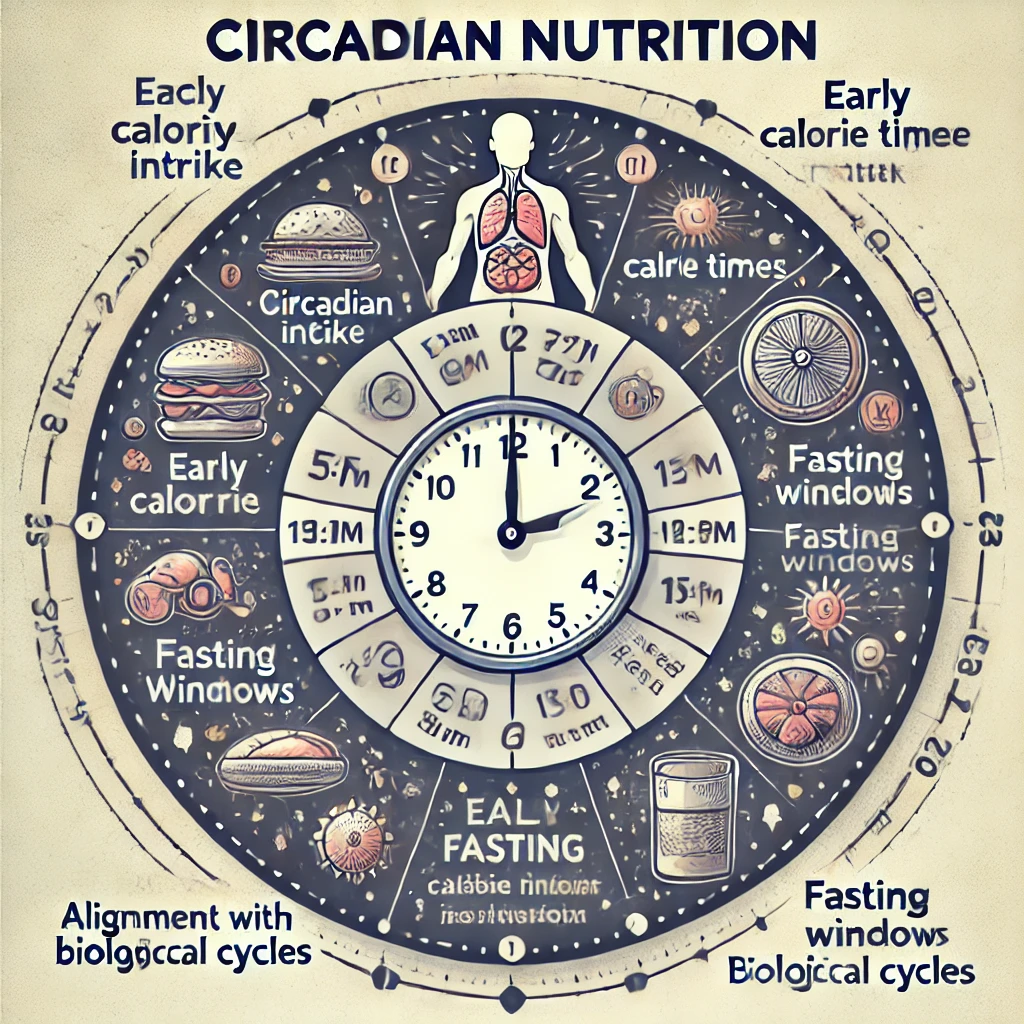
Emma: Circadian nutrition is about eating in sync with your body's natural clock. Your body has a 24-hour cycle, controlling hormones, digestion, and metabolism.
Jake: So, my body follows a schedule even for processing food?
Emma: Exactly! During the day, your body is optimized to digest food efficiently. But at night, metabolism slows, insulin sensitivity drops, and fat storage increases.
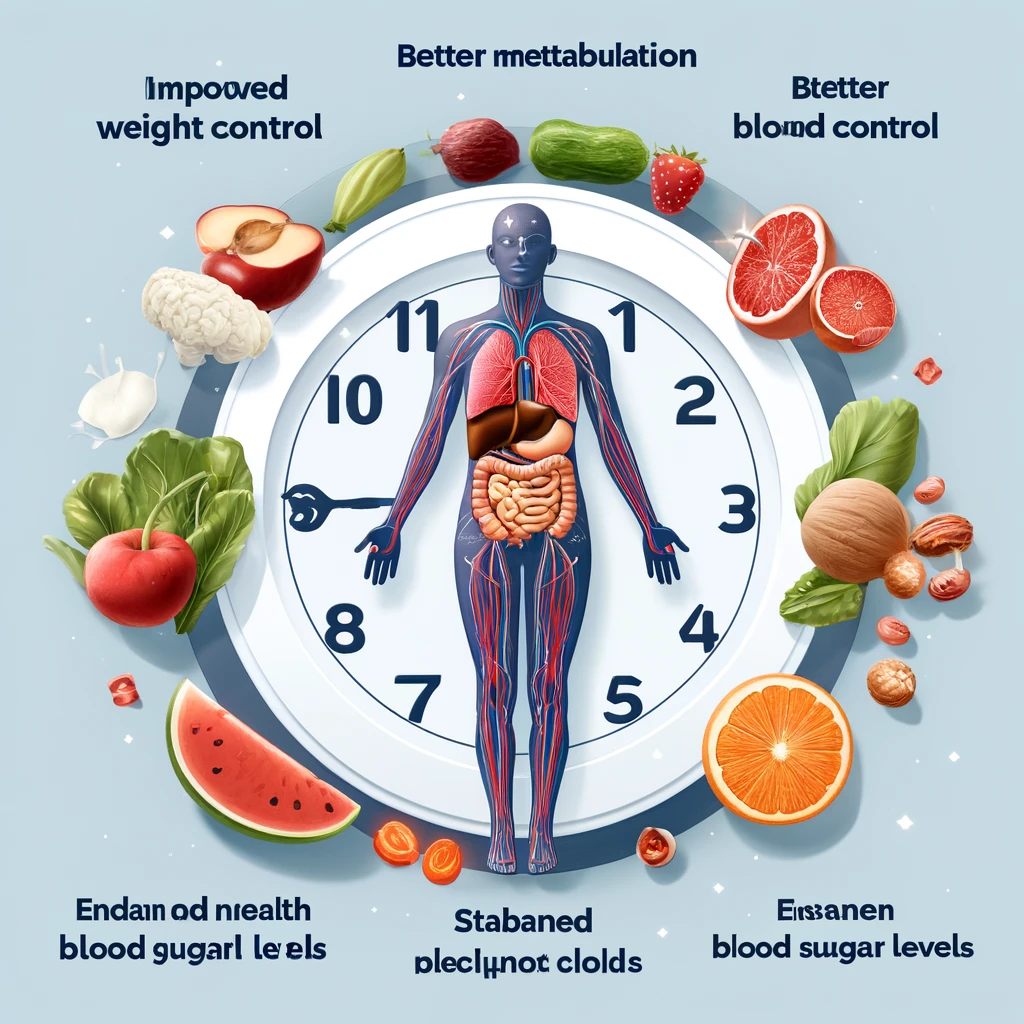
🔬 A 2022 study in Nature Reviews Endocrinology found that people who eat most of their calories earlier in the day have better weight control and metabolic health. (Source)
Jake: Does this mean skipping dinner would be better than skipping breakfast?
2️⃣ The Science Behind Meal Timing & Metabolism
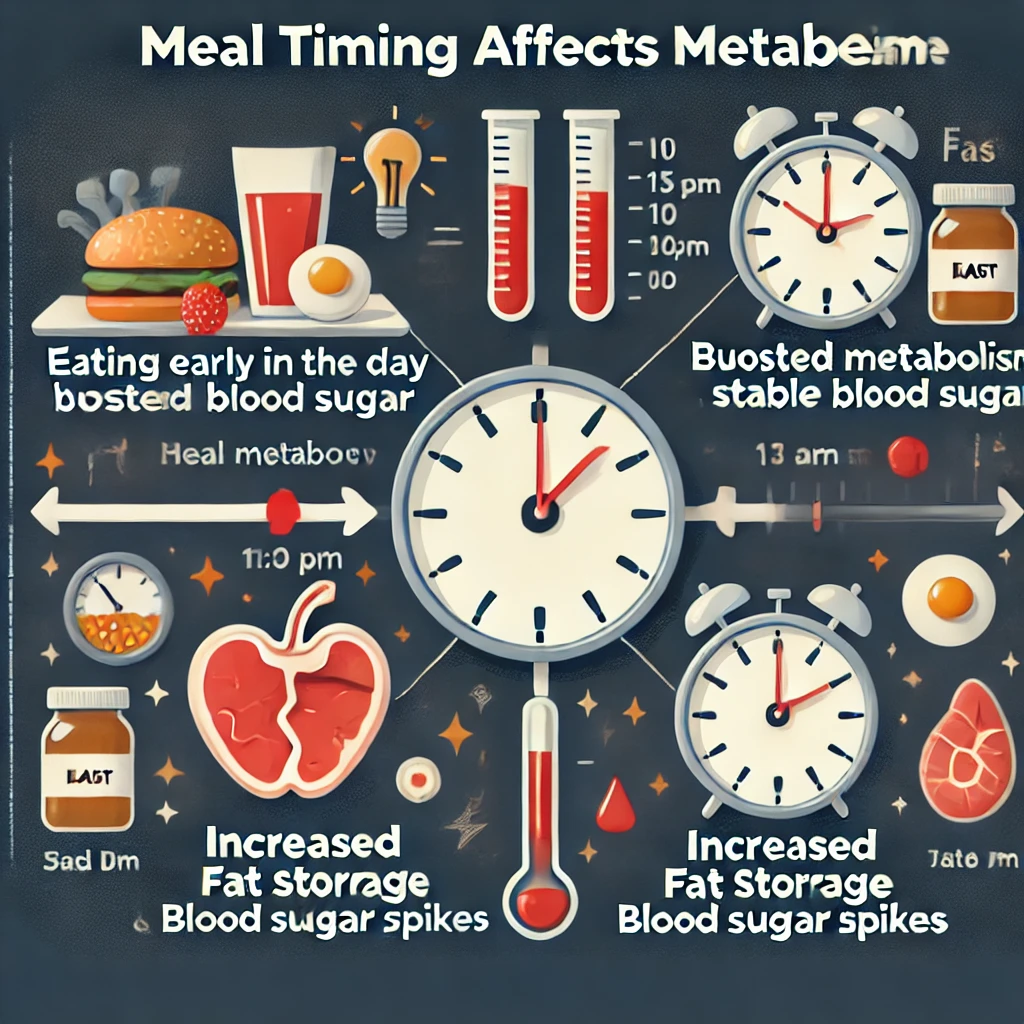
Emma: Studies show that eating earlier in the day leads to better metabolic health.
✅ Early eaters (front-loading calories) → Improved insulin sensitivity & fat metabolism
❌ Late-night eaters → Increased blood sugar levels, fat storage, and inflammation
✅ Time-Restricted Eating (TRE) → Aligns meals with natural circadian rhythms, boosting weight loss & energy
🔬 A 2023 study in The Lancet Diabetes & Endocrinology found that individuals who ate 80% of their daily calories before 3 PM had better glucose control and lower body fat. (Source)
Jake: So if I eat late at night, my body doesn’t process food as efficiently?
Emma: Exactly! Late-night snacking can increase fat storage, disrupt sleep, and raise cortisol levels.
⏰ Circadian Nutrition Self-Check
Answer honestly to discover your meal timing health score!
3️⃣ How to Eat According to Your Circadian Rhythm
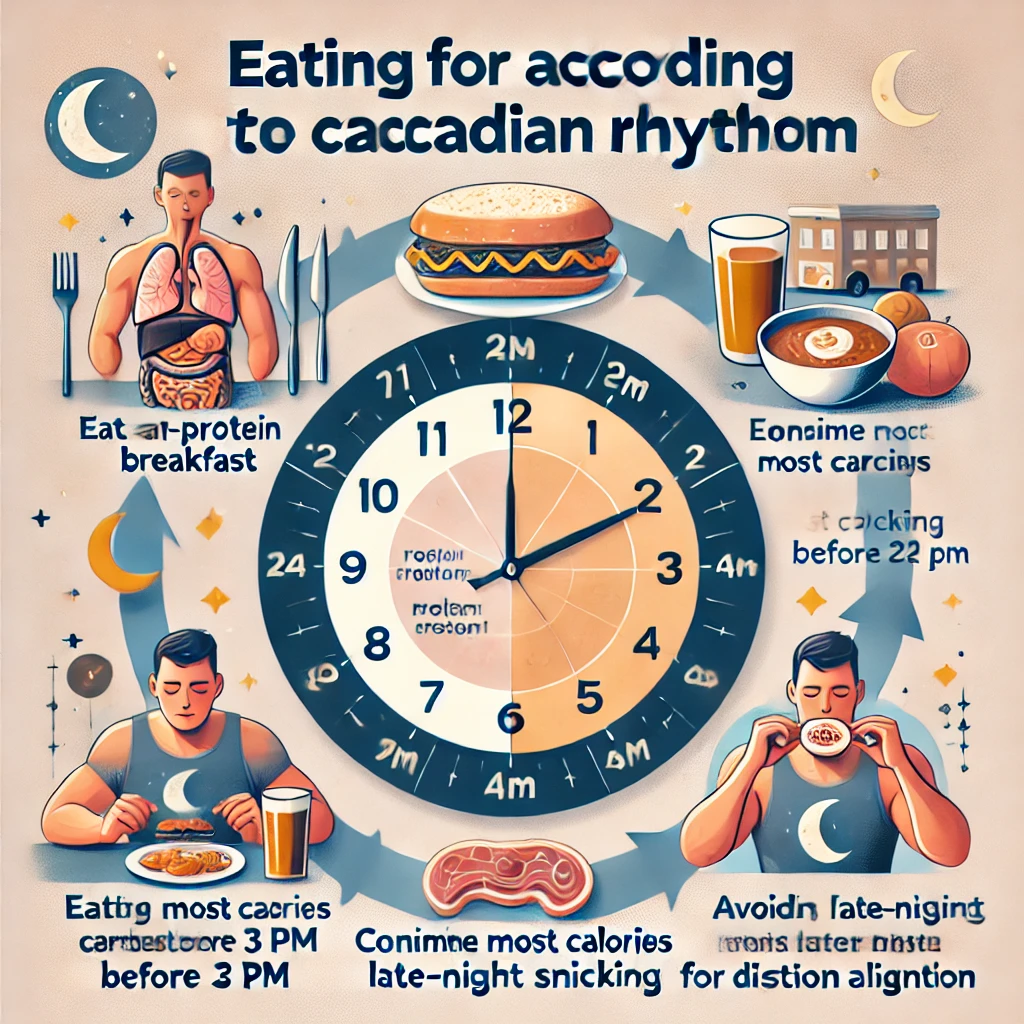
✅ Front-load calories – Have a high-protein breakfast & moderate lunch
✅ Eat your biggest meal before 3 PM – Helps optimize digestion & metabolism
✅ Avoid eating 3 hours before bed – Reduces late-night blood sugar spikes
✅ Follow a 12-14 hour fasting window – Supports digestion & circadian alignment
✅ Limit caffeine & alcohol at night – Disrupts sleep & metabolism
🔬 A 2023 study in Science Advances found that individuals following a circadian-based eating schedule had lower inflammation, improved energy levels, and better sleep. (Source)
Jake: This actually sounds doable. But how strict do I need to be with meal timing?
Emma: Small adjustments can have a big impact. Even shifting dinner earlier can help!
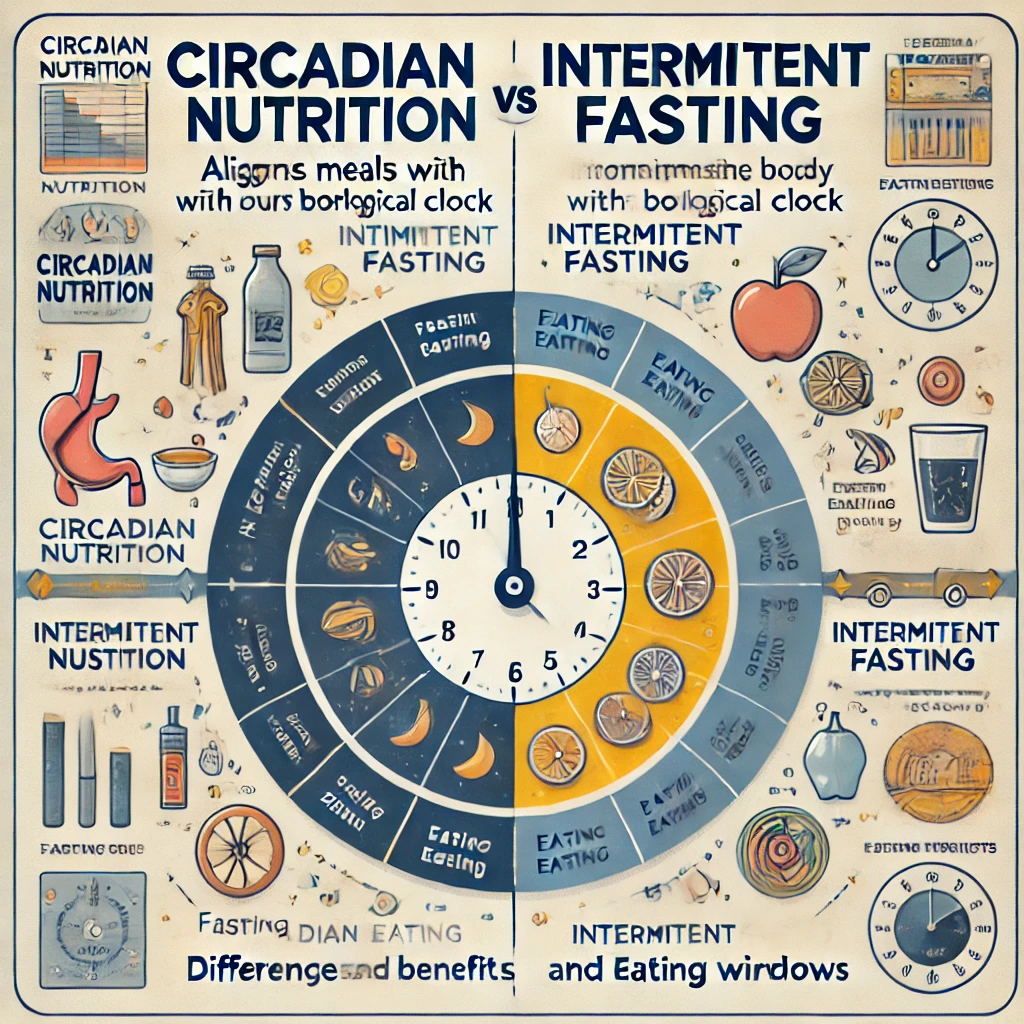
4️⃣ Circadian Nutrition vs. Intermittent Fasting (IF)
Jake: How is this different from intermittent fasting (IF)?
Emma: Great question! IF focuses on when you eat (fasting vs. eating windows), while circadian nutrition focuses on eating in sync with your body’s clock.
✅ IF (Intermittent Fasting) → Cycles between fasting & eating windows (e.g., 16:8 fasting)
✅ Circadian Nutrition → Aligns meal timing with your biological clock for optimal metabolism
🔬 A 2023 review in Harvard Medical Review found that combining IF with circadian eating patterns led to greater fat loss, better sleep, and improved cognitive function. (Source)
Jake: So IF is about fasting periods, while circadian nutrition is about meal timing during the day?
Emma: Exactly! Combining both can be powerful for health & longevity.
Final Thoughts
Jake: This was eye-opening! I’m going to shift my biggest meal to lunchtime instead of dinner.
Emma: That’s a great start! Even small changes in meal timing can boost metabolism, energy, and long-term health.
💬 Have you tried aligning your meals with your circadian rhythm? Share your thoughts in the comments!


