TL;DR (3-Sentence Summary)
Rainy days can disrupt mood, energy levels, and motivation, but the right self-care routine can turn gloom into growth. This post outlines a science-backed, expert-curated self-care plan designed specifically for rainy weather, addressing physical, emotional, and sensory wellness. From circadian-friendly lighting to mood-boosting foods, you'll find real strategies that work—no fluff, just function.
👩⚕️ Expert Dialogue (Extended): Rainy Day Self-Care That Supports Mind and Body
Dr. Ava Lin (Integrative Medicine Specialist):
"Rainy days aren’t just about water in the atmosphere—they shift our internal climate. Our circadian rhythm gets disrupted, cortisol regulation shifts, and inflammatory markers often go up. Patients with autoimmune conditions frequently report flares during barometric pressure changes.”
Dr. Chris Mendez (Clinical Psychologist):
“Exactly. I often see an uptick in mood disorders during prolonged rain or cloudy weeks. It’s a triple threat: less sunlight (so less serotonin), reduced social activity, and a decrease in physical movement. These together can increase symptoms of anxiety and depression.”
Dr. Lin:
“And let’s not forget how vital light is—not just visually but physiologically. Retinal ganglion cells that detect blue light signal your brain to stop melatonin and start the day. But on rainy days, that natural trigger is weak or missing.”
Dr. Mendez:
“That’s why using a 10,000-lux light therapy lamp early in the morning can mimic sunlight and reset the brain’s mood and energy settings. It’s a game-changer for patients with seasonal affective tendencies or even mild rainy-day fatigue.”
Dr. Lin:
“And self-care isn’t about bubble baths and spa days—it’s about functional interventions. A weighted blanket, for instance, works through deep pressure stimulation to calm the nervous system. Same with essential oils like bergamot or lavender—they can actually modulate the HPA axis response.”
Dr. Mendez:
“There’s also a behavioral science angle. When people create structured rituals on rainy days, like journaling or indoor movement, it sends a message to the brain: ‘You’re still in control.’ That predictability combats helplessness.”
Dr. Lin:
“Plus, the microbiome and inflammation don’t take a rain check. Comfort foods high in sugar may temporarily soothe, but they worsen fatigue and mood in the long term. A better approach is warm, anti-inflammatory meals that also support neurotransmitter synthesis—think magnesium, tryptophan, and omega-3s.”
Dr. Mendez:
“It’s all connected. The most effective rainy day routines I’ve seen are ones that target the body and the brain. Mood, energy, immune function—they're all modifiable with the right self-care strategies.”

☔ The Science of Rainy Day Blues
Rainy weather is linked with:
- Reduced sunlight → less vitamin D → altered mood & sleep
- Lower barometric pressure → joint pain & fatigue
- Increased melatonin → daytime drowsiness
- Environmental cues → lower activity levels & dopamine
🧠 The Psychology Behind Rainy Day Self-Care
Dr. Mendez:
“Self-care isn’t just pampering. On rainy days, it's about re-regulating systems thrown off by the environment. That means light therapy, emotional grounding, and physical activation.”
☔ Rainy Day Self-Care – Are You Prepared?
🌤️ Build a Self-Care Routine That Actually Works
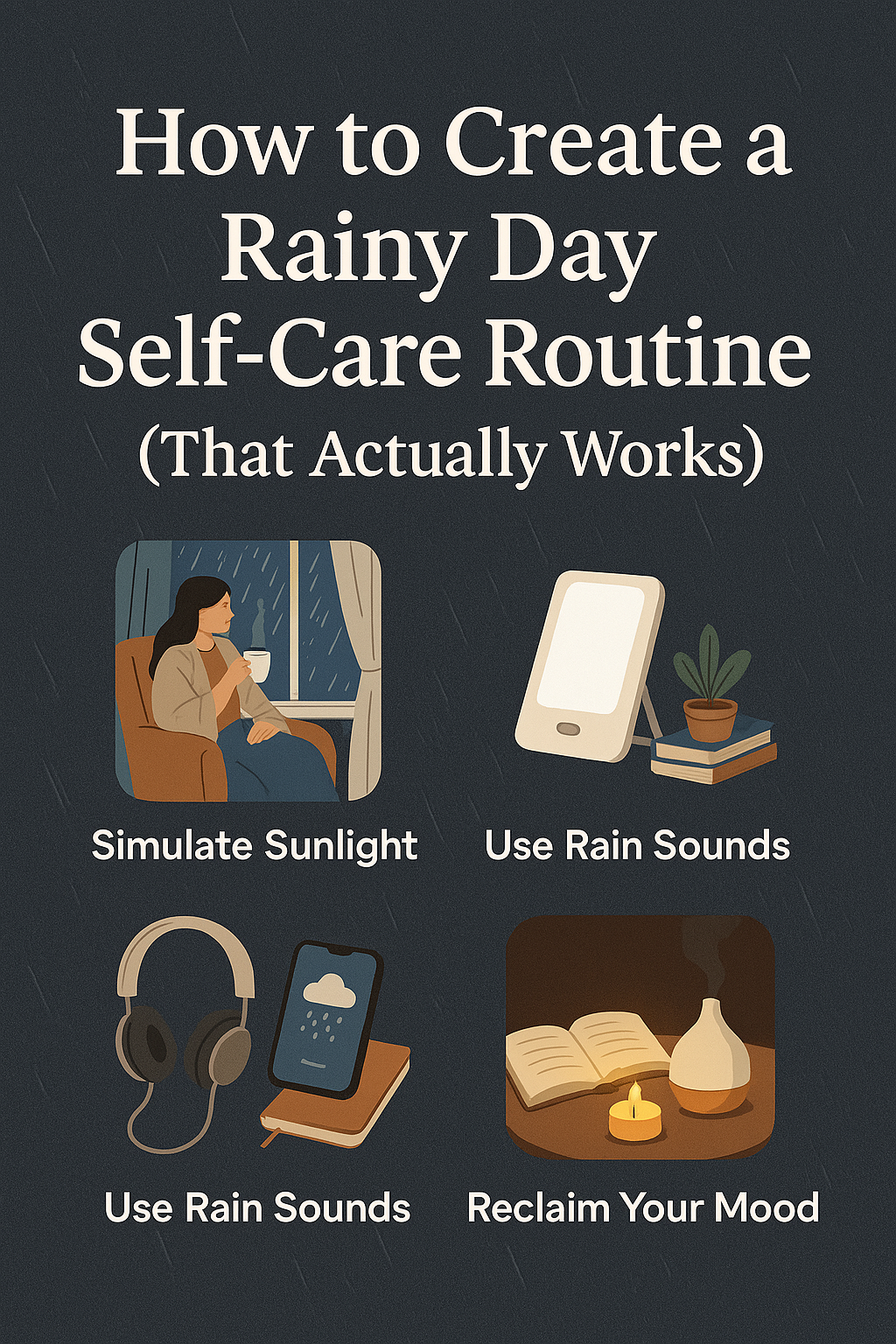
1. Simulate Sunlight as Soon as You Wake Up
- Use a daylight therapy lamp (10,000 lux) within 30 minutes of waking.
- Open blinds—even if it’s gloomy, natural light still counts.
2. Move Your Body (But Make It Gentle)
Rainy weather affects joints and energy. Opt for:
- Indoor yoga or tai chi
- Low-impact cardio (stationary bike or dance video)
- Rebounding (mini trampoline) for lymphatic flow
💡 Tip: Movement should energize, not exhaust you.
3. Use Rain Sounds Strategically
White noise isn’t just for sleep—rain sounds enhance focus, reduce anxiety, and improve meditation effectiveness.
- Use apps like Noisli or CalmTry "binaural beats + rain" for enhanced calm
- Try "binaural beats + rain" for enhanced calm
4. Eat to Fight Inflammation and Sluggishness
Foods to include:
- Omega-3-rich: Salmon, walnuts, flaxseed
- Bright-colored veggies: Bell peppers, spinach, turmeric
- Warm anti-inflammatory drinks: Ginger tea, golden milk
🍲 Try: Spiced lentil soup with turmeric and ginger – comforting and anti-inflammatory
5. Reclaim Your Mood with Sensory Rituals
Engage the senses to combat boredom and lethargy:
- Smell: Diffuse citrus, rosemary, or eucalyptus
- Touch: Use soft textures (blankets, bathrobe, weighted blanket)
- Sight: Add warm lighting, LED candles, or Himalayan salt lamps

6. Create a Structured “Rainy Day Flow” Schedule
A flexible but intentional plan might include:
- 🌞 8:00 AM: Light therapy + warm drink
- 💪 9:00 AM: Gentle workout or stretch
- 📖 10:00 AM: Reading or journaling
- 🍲 12:00 PM: Warm nutrient-rich lunch
- 🎧 2:00 PM: Rain sound meditation or focus session
- 🛁 8:00 PM: Bath, essential oils, no screens
- 🌙 9:30 PM: Wind-down + melatonin-safe lighting
7. Reframe the Rain
Dr. Mendez:
“Instead of resisting the weather, embrace it. Let it be a cue to slow down, reflect, and restore. Reframing rainy days as ‘intentional recharge time’ is a powerful cognitive shift.”
📌 Extended FAQ: Your Questions About Rainy Day Self-Care, Answered
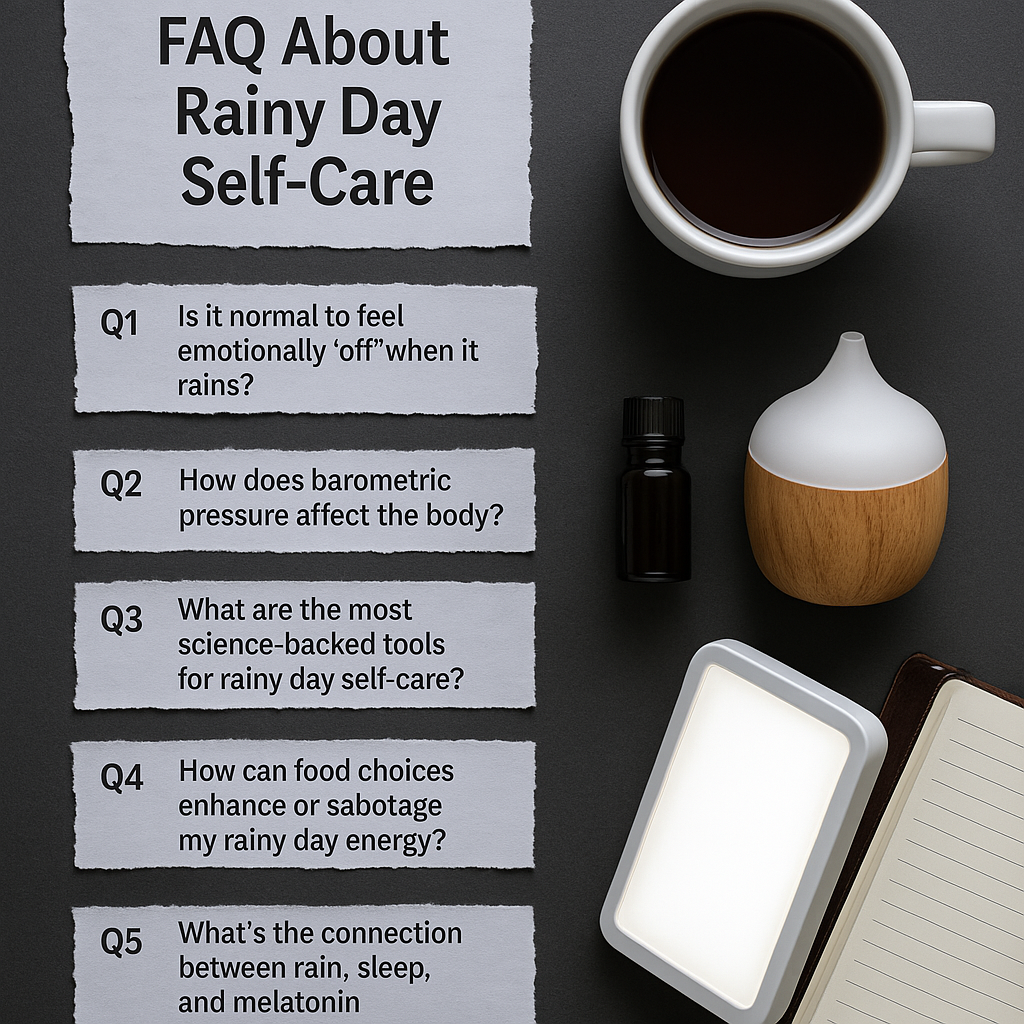
Q1: Is it normal to feel emotionally "off" when it rains?
Yes, and it's not just in your head—it’s physiological.
Rainy days reduce exposure to blue light, which is critical for regulating mood-related hormones like serotonin and dopamine. On top of that, gray skies can signal the brain to increase melatonin production, causing lethargy. Combined with social withdrawal and lower physical activity, it becomes a perfect storm for low mood.
A 2017 study in JAMA Psychiatry found that regions with fewer daylight hours had higher rates of seasonal mood disturbances—even outside of winter.
Q2: How does barometric pressure affect the body?
It can trigger joint pain, migraines, and even fatigue.
Drops in atmospheric pressure can cause tissues and fluids in the body to expand slightly, irritating joints and sinuses. People with arthritis or chronic pain may experience flare-ups, while others may feel increased fatigue due to subtle shifts in cardiovascular or neurological pressure sensing.
Some weather-tracking apps now integrate pain-tracking features—many patients report higher accuracy in anticipating flare-ups this way.
Q3: What are the most science-backed tools for rainy day self-care?
Here are the top four, backed by evidence:
- Light therapy lamp (10,000 lux) – Shown to improve mood and circadian function within 1-2 weeks.
- Essential oils – Studies support the mood-regulating effects of bergamot, citrus, and lavender via olfactory-triggered neurochemical shifts.
- Weighted blankets – Activate deep pressure receptors, calming the autonomic nervous system and reducing cortisol.
- Structured movement routines – Gentle physical activity boosts BDNF (Brain-Derived Neurotrophic Factor), essential for brain health and emotional regulation.
Q4: How can food choices enhance or sabotage my rainy day energy?
Food is chemical messaging for your brain.
Comfort foods high in refined sugar or trans fats create a brief dopamine surge but often lead to crashes and inflammation. Instead, choose:
- Warm, slow-digesting complex carbs like oatmeal or lentils
- Mood-enhancing nutrients: omega-3s, magnesium, zinc
- Tryptophan-rich foods like turkey or pumpkin seeds for serotonin synthesis
Bonus: Herbs like turmeric and ginger not only warm the body but reduce neuroinflammation, supporting mood and clarity.
Q5: What’s the connection between rain, sleep, and melatonin?
Rain disrupts your natural light exposure, affecting melatonin rhythms.
Without sufficient morning light, melatonin production can linger, making you groggy during the day and wired at night. Over time, this circadian confusion contributes to insomnia, fatigue, and metabolic disruption.
Pro tip: Get 10-20 minutes of bright light exposure early in the day—preferably from a light therapy box if the sun isn’t out.
Q6: How do rainy day rituals improve mental resilience?
They create a sense of control, stability, and safety.
The brain thrives on rhythm and predictability. When external cues (like sunlight) are missing, internal structure becomes even more vital. Repeating sensory-rich, intentional activities like journaling, warm baths, or meditation helps regulate the nervous system and reduce anxiety.
Think of these rituals as your "anchor"—especially valuable on days when everything feels gray or unmotivating.
📘 Final Thoughts: Turn Rain Into Restoration
Rainy days don’t have to derail your productivity or your peace. When approached intentionally, they can become an invitation to slow down, restore your energy, and deepen your mind-body connection.
“Don’t fight the rain. Let it water your roots.”


