Real experiences. Real strategies. Real strength.
✅ TL;DR (3-Line Summary)
- Weather changes can significantly affect chronic pain, fatigue, and mental well-being.
- This post shares real stories from readers on how they cope with pain linked to rain, humidity, and barometric pressure shifts.
- Experts weigh in with commentary and strategies inspired by what actually works in real life.
🧑⚕️ Expert Commentary: Dr. Jenna (Pain Psychologist) & Dr. Luis (Rheumatologist)

Dr. Jenna: One of the most powerful resources we have in pain management is lived experience. The insights people share about how they navigate weather-related symptoms are incredibly valuable.
Dr. Luis: I agree. Patients are often ahead of the science in terms of figuring out what actually helps. Tracking symptoms, changing routines, even adjusting nutrition based on the forecast—these are meaningful interventions.
Dr. Jenna: That’s why this post is so exciting. It’s a fusion of practical wisdom and clinical validation. Let’s dive in.
📖 Weather & Pain: How Do You Cope?
💬 Reader Story 1: “The Pressure Drop Predictor”
Maria, 47 – Migraines & Fatigue
"I can literally feel a storm coming in my skull. My fix? I follow barometric pressure using an app and begin hydrating aggressively the moment it drops. I dim lights, cancel plans, and go into prevention mode."
Dr. Luis’s Note: Hydration and light control are very effective in mitigating pressure-induced migraines. I often recommend Maria's approach to others.
💬 Reader Story 2: “Joint Whisperer”
Daniel, 62 – Rheumatoid Arthritis
"Cold and wet? That’s my cue to warm up. I do a short tai chi routine by the heater, wear compression gloves, and increase omega-3s in my food. It helps me stay limber."
Dr. Jenna’s Note: Movement + warming therapy + dietary changes = a holistic approach. Tai chi is especially joint-friendly.
💬 Reader Story 3: “Fog Fighter”
Nina, 33 – Fibromyalgia & Brain Fog
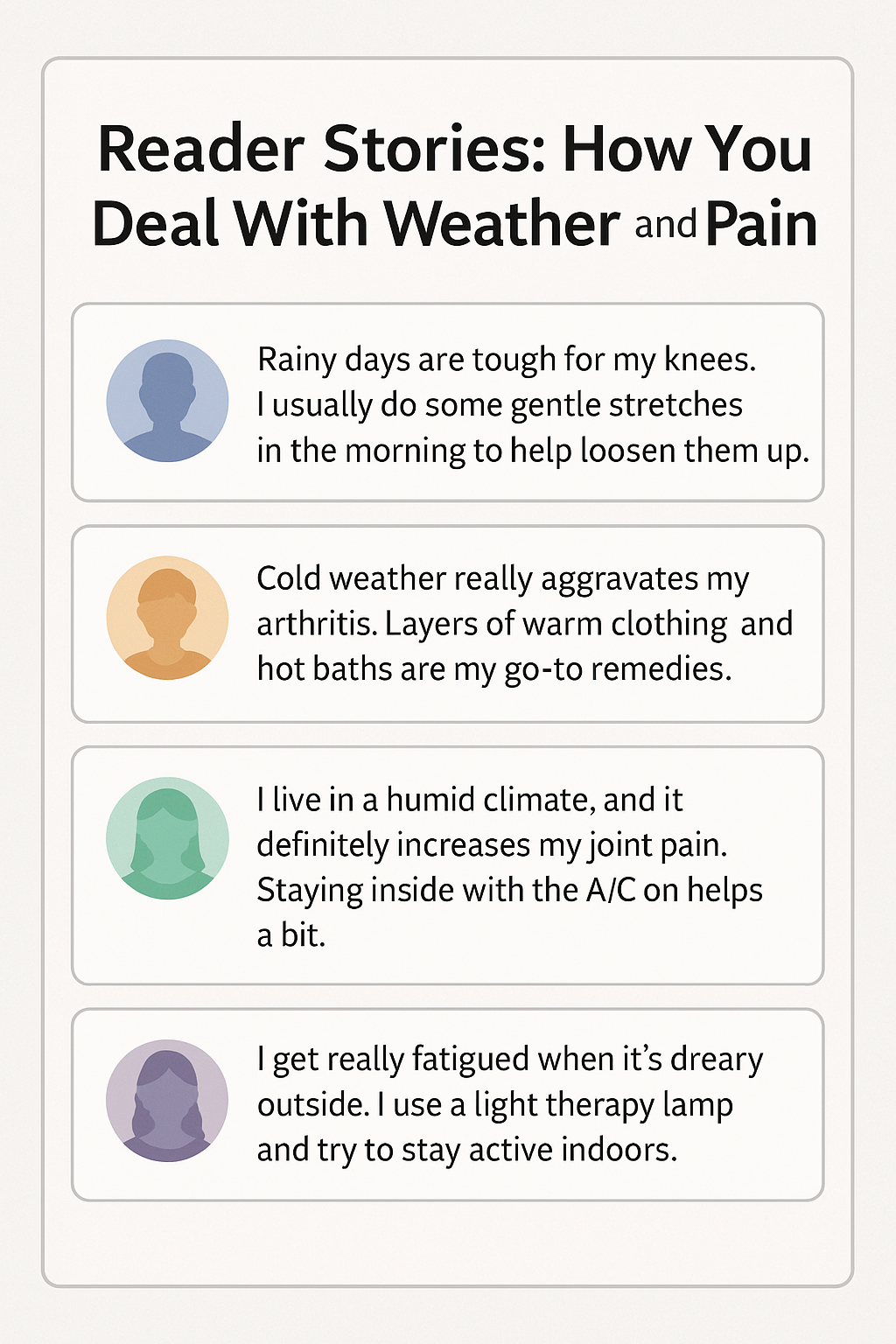
"Rainy days zap my clarity. I use peppermint oil and a SAD lamp, and I eat mostly warm, low-sugar foods. Also: less phone, more books."
Dr. Luis’s Note: Nina intuitively combines stimulation (light, scent) and cognitive regulation (reading) to balance sensory overload. Smart strategy.
💬 Reader Story 4: “Barometer Buddy”
Leo, 55 – Osteoarthritis & Insomnia
"When the air pressure drops, my knees throb and I can’t sleep. So I pre-load my evening with an Epsom salt bath, slow stretching, and chamomile tea."
Dr. Jenna’s Note: Leo’s preemptive wind-down ritual is great for managing weather-related sleep disturbance. Magnesium (in Epsom salt) also supports muscle recovery.
💬 Reader Story 5: “The Weather Diary Warrior”
Sophia, 41 – Chronic Back Pain & Anxiety
"I journal my symptoms every day with the weather forecast. It’s helped me predict pain and also helps me feel less anxious—it’s like connecting dots in advance."
Dr. Luis’s Note: Fantastic practice. Weather-pain journaling builds personal predictive models and gives patients more control.
💬 Reader Story 6: “Movement in the Mist”
Jihye, 38 – Chronic Neck & Shoulder Pain
"Whenever it's cloudy or rainy, my muscles tense up and I get headaches. I’ve learned to step away from my screen and do 10-minute dance breaks with relaxing playlists. It's silly but works every time."
Dr. Jenna’s Note: Jihye’s strategy combines movement, music therapy, and screen breaks—perfect for both muscular and cognitive tension.
🙋♀️ FAQ – Living with Weather-Triggered Pain
Q1. Does weather really affect chronic pain?
Yes, many people experience flare-ups with shifts in barometric pressure, humidity, or temperature. Research continues to confirm patient-reported trends, especially in arthritis, fibromyalgia, and migraine.
Q2. Should I use a weather app to track symptoms?
Definitely. Many patients benefit from pairing weather tracking apps with a symptom journal. This helps identify triggers and prepares you for flare-ups.
Q3. Are there foods that help with weather-related inflammation?
Yes—omega-3 rich foods, turmeric, ginger, and magnesium-rich greens can help regulate inflammation. Avoid refined sugar and excess salt on stormy days.
Q4. How do I manage mood swings when it rains?
Try exposure to daylight lamps, mindfulness exercises, and staying physically active. Avoid isolation—connect with others, even virtually.
Q5. What if I’m already doing everything right but still feel pain?
That’s okay. Pain is multifactorial. Celebrate consistency, and consider talking to a specialist about weather-adapted treatment plans.

🧭 Final Thoughts: Strength Through Shared Stories
Pain may be personal—but you’re not alone. These stories show how people turn awareness into action, and discomfort into strategy. Sharing your experience isn’t just therapeutic—it can be revolutionary for someone else.
Whether it’s a tea ritual, a warmup, or a journal by the window, your weather-smart routine matters. Keep building it. Keep adjusting. Keep sharing.
💬 What’s Your Weather & Pain Story?
Do you track symptoms? Have you found a trick that works?
👇 Share it in the comments! You could inspire someone else.


