✅ TL;DR (3-Line Summary)
- Endless streams of digital content are reshaping how we think, remember, and pay attention—leading to cognitive burnout.
- Information overload fragments our focus and creates a persistent sense of mental chaos and fatigue.
- This post breaks down the brain science behind our attention crisis—and offers real strategies to reclaim clarity.
👥 Expert Dialogue: Dr. Jules (Cognitive Neuroscientist) & Chris (Remote Worker)
Chris: Dr. Jules, why do I feel mentally exhausted after just a few hours online? I’m not even doing anything physically tiring.
Dr. Jules: What you’re describing is cognitive overload. Every tweet, email, headline—even if it’s short—demands attention. Your prefrontal cortex is constantly context-switching, which uses more mental energy than people realize.
Chris: I keep dozens of tabs open and check five apps in a span of ten minutes. Is that the problem?
Dr. Jules: Yes, exactly. That’s what we call attentional residue. Every time you switch tasks, a portion of your attention remains on the previous one. Studies show it can take 20–30 minutes to regain full focus after a single interruption.
Chris: So it’s not that I’m lazy or distracted by default—it’s structural?
Dr. Jules: Very much so. Our brains aren’t built to handle a constant stream of fragmented, emotionally-charged micro-information. That’s why you feel drained—it’s an attention debt.
📊 Quick Poll Do
🔍 Deep Dive: The Science Behind Focus Fragmentation
1. Dopamine Overdose: The Attention Economy’s Trap
Every notification, headline, or meme activates your brain’s reward system, releasing a small burst of dopamine. But frequent stimulation desensitizes this response. A 2022 Stanford study found that people who received more than 100 alerts per day had 40% lower sustained attention in cognitive tasks.
2. Task Switching and Mental Residue
Multitasking is a myth—your brain actually switches rapidly between tasks, leaving behind “residue” that impairs focus. Research from the University of Michigan shows it takes an average of 23 minutes and 15 seconds to return to full focus after a digital interruption.
3. The Working Memory Bottleneck
Your brain can only hold 3–5 pieces of information at once. Information overload exceeds this limit, leading to stress, decision fatigue, and memory gaps. Harvard researchers observed that students multitasking with tech during lectures retained 52% less information.
4. Digital Stress and Cognitive Fatigue
The constant inflow of information triggers micro-stress events—each requiring emotional and cognitive processing. Over time, this elevates cortisol and leads to brain fog. A 2021 European study linked heavy social media use with 2x higher rates of subjective cognitive fatigue.
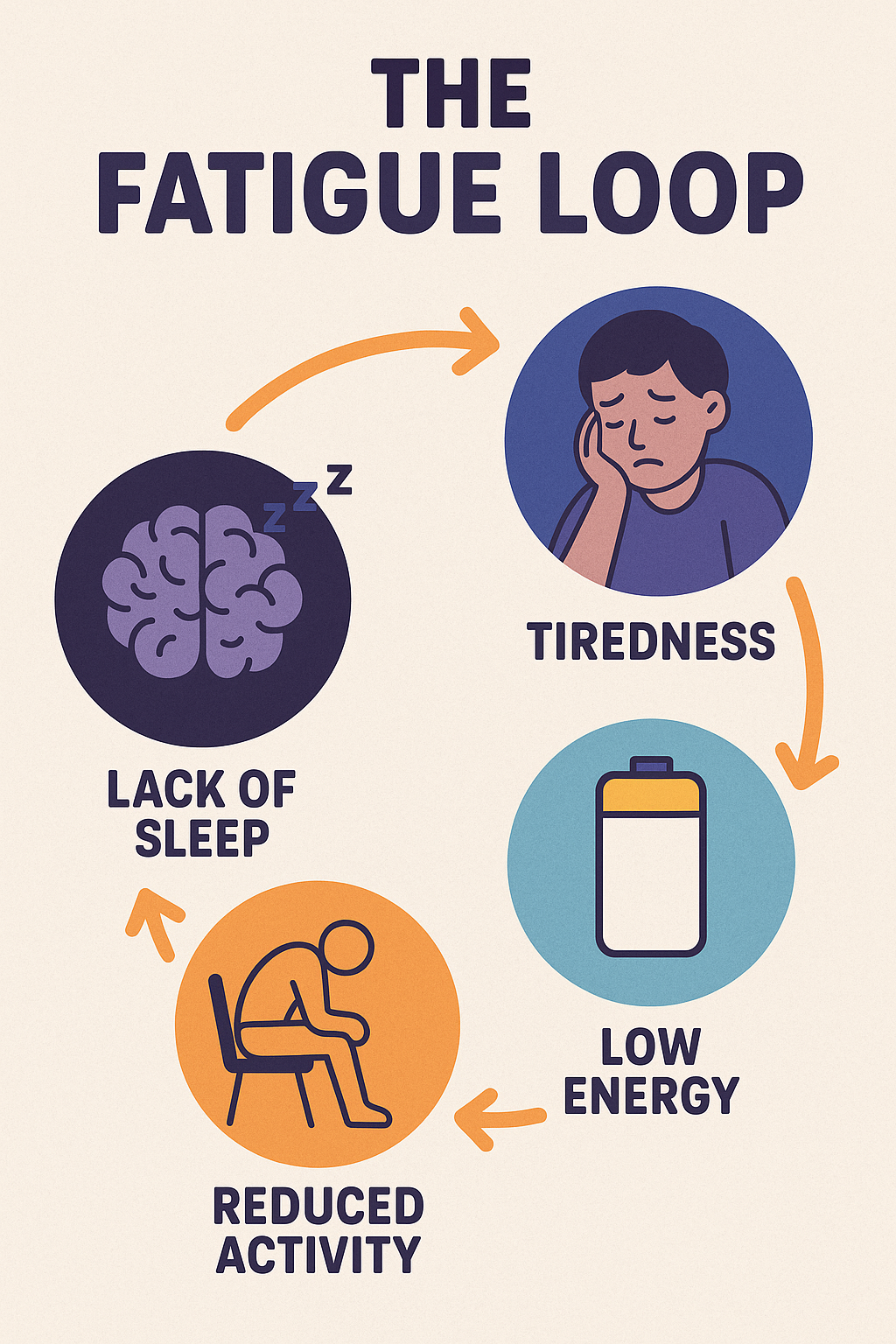
🧠 Infographic: The Fatigue Loop
❓ FAQ: Digital Overload & Focus
1. Why do I feel mentally drained after being online for just a short time?
✅ Your brain is multitasking more than you realize.
📊 Studies show switching tasks as little as 4 times in 30 minutes can cause cognitive fatigue. Stanford research revealed that digital multitaskers performed 40% worse on memory tests than those who focused on one task.
2. Can constant notifications really impair long-term focus?
✅ Yes, and the effects can be lasting.
🔬 A University of California study found that people receiving frequent alerts had 20% higher cortisol levels and were 3x more likely to report difficulty concentrating on complex tasks.
3. Is information overload affecting my memory?
✅ Absolutely. Overloading working memory leads to recall failure.
📊 Harvard research found multitasking students retained 52% less lecture content compared to those who silenced devices.
4. What’s “attentional residue” and how does it impact me?
✅ It’s when your brain partially stays with the last task while trying to focus on the next.
🧠 According to a Microsoft study, switching tabs frequently reduces mental efficiency by up to 31% and increases error rates.
5. How can I reverse focus fragmentation?
✅ Start with screen-free zones and time blocking.
🔄 Neuroscience research shows attention span recovery begins after 72 hours of structured screen detox. Practicing single-tasking and avoiding alerts can restore clarity and emotional regulation.
👤 Reader Story: "The Week I Turned Off All Notifications"
“I didn’t think I had a focus problem—until my partner pointed out I hadn’t finished a single book, movie, or conversation in months. I decided to try a no-notification challenge. I turned off every badge, buzz, and banner alert. The first day was hard—I kept instinctively checking my phone every few minutes. But by day three, I stopped reaching for it compulsively. By day seven, I got through a full work session without a single tab switch. I didn’t just get more done—I felt calmer, more creative, more present.”
🧪 Self Check: Is Digital Overload Hijacking Your Focus?
📌 Sticky CTA: Feeling digitally overwhelmed? Join the 7-day Focus Reset Challenge. Turn off alerts. Close tabs. Reclaim your brain.
🔚 Call to Action Your mind wasn’t made to handle 10,000 inputs a day. But you can train it to find clarity again.
Start with silence. Reclaim your attention. Live with intention.


