✅ TL;DR (3-Line Summary)
- Blue light exposure from screens suppresses melatonin, disrupts sleep architecture, and contributes to chronic cognitive fatigue.
- Continuous screen interaction overstimulates the brain, increases cortisol, and shortens deep sleep duration.
- In this post, we break down the neuroscience behind screen-induced insomnia and how to reclaim restorative rest.
👥 Expert Dialogue: Dr. Morgan (Sleep Scientist) & Elena (UX Designer)
Elena: Dr. Morgan, why does scrolling through my phone at night feel relaxing, but I wake up exhausted?
Dr. Morgan: That paradox is actually biological. Your phone emits short-wavelength blue light, which tricks your brain into thinking it’s still daytime. It suppresses melatonin by up to 80%, delaying your sleep onset and shortening REM and deep sleep phases.
Elena: I feel like my brain never fully shuts down anymore.
Dr. Morgan: That's screen-induced hyperarousal. When you scroll, your visual cortex, limbic system, and prefrontal cortex are all active. It's like keeping your brain in multitask mode, even when you're lying in bed.
Elena: So it’s not just the content—it’s the light and stimulation itself?
Dr. Morgan: Exactly. Every notification, every swipe triggers dopamine and micro-cortisol spikes. Over time, this fragments your circadian rhythm and creates what we now call "digital insomnia."
📱 Quick Poll
Do you check your phone within an hour of bedtime?
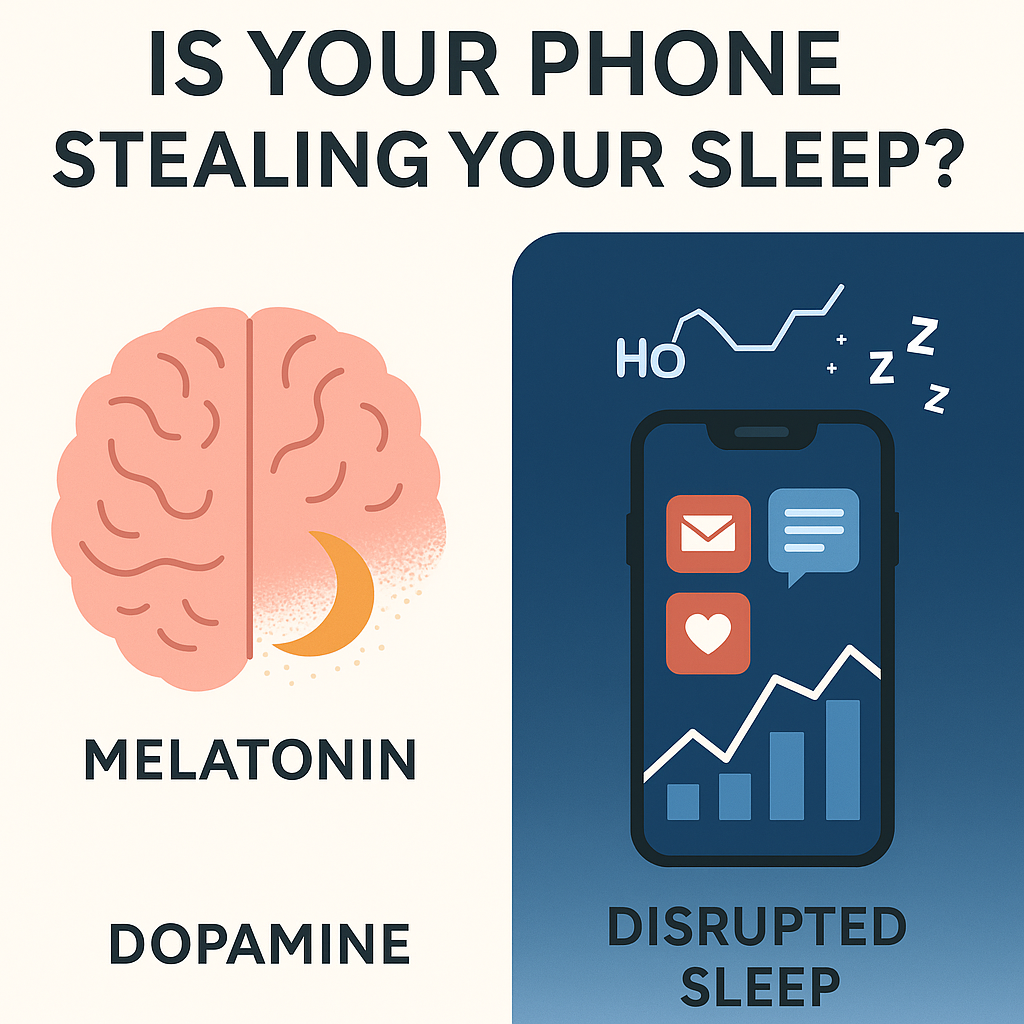
🧠 Infographic This image visualizes how screen exposure reduces melatonin and disrupts sleep cycles.
🔬 Deep Dive: Scientific Breakdown
1. Melatonin Suppression & Blue Light
Blue light, especially at 460-480nm wavelengths, inhibits the pineal gland’s melatonin production. Harvard studies show that 2 hours of nighttime blue light exposure delays melatonin onset by 90 minutes and reduces production by 40-50%.
2. Cortisol Spikes from Screen Stress
Interactive content elevates cortisol—the alertness hormone. One Stanford experiment found that social media use before bed elevates cortisol levels by 21% and delays REM onset.
3. Fragmented Sleep Architecture
Sleep studies indicate that nighttime screen use shortens slow-wave sleep (SWS) by 30% and REM by 25%, while increasing nocturnal awakenings. This results in reduced memory consolidation and emotional processing.
Chart showing reduction in REM and deep sleep associated with screen time.
4. Circadian Disruption & Brain Fog
Blue light shifts the circadian phase. When sleep is delayed, core body temperature and melatonin rhythms misalign. This desynchronization results in cognitive fatigue, decreased alertness, and decision fatigue.
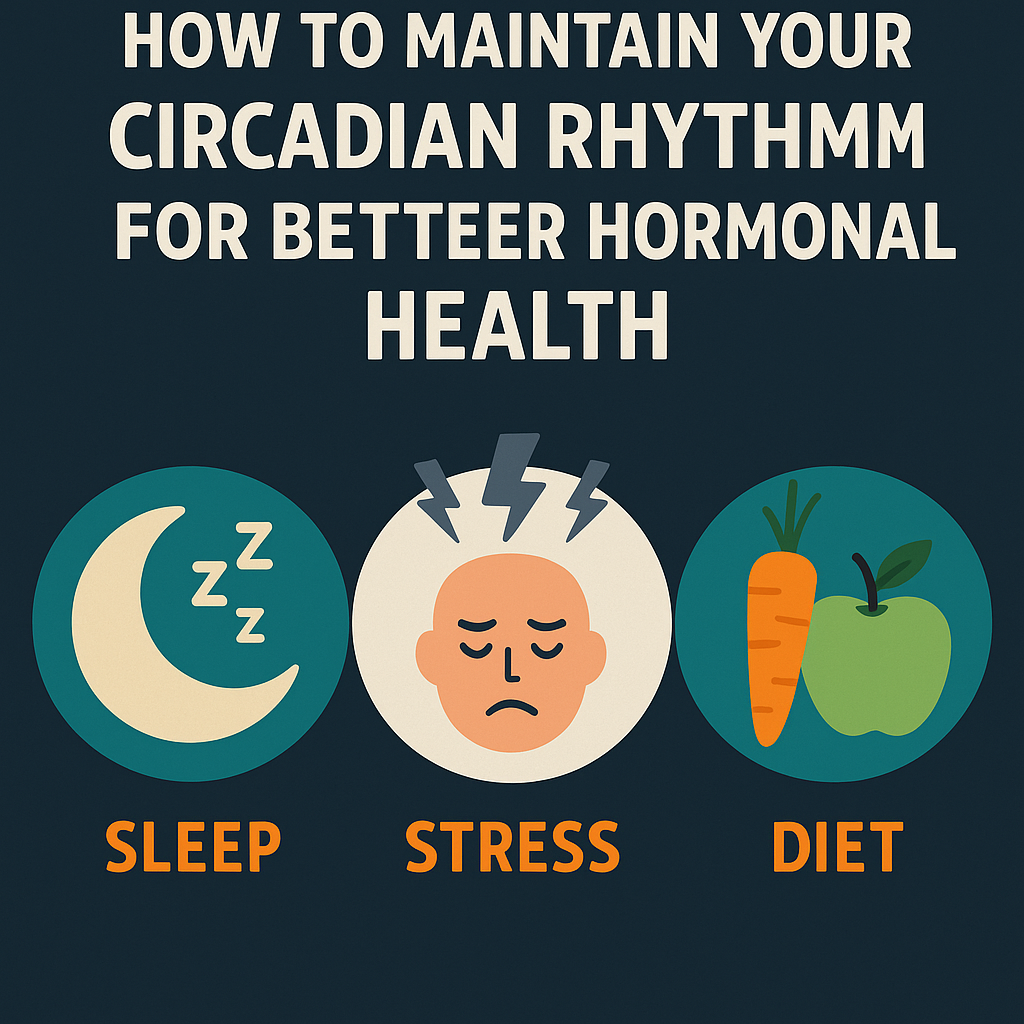
“Screen Time vs. Deep Sleep”
❓ FAQ (Sleep, Screens & Brain Health)
1. How much screen time at night is too much?
Most sleep experts agree that more than 30 minutes of screen time within an hour of bedtime can significantly affect your ability to fall asleep and reduce sleep quality. Ideally, avoid all screens 60–90 minutes before bed.
2. Can blue light filters or night mode apps fully protect your sleep?
Not entirely. While apps and device settings like Night Shift or Android's Night Mode reduce brightness and shift color temperatures, they still allow blue wavelengths to reach your eyes. For stronger protection, use blue light blocking glasses rated for 90–100% blockage in the 460nm range.
3. Does watching videos or reading on a tablet before bed have the same effect?
Yes. Light-emitting devices (including tablets and e-readers) suppress melatonin similarly to smartphones. A 2015 Harvard study showed e-readers delayed sleep onset and reduced next-morning alertness compared to print books.
4. What symptoms might indicate screen-related insomnia?
Frequent waking, difficulty falling asleep, waking up feeling unrefreshed, experiencing vivid dreams or even morning headaches may all point to overstimulated brain activity caused by screens.
5. Can I undo the damage caused by screen-induced sleep disruption?
Yes. Research from the University of Colorado found that just one week of screen restriction (no screens after sunset) restored melatonin cycles and improved deep sleep by over 15%. Sleep loss due to screens is reversible with consistent habits.
👤 Reader Story : "Why I Gave Up Screens After 9PM" "I used to think YouTube videos helped me relax after work. But I started waking up groggy every day. I tracked my sleep and saw deep sleep was under 40 minutes per night. So I did a 2-week screen detox: no screens after 9PM. By day 4, I fell asleep faster. By day 7, my deep sleep tripled. Now I feel human again."
How sleep quality, gut microbiota, and mental clarity are intertwined.
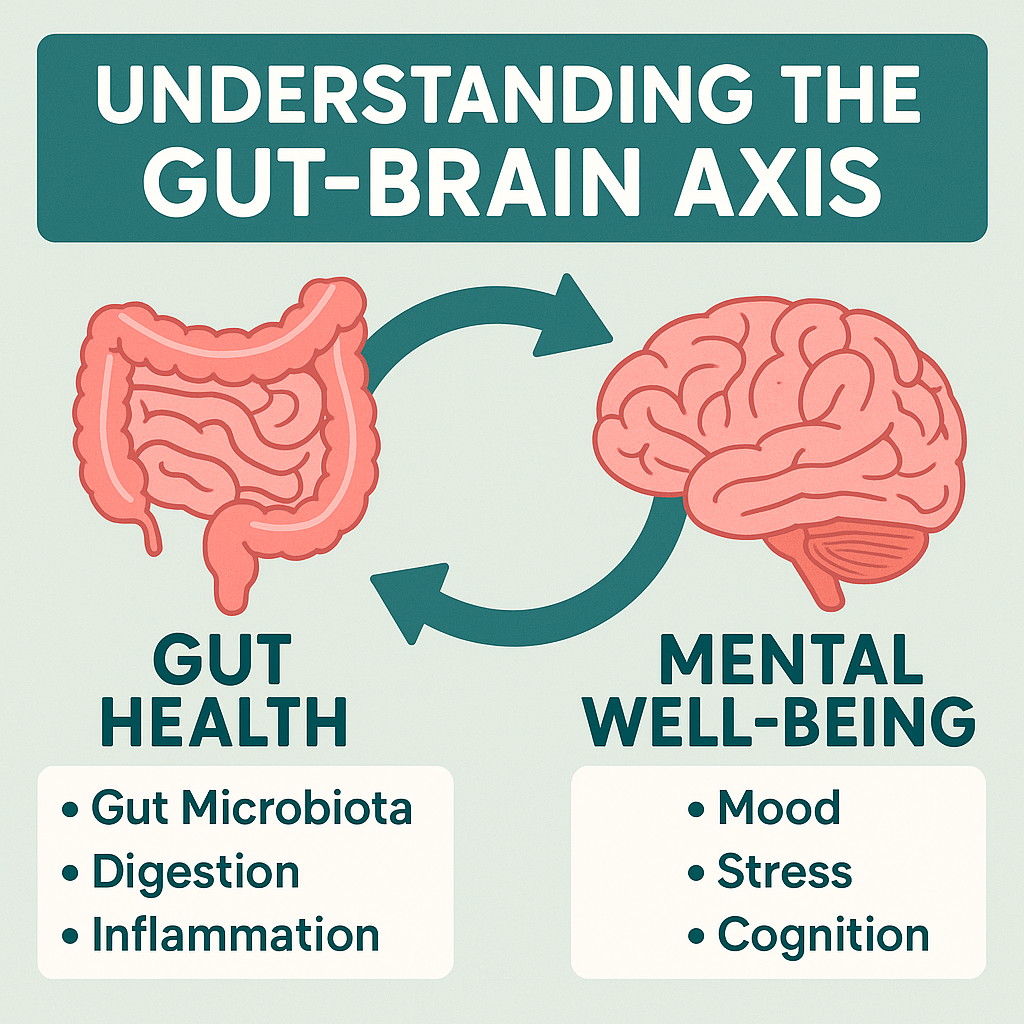
“Gut-Brain-Sleep Connection”
🧪 Self Check: Are Screens Sabotaging Your Sleep?
1. Do you feel anxious if you don't check your phone before bed?
2. Do you often scroll through your phone while lying in bed?
3. Do notifications or blue light disturb your ability to fall asleep?
4. Do you wake up feeling tired even after 7+ hours of sleep?
5. Do you check your phone if you wake up in the middle of the night?
6. Do you fall asleep with the TV or screen on?
7. Do you use screens less than 1 hour before sleep every night?
🔚 Call-to-Action Closing: Your brain isn’t wired for blue light at midnight. Yet every scroll chips away at your sleep, clarity, and resilience. Tonight, try powering down early. Let your brain rest the way nature intended.
(Internal Link Suggestions:


