🔐 TL;DR (3-Line Summary)
- Over-the-counter (OTC) sleep aids, especially antihistamines like diphenhydramine, may help you fall asleep but can impair next-day cognitive performance.
- These drugs are not designed for long-term use and can lead to dependence, tolerance, and persistent brain fog.
- This post explores the hidden neurological effects, expert insights, self-assessment, and what safer options exist.
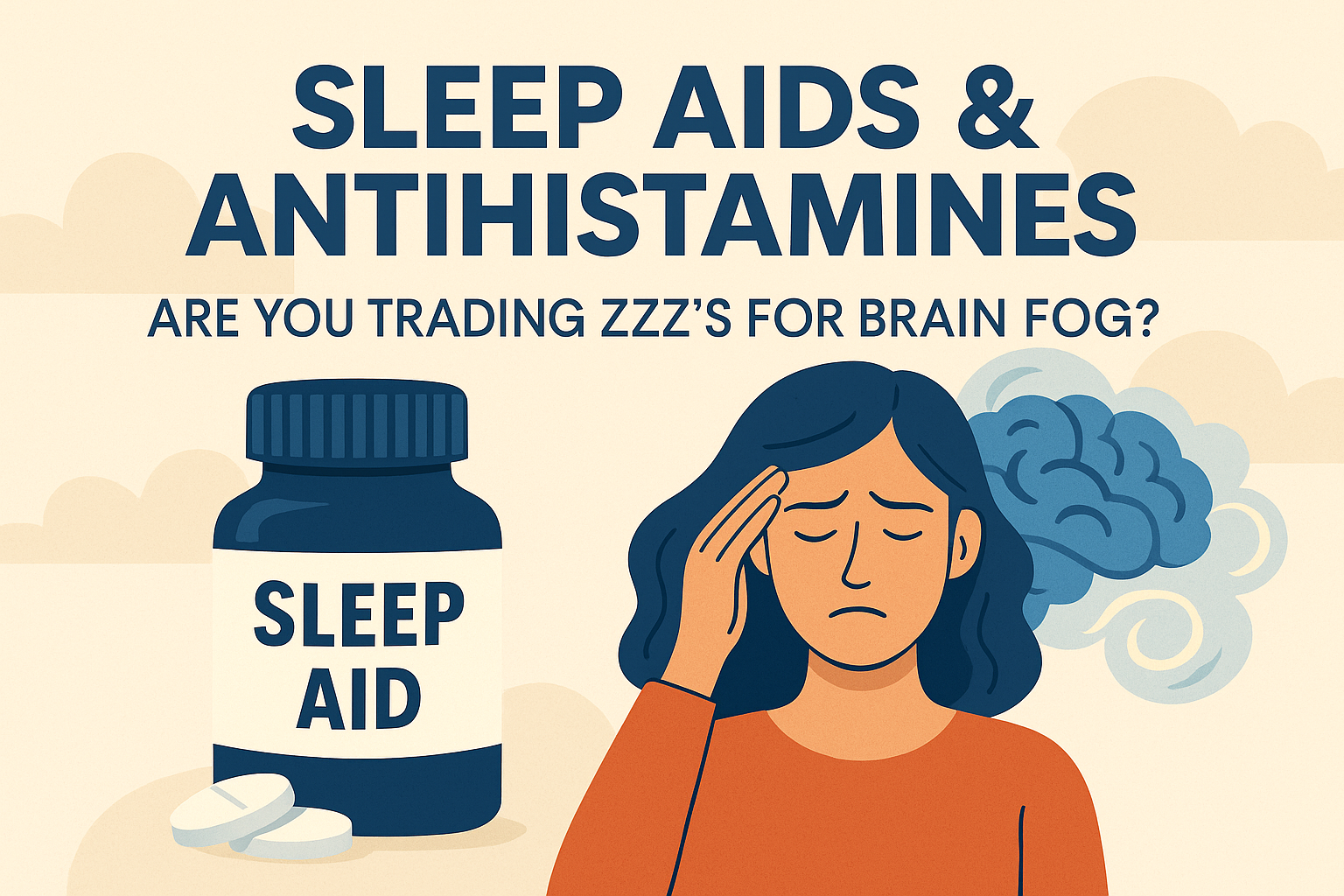
Alt text: "Sleep Aids & Antihistamines – Are You Trading Zzz’s for Brain Fog?" showing a woman with brain fog next to a sleep aid bottle, emphasizing the cognitive side effects of common OTC sleep medications.
💬 Expert Dialogue: Sleep Specialist vs. Allergist
Dr. Rachel Minh (Sleep Medicine): "Many of my patients grab a bottle of Unisom or Benadryl without realizing they’re taking a first-generation antihistamine with serious brain implications."
Dr. Alan Morse (Allergist & Immunologist): "Exactly. Diphenhydramine is meant for allergic reactions, not chronic insomnia. But its sedative side effect is misused."
Dr. Minh: "We now know it disrupts REM sleep and leaves anticholinergic residues in the brain. That’s where the brain fog comes from."
Dr. Morse: "And older adults are particularly vulnerable. The Beers Criteria lists these as potentially inappropriate medications for seniors due to confusion and fall risks."
Dr. Minh: "Ironically, patients use them to fix sleep, but long-term they degrade cognitive performance. It’s a slow neurological tax."
🔬 How Antihistamines Affect Your Brain
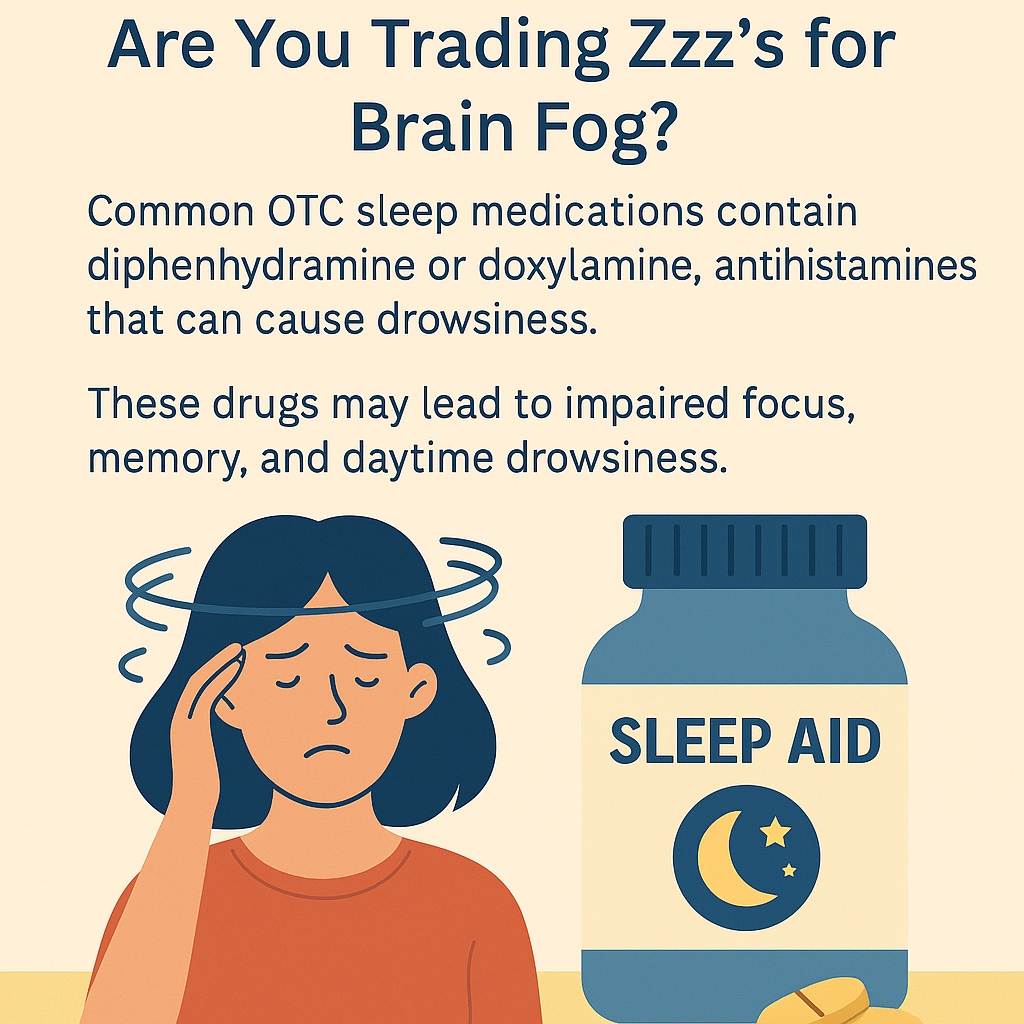
Alt text : Infographic illustrating how first-generation antihistamines like diphenhydramine cross the blood-brain barrier, leading to sedation, delayed cognition, and brain fog.
First-Gen vs. Second-Gen Antihistamines
- First-Generation (e.g., diphenhydramine, doxylamine): Cross the blood-brain barrier, sedating.
- Second-Generation (e.g., loratadine, cetirizine): Do not cross as easily; fewer cognitive side effects.
Brain Fog and Acetylcholine Suppression
- Diphenhydramine blocks acetylcholine receptors.
- This can lead to confusion, slower memory formation, and a feeling of disconnection or fatigue.
⚠️ Long-Term Use: Tolerance, Dependence & Cognitive Decline
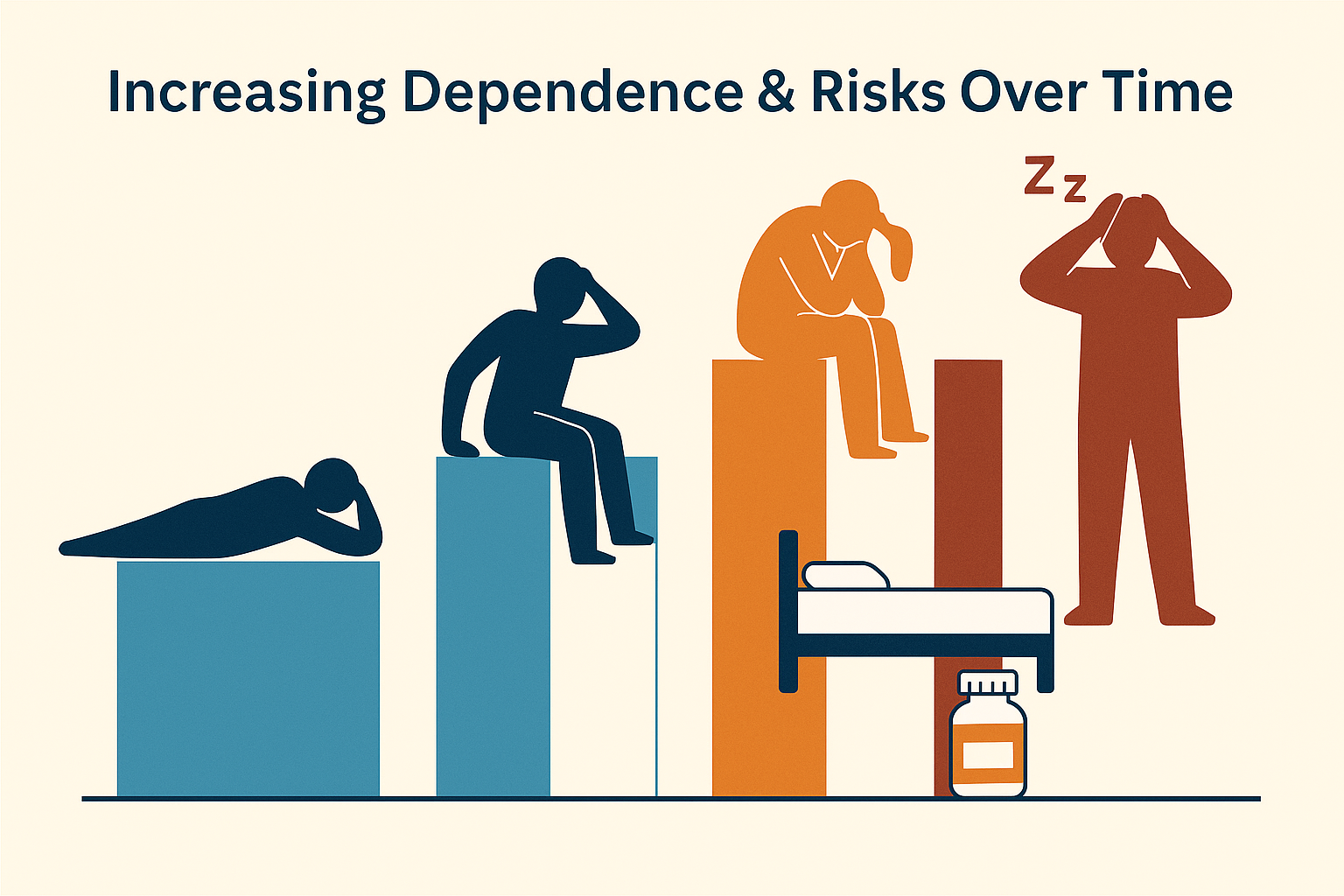
Alt text : "Increasing Dependence & Risks Over Time" showing four stages of worsening sleep and rising medication reliance, ending with a figure experiencing brain fog and a pill bottle by the bed.
- Week 1-2: Effective for initiating sleep.
- Week 3-4: Brain adjusts. Increased tolerance. Grogginess appears.
- Week 5-6: Reduced effectiveness. Users increase dose or add alcohol.
- After 6+ weeks: Daytime drowsiness, cognitive fog, and possible withdrawal insomnia if stopped.
❓ FAQ: Common Questions About OTC Sleep Aids
Q1: How long can I safely use OTC sleep aids?
A: No more than 2 consecutive weeks. Longer use increases risk of cognitive impairment and physical dependence.
Q2: What’s the most common side effect?
A: Morning drowsiness and cognitive fog. In one study, 47% of diphenhydramine users reported trouble concentrating the next day.
Q3: Are "PM" formulas worse?
A: Many contain both pain relievers (acetaminophen/ibuprofen) and diphenhydramine. This increases the risk of overdose and liver strain if misused.
Q4: Do these affect older adults more?
A: Yes. Cognitive decline, memory loss, and fall risks are significantly higher in seniors due to slower metabolism and higher brain permeability.
Q5: What are safer alternatives?
A: Melatonin (short-term), CBT-I therapy, magnesium, and proper light hygiene. Consult a doctor before switching strategies.
🧪 Sleep Aid Dependency Interactive Quiz
🔍 Quick Poll
Do you feel foggy the morning after taking OTC sleep aids?
💬 Share your experience in the comments below!
📅 Reader Story
"I used to pop Benadryl every night because it helped me doze off fast. But after two months, I couldn’t focus at work, felt detached in conversations, and had no energy. My doctor helped me taper off and start magnesium + light therapy. Game changer."
🔍 Sticky CTA
Is brain fog worth one night of sleep? Audit your OTC habits, talk to your provider, and reclaim your clarity.


