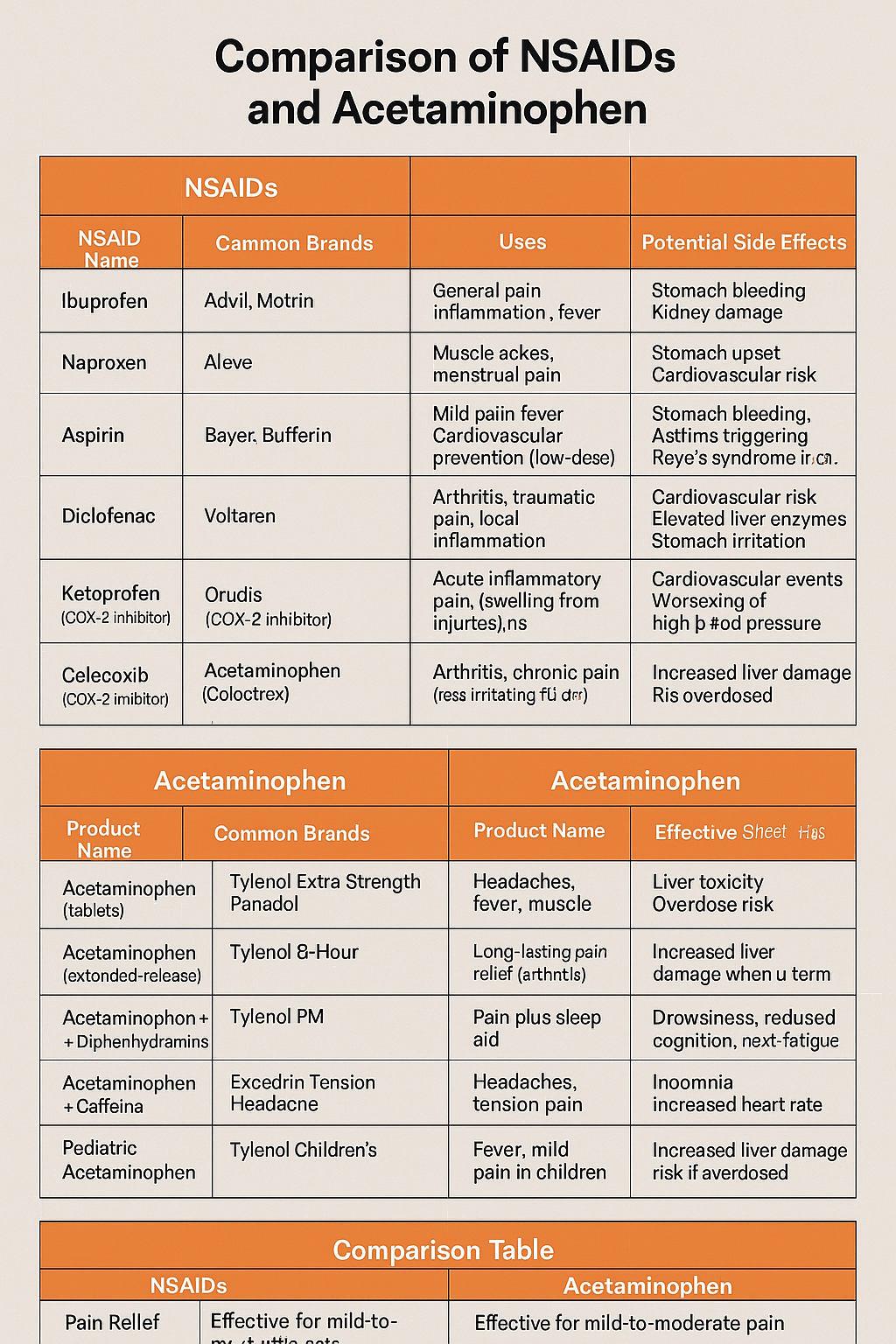
Alt text: Infographic comparing NSAIDs and Acetaminophen across multiple categories including mechanism of action, GI safety, liver risk, heart/kidney effects, best use cases, and common brand names.
🧠 Why This Comparison Matters
NSAIDs (Nonsteroidal Anti-inflammatory Drugs) and Acetaminophen (also known as Paracetamol) are the world’s most commonly used pain relievers. While both are available over the counter and seem similar, their mechanisms, safety profiles, and recommended uses are quite different. Misunderstanding those differences could lead to serious health consequences—from gastrointestinal bleeding to liver damage.
In this post, we break down everything you need to know: drug types, brand names, best uses, side effects, and how to decide what’s right for your body.
🔍 NSAID Comparison Table
Drug NameCommon BrandPrimary UsesCommon Side Effects
| Ibuprofen | Advil, Motrin | Fever, headache, muscle pain | GI bleeding, kidney stress, blood pressure ↑ |
| Naproxen | Aleve | Arthritis, menstrual cramps | GI ulcers, cardiovascular risk |
| Aspirin | Bayer | Mild pain, heart attack prevention | GI bleeding, Reye's syndrome (children) |
| Diclofenac | Voltaren | Arthritis, localized pain | Liver enzyme elevation, GI issues |
| Celecoxib | Celebrex | Chronic pain, arthritis | Heart attack, stroke risk |
💊 Acetaminophen Formulations
| Form | Common Brand | Use Case | Caution |
| Regular tablets | Tylenol | Mild pain, fever | Liver damage at high doses |
| Extended-release | Tylenol 8-Hour | Chronic pain relief | Overdose if misused |
| With Diphenhydramine | Tylenol PM | Sleep + pain | Sedation, confusion in elderly |
| With Caffeine | Excedrin | Tension headache | Insomnia, jitteriness |
| Pediatric formula | Children's Tylenol | Fever/pain in kids | Must be dosed by weight |

⚖️ Head-to-Head Comparison
| Category | NSAIDs | Acetaminophen |
| Mechanism | Anti-inflammatory (COX inhibitor) | Central pain and fever reducer |
| GI Safety | ❌ Risk of ulcers/bleeding | ✅ Safer on stomach |
| Liver Safety | ✅ Generally safe | ❌ Liver toxicity risk above 3,000mg/day |
| Heart/Kidney Risk | ❌ May worsen BP or fluid retention | ✅ Safer in heart disease patients |
| Fever Reduction | ✅ Yes | ✅ Yes |
| Inflammatory Pain | ✅ Most effective | ⚠ Less effective |
| Best For | Arthritis, sprains, dental pain | Headache, fever, post-surgery pain |
🧨 Risk Factors to Consider
| Risk Factor | NSAIDs Caution | Acetaminophen Caution |
| Age over 60 | High GI bleed risk | Slower liver metabolism |
| Alcohol Use | Bleeding risk increases | Liver toxicity risk multiplies |
| Heart/Kidney Issues | May raise BP, fluid retention | Generally safer |
| Liver Disease | Usually safer | Should be avoided |
| Blood Thinners | Bleeding risk | Generally safer if dosed correctly |
🧭 So Which One Should You Choose?
- Use NSAIDs if: You need anti-inflammatory action (e.g., arthritis, swollen joints).
- Use Acetaminophen if: You have fever, headaches, or stomach sensitivity.
- Avoid both if: You’re using them longer than 7 days without improvement.
Always talk to your doctor if you:
- Take prescription medications
- Have chronic conditions
- Need pain relief more than 3 times per week
✅ Pro Tip: Don’t Mix Without Tracking
While alternating acetaminophen and NSAIDs can be safe in some situations (like after dental surgery), doing so without timing or dose control can quickly exceed safe limits.
🕐 Use a medication log.
📋 Read the label—many combo cold meds already contain acetaminophen.
🧪 Personalized Painkiller Recommendation
Answer the questions below to find out which type of medication best suits your needs and health risks.
📝 Interactive Quiz: NSAID or Acetaminophen?
📚 Related Posts
- What Are OTC Drugs—and Are They Really Safe?
- Cold & Flu OTCs: What Works and What Doesn’t
- Natural Alternatives to Painkillers


