TL;DR (Too Long; Didn't Read)
- Silent inflammation is a chronic, low-grade inflammation that can disrupt hormonal balance and lead to various health issues.
- Anti-inflammatory diets rich in whole foods, healthy fats, and antioxidants can help mitigate this condition.
- Avoiding processed foods, excessive sugars, and unhealthy fats is crucial in reducing inflammation.

Alt Text: "Flat lay of anti-inflammatory foods including leafy greens, berries, salmon, olive oil, and turmeric arranged on a clean wooden table."
Understanding Silent Inflammation
Silent inflammation is a persistent, low-level inflammation that doesn't cause noticeable symptoms initially but can lead to serious health problems over time. It's associated with conditions like heart disease, diabetes, and hormonal imbalances. Diet plays a significant role in either exacerbating or alleviating this inflammation.
🥗 Anti-Inflammatory Lifestyle Self-Check
Answer the questions below to check if your current lifestyle may be fueling silent inflammation.
Foods That Fight Inflammation
1. Fruits and Vegetables
Rich in antioxidants and phytochemicals, these help neutralize free radicals.
- Berries: Blueberries, strawberries, and raspberries are high in anthocyanins.
- Leafy Greens: Spinach, kale, and collards provide vitamins A, C, and K.
- Cruciferous Vegetables: Broccoli and Brussels sprouts contain sulforaphane, a potent anti-inflammatory compound.
2. Healthy Fats
Essential for hormone production and reducing inflammation.
- Olive Oil: Extra virgin olive oil is rich in monounsaturated fats and polyphenols.
- Avocados: Contain monounsaturated fats and antioxidants.
- Nuts and Seeds: Almonds, walnuts, flaxseeds, and chia seeds offer omega-3 fatty acids.
3. Fatty Fish
Salmon, mackerel, sardines, and tuna are high in omega-3 fatty acids, which have been shown to reduce inflammation.
4. Whole Grains
Brown rice, quinoa, and oats provide fiber, which helps reduce levels of C-reactive protein (CRP), a marker of inflammation.
5. Spices
Certain spices have anti-inflammatory properties.
- Turmeric: Contains curcumin, known for its anti-inflammatory effects.
- Ginger: Can reduce inflammation and pain.
- Cinnamon: Has antioxidant and anti-inflammatory properties.
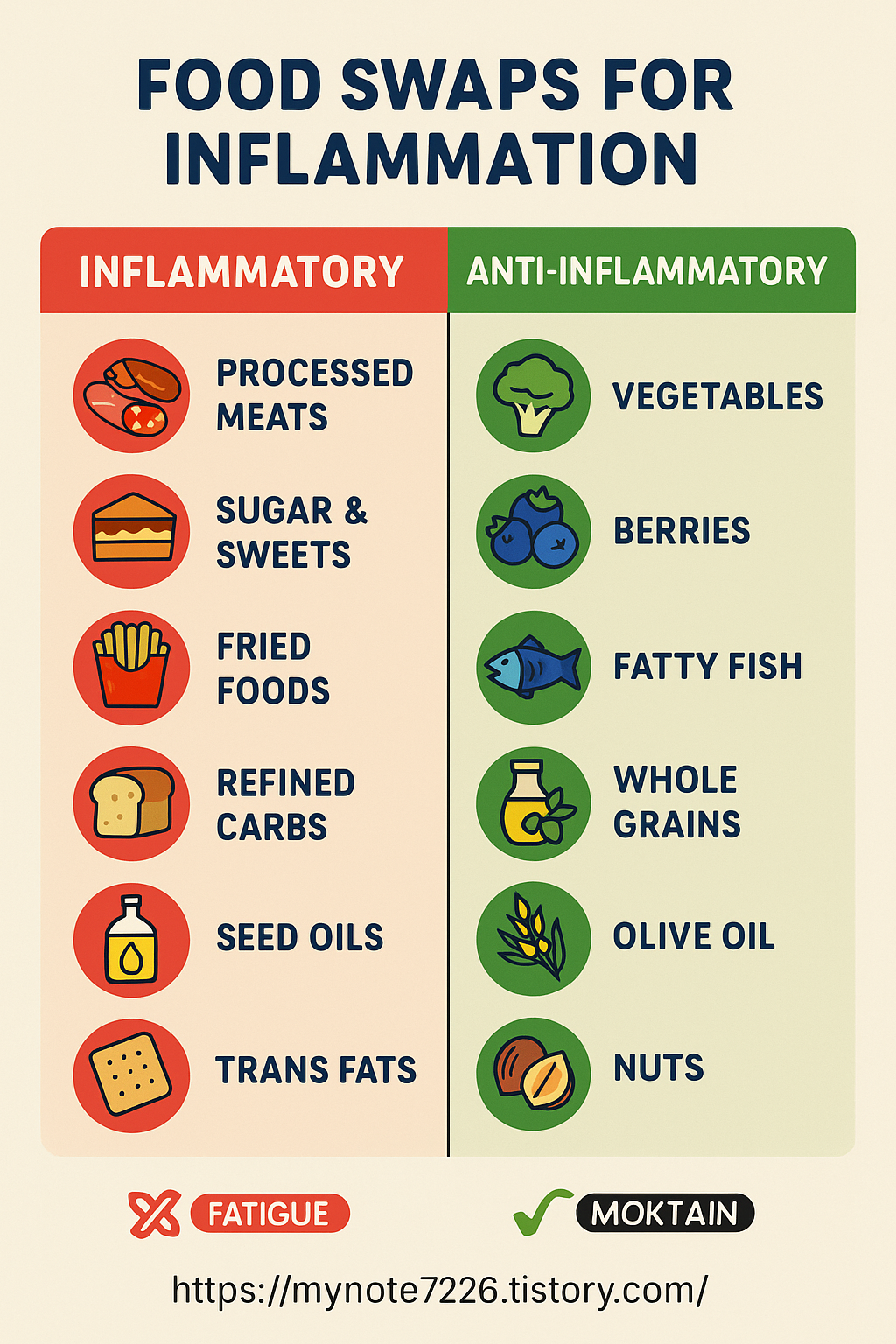
Alt Text: "Infographic chart comparing inflammatory vs. anti-inflammatory foods, showing processed meats, sugar, and trans fats versus vegetables, fish, and nuts."
Foods to Avoid
1. Processed Foods
Often high in trans fats, sugars, and additives that promote inflammation.
2. Refined Carbohydrates
White bread, pastries, and other refined carbs can spike blood sugar levels, leading to increased inflammation.
3. Sugary Beverages
Sodas and sweetened drinks are linked to higher inflammatory markers.
4. Red and Processed Meats
High consumption is associated with increased inflammation and disease risk.
5. Excessive Alcohol
Can increase inflammation and weaken the immune system.
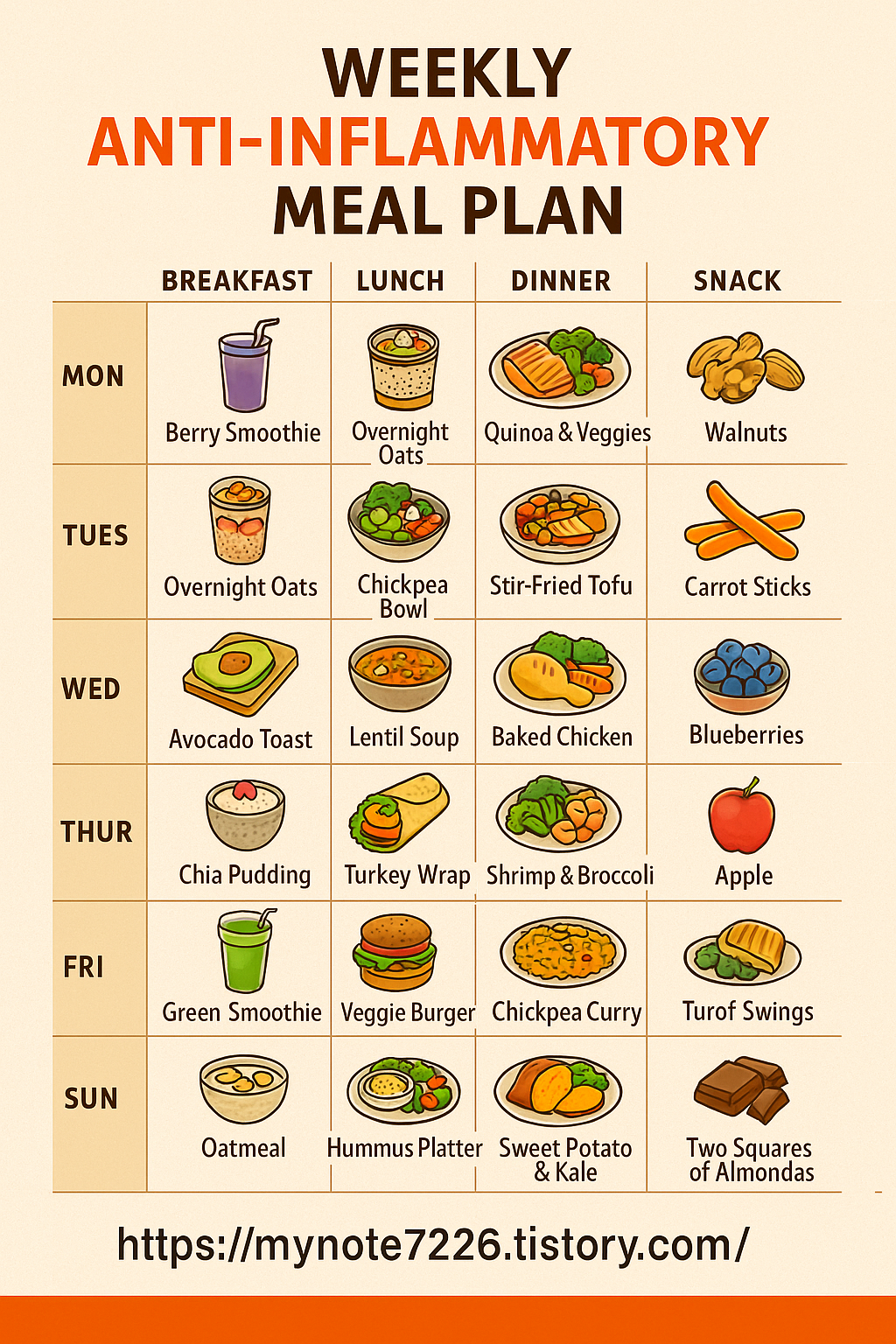
Alt Text: "Weekly anti-inflammatory meal plan with illustrated portions of breakfast, lunch, dinner, and snacks based on whole foods and clean eating principles."
Sample Anti-Inflammatory Meal Plan
Breakfast
- Oatmeal topped with blueberries, chia seeds, and a drizzle of honey.
- Green tea.
Lunch
- Grilled salmon salad with mixed greens, cherry tomatoes, avocado, and olive oil dressing.
- Whole grain bread slice.
Snack
- A handful of walnuts and an apple.
Dinner
- Quinoa with steamed broccoli, roasted sweet potatoes, and grilled chicken.
- Herbal tea.
Expert Insights
Dr. Jane Smith, Nutritionist:
"Incorporating anti-inflammatory foods into your diet not only helps reduce chronic inflammation but also supports overall hormonal balance and well-being."
🧠 FAQ: Inflammation-Fighting Diet
1. Can diet alone reduce chronic inflammation?
A:
Yes, but it works best in combination with sleep, movement, and stress control.
📊 A 2021 review in Nutrients showed that the Mediterranean diet lowered CRP levels (a key inflammation marker) by an average of 20–30% across multiple studies.
✅ Eliminate pro-inflammatory foods and emphasize omega-3s, polyphenols, and fiber to suppress immune overactivation.
2. Which foods cause the most inflammation?
A:
- Refined sugars and high-fructose corn syrup
- Trans fats (e.g., margarine, shortening)
- Processed meats (e.g., bacon, hot dogs)
- Seed oils high in omega-6 (soybean, corn oil)
These foods raise IL-6, TNF-alpha, and CRP, which are linked to chronic diseases like diabetes, arthritis, and heart disease.
🛑 A 2020 study found that just one fast-food meal elevated inflammatory markers for up to 6 hours.
3. How does an anti-inflammatory diet improve hormone balance?
A:
Chronic inflammation interferes with the HPA axis and insulin signaling.
✔️ Anti-inflammatory diets lower insulin resistance, stabilize cortisol, and support estrogen metabolism via the liver.
📚 Research in Endocrine Reviews (2020) shows that diets high in fiber and omega-3s reduce hormonal imbalances in PCOS and menopause by modulating inflammatory cytokines.
4. How long does it take for inflammation to go down with dietary changes?
A:
⏱️ Most people report noticeable results within 2 to 4 weeks, especially with joint pain, brain fog, or fatigue.
📈 Clinical trials have shown that switching to an anti-inflammatory diet can reduce CRP by over 1 mg/L in under a month.
However, gut and hormonal healing may take 3–6 months depending on baseline severity.
5. What are 3 simple steps I can take today to start?
A:
- ✅ Swap vegetable oil with extra virgin olive oil
- ✅ Add 1 handful of berries or leafy greens to every meal
- ✅ Avoid sugary drinks and hydrate with filtered water or herbal tea
📊 These three steps alone can lower oxidative stress and inflammation within a week.
They also improve gut microbiota diversity, which regulates immune tone and inflammation thresholds.
Conclusion
Adopting an anti-inflammatory diet is a proactive step towards reducing silent inflammation and promoting overall health. By making informed food choices and combining them with a healthy lifestyle, you can mitigate the risks associated with chronic inflammation.
For more insights and personalized advice, visit our blog at https://mynote7226.tistory.com.


