Digital Overload Part - 3
TL;DR: Screens & Sleep Disruption
Your brain needs melatonin to sleep—but your screens are messing with that process. In this post, we’ll explore how nighttime tech use disrupts your natural rhythm, why melatonin suppression is a hidden epidemic, and the best science-backed ways to fix it (without tossing your phone).
Reader Question: “Why do I feel wide awake after scrolling in bed? I’m exhausted, but my brain won’t shut off.”
🧠 Expert Dialogue: Light vs. Sleep
Emma (Behavioral Coach): Dr. Mehta, I’ve had so many clients tell me they’re tired but can’t sleep—especially after being on their phones. What’s happening biologically?
Dr. Priya Mehta (Integrative MD): The short answer? Blue light is blocking their melatonin. Melatonin is your body’s natural "sleep switch," and it’s extremely sensitive to light—especially the kind from screens.
Emma: So just checking texts at night can delay sleep?
Dr. Mehta: Yes. Studies show even 30 minutes of screen use before bed can delay melatonin release by over 90 minutes. Your brain thinks it’s still daytime.
Emma: What about night mode or blue light filters?
Dr. Mehta: Better than nothing—but not enough. The intensity of light and emotional stimulation from content also matters. Doomscrolling at midnight triggers stress, not rest.
Emma: So we’re not just losing time—we’re damaging our rhythms.
Dr. Mehta: Exactly. And over time, it leads to insomnia, mood disorders, hormonal imbalance, and even weight gain.
🌙 Self-Check: Is Screen Time Harming Your Sleep?
Take this 10-question quiz to find out if screens are silently disrupting your melatonin, sleep quality, and nighttime rhythm.
🔬 What Science Says About Screens and Sleep
- 🔵 Melatonin levels drop by up to 55% with nighttime screen exposure (Harvard Medical School)
- 💡 Circadian misalignment is now classified as a sleep disorder in chronic tech users
🧠 REM sleep is reduced in people who scroll in bed vs. those who journal or meditate
Emma: It’s like tech is training our brains to stay alert at the exact moment they should be resting.
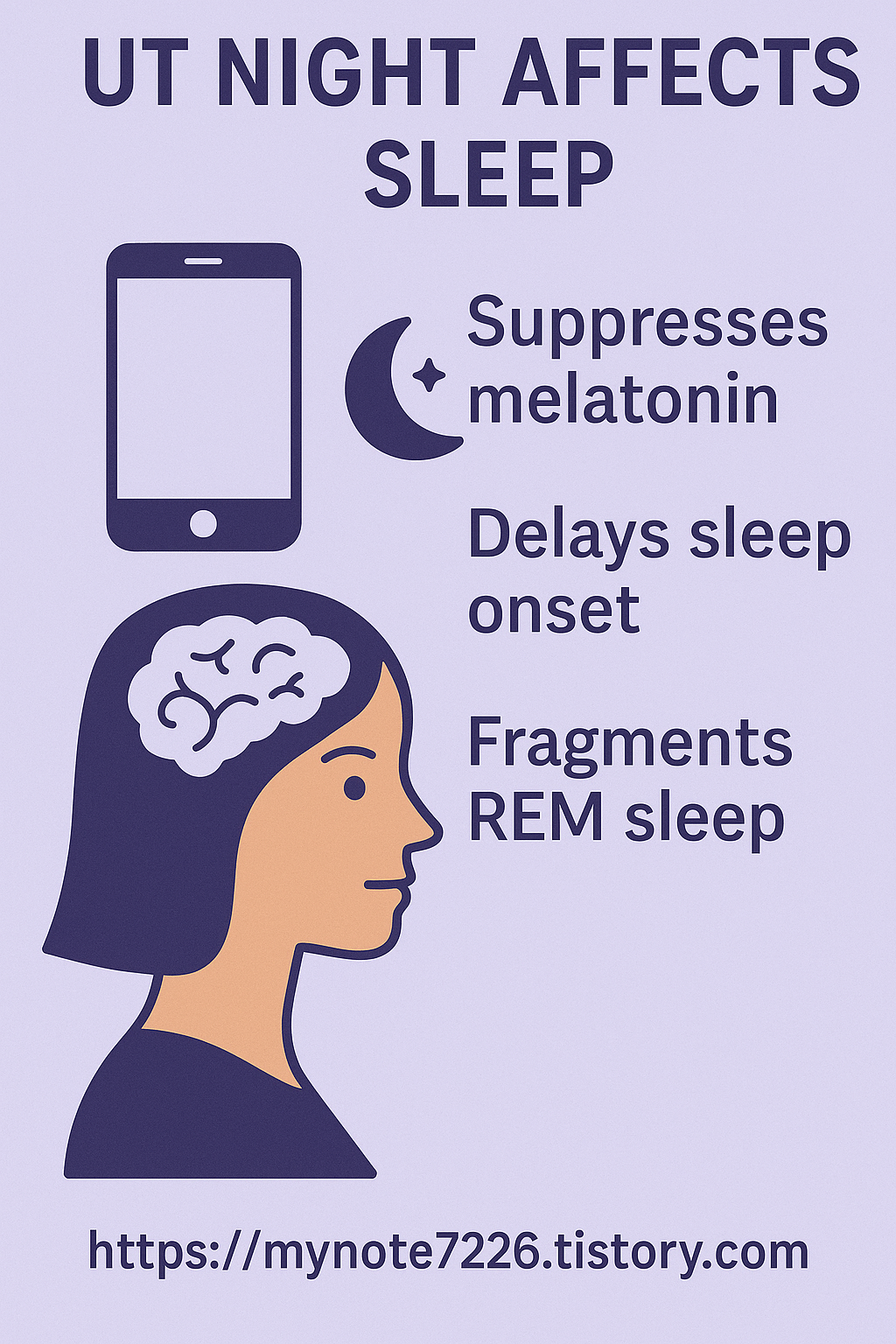
alt text: “Infographic showing how screen use at night suppresses melatonin, delays sleep onset, and fragments REM sleep, with phone and moon icons.”
🛌 Symptoms of Screen-Disrupted Sleep
- ❗ Struggling to fall asleep despite feeling tired
- ❗ Waking up at 2–3 AM without reason
- ❗ Groggy mornings even after 7+ hours in bed
- ❗ More vivid dreams or nightmares
- ❗ Mood swings or irritability during the day
⏳ Real Reader Moment: Jordan’s 3AM Loop
“I kept waking up between 3–4 AM, scrolling for a ‘few minutes,’ then suddenly it’s 5:30. My whole day was off. I finally bought a real alarm clock and put my phone outside the bedroom. First week was hard. Second week—I was sleeping like I hadn’t in years.”
🔧 Practical Fixes (That Actually Work)
1. Blue-blocking glasses after sunset 😎
Helps reduce melatonin suppression even if screens are still used.
2. Switch to ‘dimmer’ media 📖
Try reading fiction or listening to soft music instead of Instagram.
3. No screens 90 minutes before sleep ⏰
This matches your body’s natural melatonin curve.
4. Get morning sunlight ☀️
This sets your circadian rhythm correctly and helps melatonin rise at night.
5. Keep devices out of the bedroom 🚪
Create a tech-free zone and go old-school with a book or journal.
Dr. Mehta: “You’re not weak. You’re just light-exposed. Give your brain darkness—and it will reward you with deep, healing rest.”
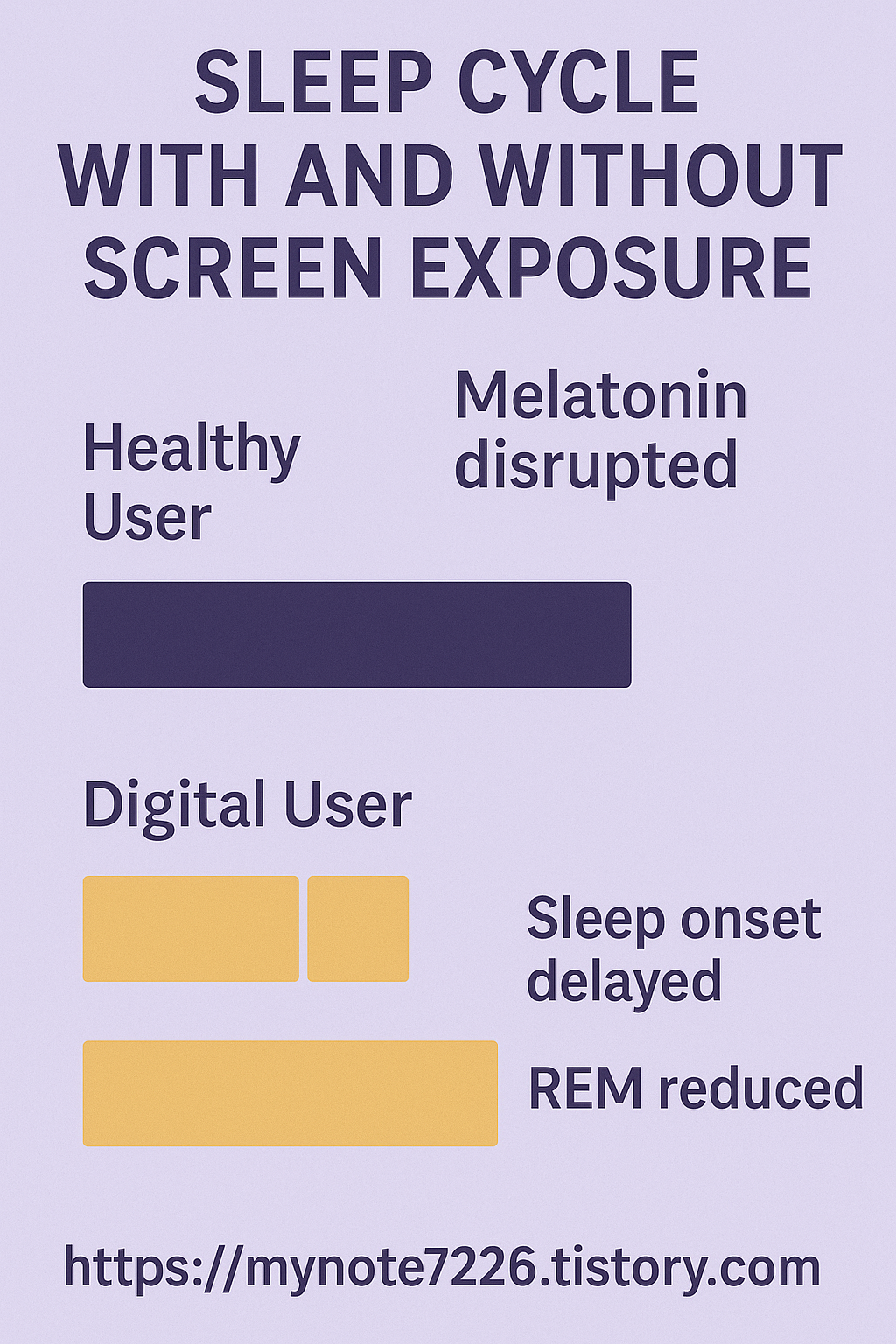
alt text: “Chart comparing healthy sleep cycle with and without screen exposure, showing disrupted melatonin, REM reduction, and delayed onset in digital users.”
🤔 FAQ: What Readers Ask About Screens & Sleep
1. Can screen time really delay sleep that much?
Yes. Just 30 minutes of blue light exposure can shift your sleep-wake cycle by over an hour. Consistent use compounds the effect.
2. Does ‘Night Shift’ or ‘Night Mode’ work?
It helps a little, but studies show it only blocks ~15–20% of melatonin suppression. Full-spectrum filters or glasses are more effective.
3. What if I need screens for bedtime wind-down?
Then use warm, low-light apps like journaling, ambient music, or gentle podcasts. Avoid anything that scrolls or stimulates.
4. Why do I wake up at 3AM after scrolling?
Your brain was artificially kept alert and hasn't reached deep restorative sleep. It resets and snaps you awake when stress hormones rise.
5. Can melatonin supplements fix this?
Only short-term. They can help reset rhythm, but without screen habit change, you’re just masking the root problem.
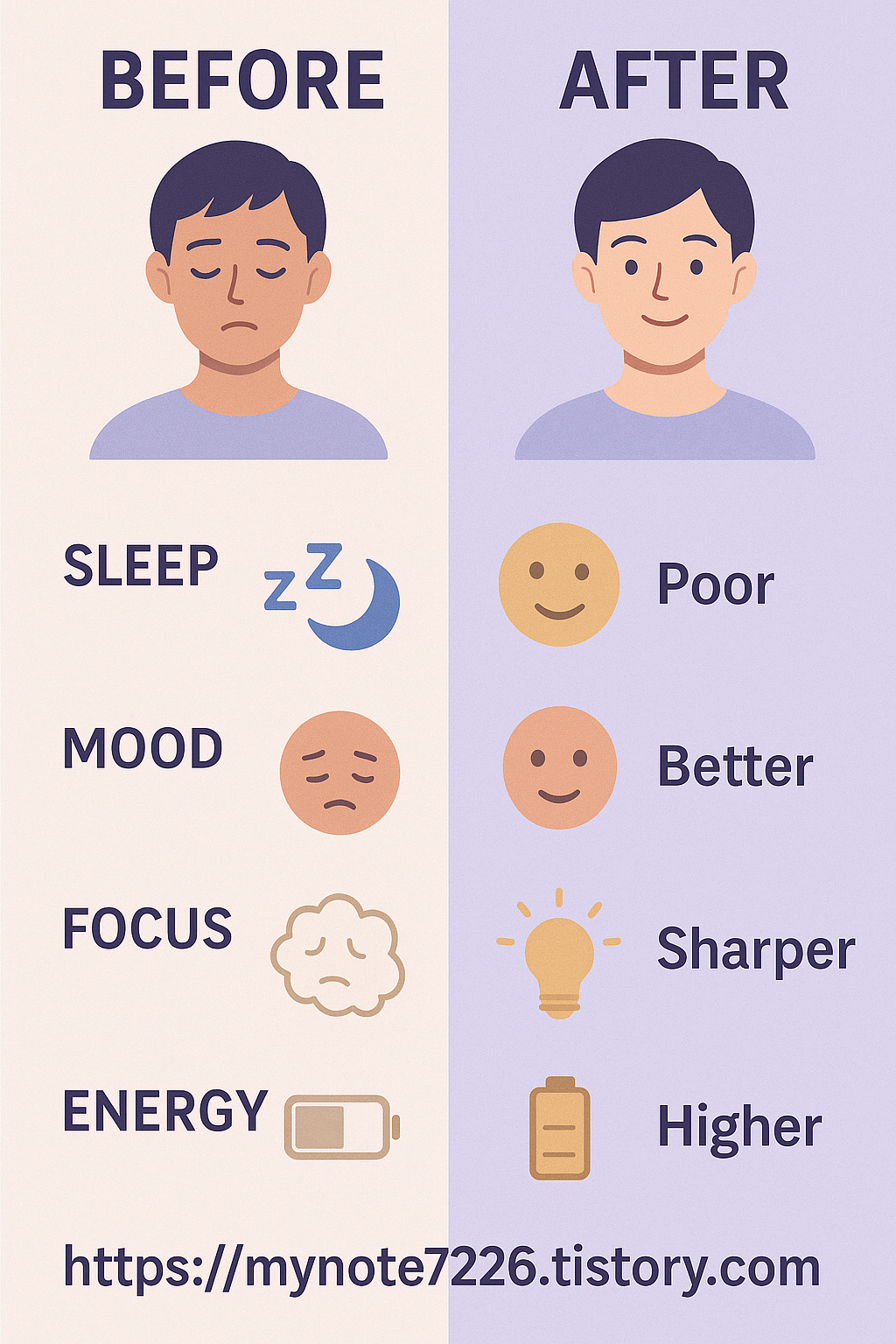
alt text: “Comparison of person’s sleep, mood, focus, and energy before vs after reducing screen use, with soft colors and calming icons.”
🌐 External Reading You’ll Love:
🔄 Navigation
- ⬅️ Previous: Part 2 – Dopamine Hijack
- ➡️ Next: Part 4 – Digital Burnout vs. Classic Burnout
- 📚 All Posts in the Digital Detox Series
🌌 Final Word
This isn’t about quitting screens. It’s about choosing rest over reflex.
Give your brain the dark it craves. Let melatonin lead. 💤
📚 Click here to explore 14 health series, curated to help you feel better, think clearer, and live stronger.

'Mental Health & Well-being' 카테고리의 다른 글
| 7-Day Digital Detox Plan (With Checklists and Self-Tests) (21) | 2025.05.27 |
|---|---|
| 🧠Digital Burnout vs. Classic Burnout – Know the Difference (38) | 2025.05.26 |
| Dopamine Hijack – How Apps Are Rewiring Your Brain (12) | 2025.05.24 |
| What Is Digital Overload? Understanding Tech-Induced Brain Fog (10) | 2025.05.24 |
| 🚀 Digital Detox Protocol: Reclaiming Focus in an Overstimulated World (24) | 2025.05.23 |


