Digital Overload Part - 4
TL;DR: Digital Burnout vs. Classic Burnout
Not all burnout looks the same. Classic burnout is emotional exhaustion from overwork. Digital burnout, though? It's subtle, sneaky, and often goes undiagnosed. This post unpacks the newest form of exhaustion in the tech age—how it differs from traditional burnout and what to do when your brain is maxed out but your body hasn't moved.
Reader Question: “I’m not overworked. I’m just… always tired and blank. Can screens burn me out even if I’m ‘doing nothing’?”
🧠 Expert Dialogue: The Burnout No One Sees Coming
Emma (Behavioral Coach): Dr. Rivera, I keep seeing clients who aren’t overwhelmed by tasks—but they feel completely drained. They say they’re “mentally blank.”
Dr. Alan Rivera (Neuropsychologist): That’s digital burnout. It doesn’t come from hustle—it comes from hyperstimulation. Your brain is overloaded by micro-decisions, attention shifts, and digital noise.
Emma: So it’s not about being too busy. It’s about being mentally fragmented?
Dr. Rivera: Precisely. Classic burnout is output fatigue—too much doing. Digital burnout is input fatigue—too much consuming. And the signs can be very different.
🔥 Self-Check: Are You Digitally Burned Out?
Take this 10-question quiz to assess whether your exhaustion is rooted in digital burnout rather than classic overwork.
🔬 What’s Actually Happening in Your Brain
- 🧩 Prefrontal cortex fatigue from constant task switching (apps, tabs, alerts)
- 🛑 Reduced dopamine resilience from micro-stimulation loops
- 🌫️ Low-grade anxiety from never fully disengaging
- 💤 Restless rest—even your downtime is noisy
Emma: No wonder people say they’re exhausted but didn’t do anything. Their brain never got to rest.
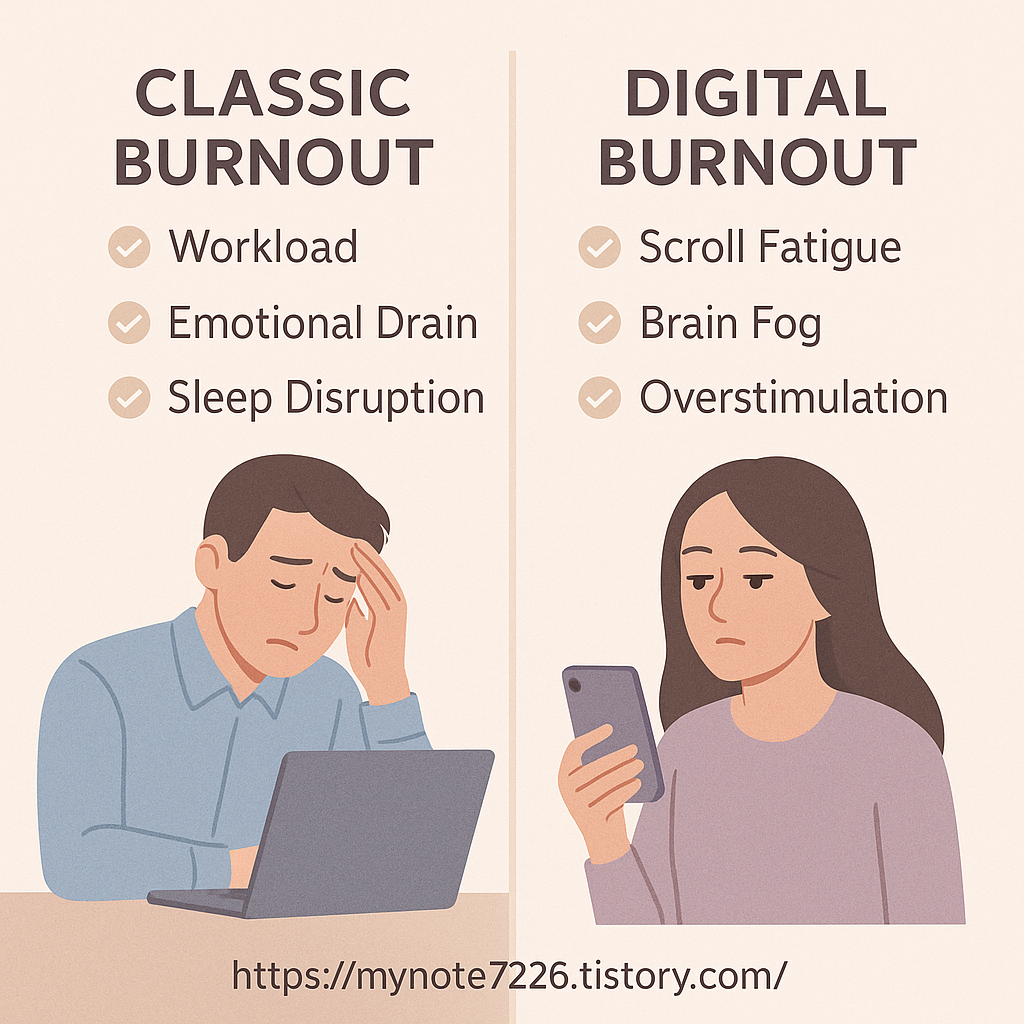
alt text: “Side-by-side infographic comparing classic burnout (workload, emotional drain, sleep disruption) with digital burnout (scroll fatigue, brain fog, overstimulation), featuring a stressed worker vs. a glazed-eyed phone user.”
⚖️ Digital vs. Classic Burnout – A Quick Table
FeatureClassic BurnoutDigital Burnout
| Source | Work overload | Screen overload |
| Symptom | Emotional fatigue | Mental fog/disengagement |
| Action Trigger | Task pressure | Passive stimulation |
| Typical Behavior | Withdrawal, apathy | Scrolling, zoning out |
| Rest Recovery | Sleep, vacation | Digital detox, boredom tolerance |
🫠 Real Reader Story: Noah’s Numbness
“I wasn’t ‘busy’ but I felt wiped. I realized I couldn’t make simple decisions—what to eat, what to wear. My brain felt fogged. I started taking screen-free walks and added white space to my evenings. Three weeks in, I was finally feeling human again.”
⚠️ 5 Signs You’re Digitally Burned Out
- ⚡ You scroll not for fun, but because you can’t not
- 💤 Sleep feels shallow, even after 8 hours
- 🧊 You feel emotionally flat (neither happy nor sad)
- 🔄 You lose track of time while multitasking between tabs
- 🧃 You need music/podcasts/TV to “fill silence” constantly
🔧 What Actually Helps (Without Quitting Everything)
1. Daily “Do Nothing” Time 🪑
Sit. No phone. No task. Let your brain breathe.
2. Default to Analog 🖊️
Use sticky notes, books, notebooks—reduce screen reliance.
3. Scheduled Digital White Space 📅
Time blocks with zero inputs: no messages, no videos, no decisions.
4. Monotasking Moments ⏳
Cook without background noise. Walk with no podcast.
5. Connection Over Consumption 🤝
Text a friend instead of scrolling a feed.
Dr. Rivera: “Burnout doesn’t only come from doing too much. In 2025, it often comes from absorbing too much.”
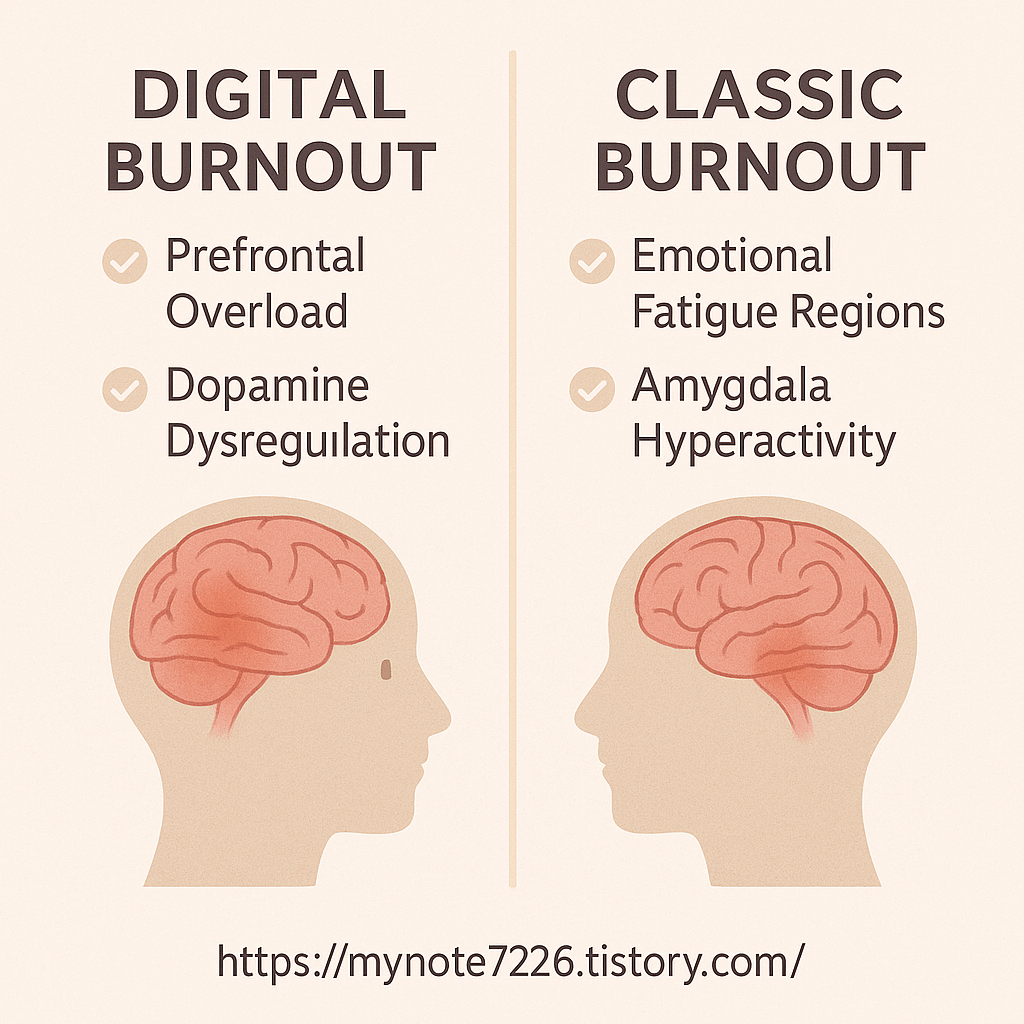
alt text: “Comparison chart of brain scans in digital vs. classic burnout: digital burnout shows prefrontal overload and dopamine dysregulation; classic shows emotional fatigue regions like amygdala hyperactivity.”
❓ FAQ: What Readers Ask About Burnout Types
1. Can I have both kinds of burnout at once?
Yes. Many people experience a blend, especially remote workers juggling screens and deadlines.
2. Why doesn’t rest fix my brain fog?
Because your “rest” still includes stimulation. Real rest involves mental stillness, not passive input.
3. Can digital burnout cause physical symptoms?
Absolutely. Headaches, neck tension, sleep issues, digestive changes—all linked to nervous system overload.
4. How fast can I recover?
Some feel better in days. Deep recovery may take weeks of intentional detox and habit change.
5. Is this just introversion or depression?
Not necessarily. Digital burnout mimics both—but it improves with environmental and behavioral shifts, not just mood meds.
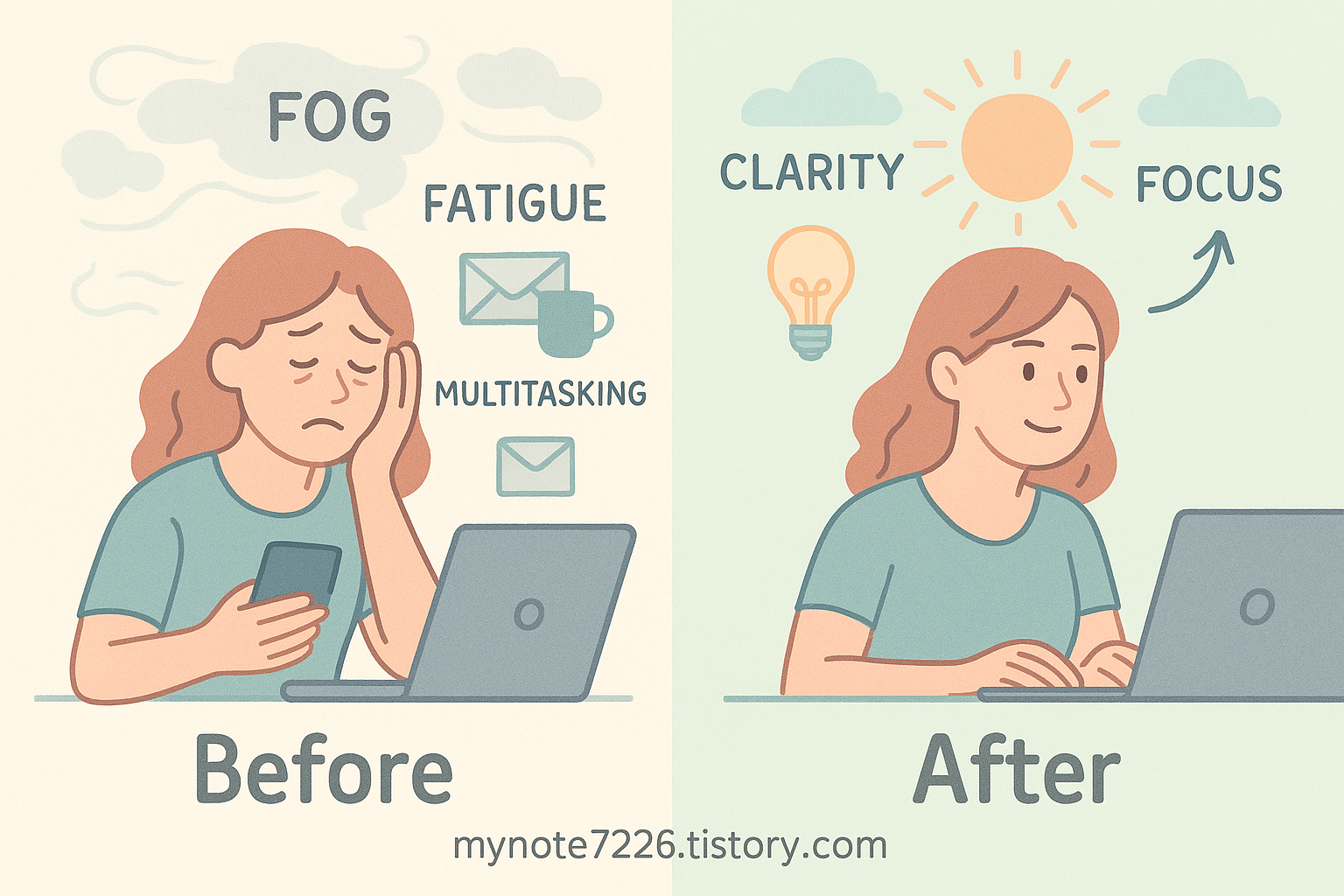
alt text: “Before and after visual showing digital burnout symptoms (fog, fatigue, multitasking) vs. post-detox recovery (clarity, energy, focus), with calm pastel colors.”
🔗 Related Content to Deepen This Topic:
🌐 External Reads That Resonate:
🧭 Navigation
- ⬅️ Previous: Part 3 – Melatonin & Sleep
- ➡️ Next: Part 5 – 7-Day Digital Detox Plan
- 📚 All Digital Detox Protocol Posts
🌈 Final Thought
Burnout doesn’t always come with alarm bells. Sometimes it whispers.
Start listening to your brain’s quiet signals—and give it the stillness it craves. 🌿
'Mental Health & Well-being' 카테고리의 다른 글
| Kids, Teens, and Tech Addiction – What Parents Need to Know (7) | 2025.05.27 |
|---|---|
| 7-Day Digital Detox Plan (With Checklists and Self-Tests) (21) | 2025.05.27 |
| Screens and Sleep – Melatonin Disruption and Fixes (18) | 2025.05.25 |
| Dopamine Hijack – How Apps Are Rewiring Your Brain (12) | 2025.05.24 |
| What Is Digital Overload? Understanding Tech-Induced Brain Fog (10) | 2025.05.24 |


