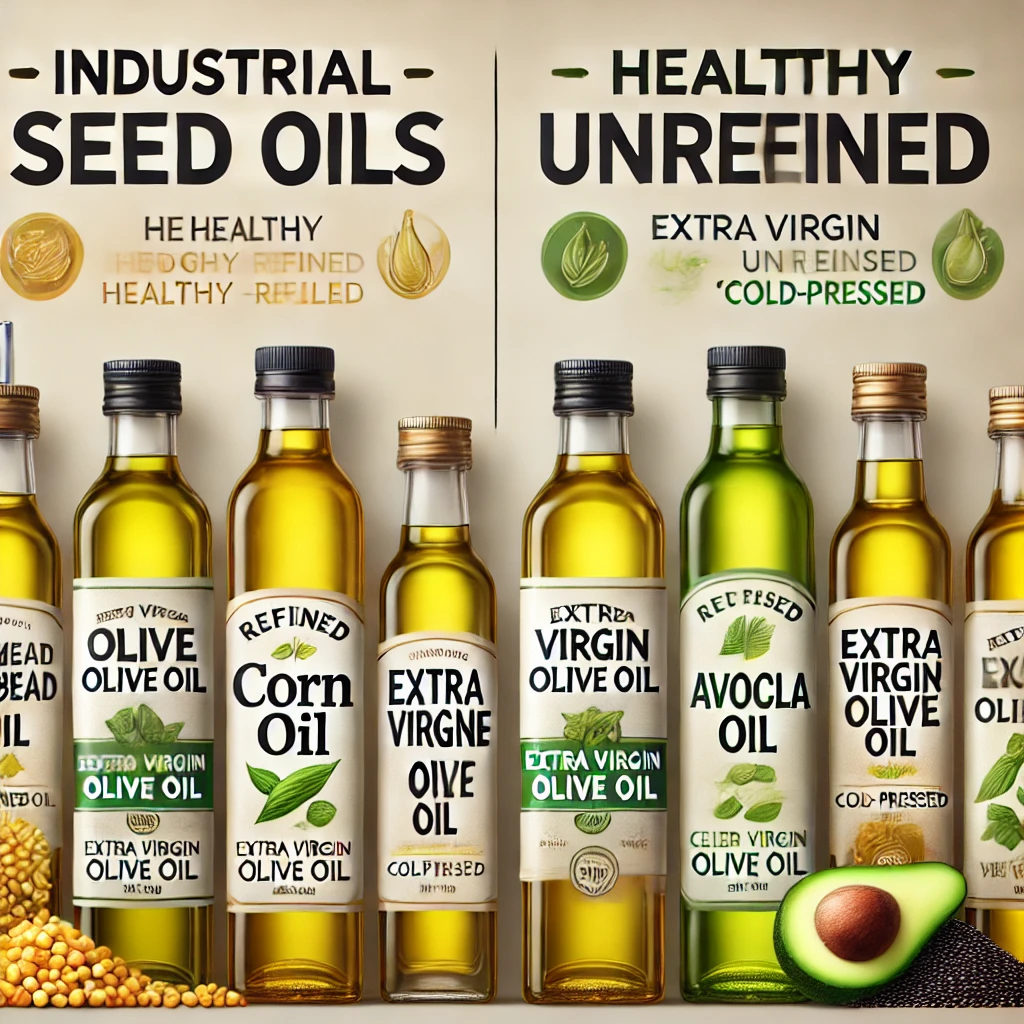
Alt text (SEO): "Comparison of industrial seed oils and healthy unrefined oils"
🎙️ Moderator (Julia Reyes, Health Journalist): Welcome to Nutrition Under the Microscope, where we unpack the hottest — and most controversial — topics in the wellness world. Today’s question: Are seed oils toxic, or are we falling for another wellness myth? To explore both sides, we’re joined by two leading voices in nutrition science:
- Dr. Emma Cole, PhD in Nutritional Biochemistry, outspoken critic of industrial seed oils.
- Dr. Marcus Lin, MD, MPH, clinical nutrition researcher and food processing specialist.
Let’s begin the debate.

Alt text (SEO): "How excess omega-6 fatty acids from seed oils may trigger inflammation"
🔥 Topic 1: Are Seed Oils Inflammatory by Nature?
Julia: Dr. Cole, you’ve called seed oils "metabolic landmines." Why?
Dr. Cole: Because they’re ultra-rich in omega-6 polyunsaturated fats (PUFAs) — particularly linoleic acid, which in excess can promote chronic inflammation. When these oils are heated or oxidized during processing, they can form toxic aldehydes like 4-HNE, known to damage DNA, mitochondria, and lipids.
Dr. Lin: Hold on — quantity matters. Omega-6 is essential to the human diet. The problem isn’t seed oils per se, but the imbalanced omega-6 to omega-3 ratio in modern diets. Epidemiological studies don’t consistently show seed oils causing inflammation in real-world contexts.
Dr. Cole: But you can’t ignore how refining, bleaching, and deodorizing destabilize these oils. Many studies on inflammation rely on isolated intakes, not what happens after deep-frying at 400°F or months of shelf storage.

Alt text (SEO): "Scientific studies comparing seed oil risks and benefits"
🧪 Topic 2: What Does the Science Actually Say?
Julia: So what does peer-reviewed science say about the risks?
📌 Pro-Risk Evidence (Dr. Cole):
- Ramsden et al. (2013) – Swapping saturated fats for linoleic acid increased mortality in the Sydney Diet Heart Study.
- Fritsche (2015) – High PUFA diets can increase lipid peroxidation under oxidative stress.
- Animal models show seed oil-fed mice accumulate oxidized LDL and develop fatty liver.
📌 Pro-Safety Evidence (Dr. Lin):
- Mozaffarian et al. (2010) – Found no increased risk of heart disease with PUFA intake.
- WHO & AHA Guidelines – Recommend replacing saturated fat with PUFAs to reduce cardiovascular risk.
- Meta-analyses (2020, 2022) show neutral to positive effects of seed oils on metabolic markers.
Dr. Lin: It’s about contextual use — small amounts of high-quality, cold-pressed oils in a balanced diet are vastly different from overused, reheated fryers at fast food chains.
Dr. Cole: Yet that’s how 80% of people actually consume them — via packaged snacks, processed meals, and restaurant fryers. That’s the toxic reality.
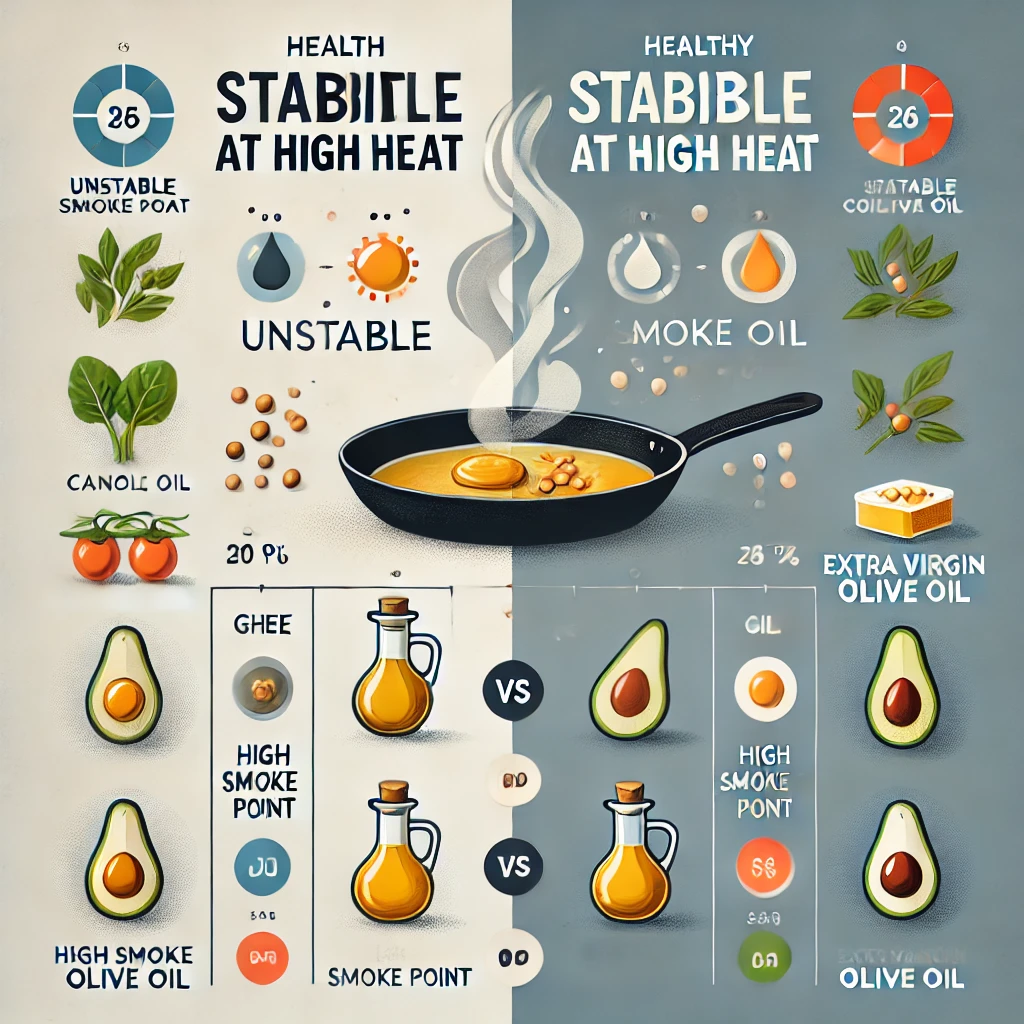
Alt text (SEO): "Infographic comparing refined and unrefined oils, including fatty acid profiles, processing types, and smoke points"
🥄 Topic 3: Are All Seed Oils the Same?
Julia: Can we group all seed oils together, or are some worse than others?
Dr. Cole: Absolutely not. Soybean, corn, cottonseed, and canola oils are ultra-processed and high in unstable PUFAs. Compare that to olive, avocado, or flaxseed oil, which are minimally processed and higher in monounsaturated or omega-3 fats.
Dr. Lin: Agreed. Not all seed oils are equal. Cold-pressed, unrefined versions (like organic sunflower oil) can be part of a healthy diet — especially if stored and cooked properly.
🧠 Topic 4: Seed Oils and Mental Health?
Julia: There’s buzz online that seed oils might impact the brain. Truth or speculation?
Dr. Cole: Emerging research links excess linoleic acid to altered endocannabinoid signaling, which may influence anxiety, mood, and neuroinflammation.
Dr. Lin: That’s speculative. While it’s interesting, human studies are lacking. Correlation ≠ causation. We need randomized controlled trials before making claims about depression or anxiety.
✅ Moderator Summary: What Can We Take Away?
- Excessive intake of industrial seed oils — especially from processed and fried foods — may increase risk factors for metabolic and cognitive health.
- Not all seed oils are equally harmful. Cold-pressed and moderate-use oils in a whole-food diet pose less concern.
- Context is key: frying oils vs. fresh dressings are not the same nutritionally or chemically.
🔬 Scientific References
- Ramsden et al., BMJ, 2013
- Mozaffarian et al., Circulation, 2010
- Fritsche KL, Prostaglandins Leukot Essent Fatty Acids, 2015
- Schwingshackl L et al., 2020 Meta-analysis
- WHO Guidelines on Fats, 2023
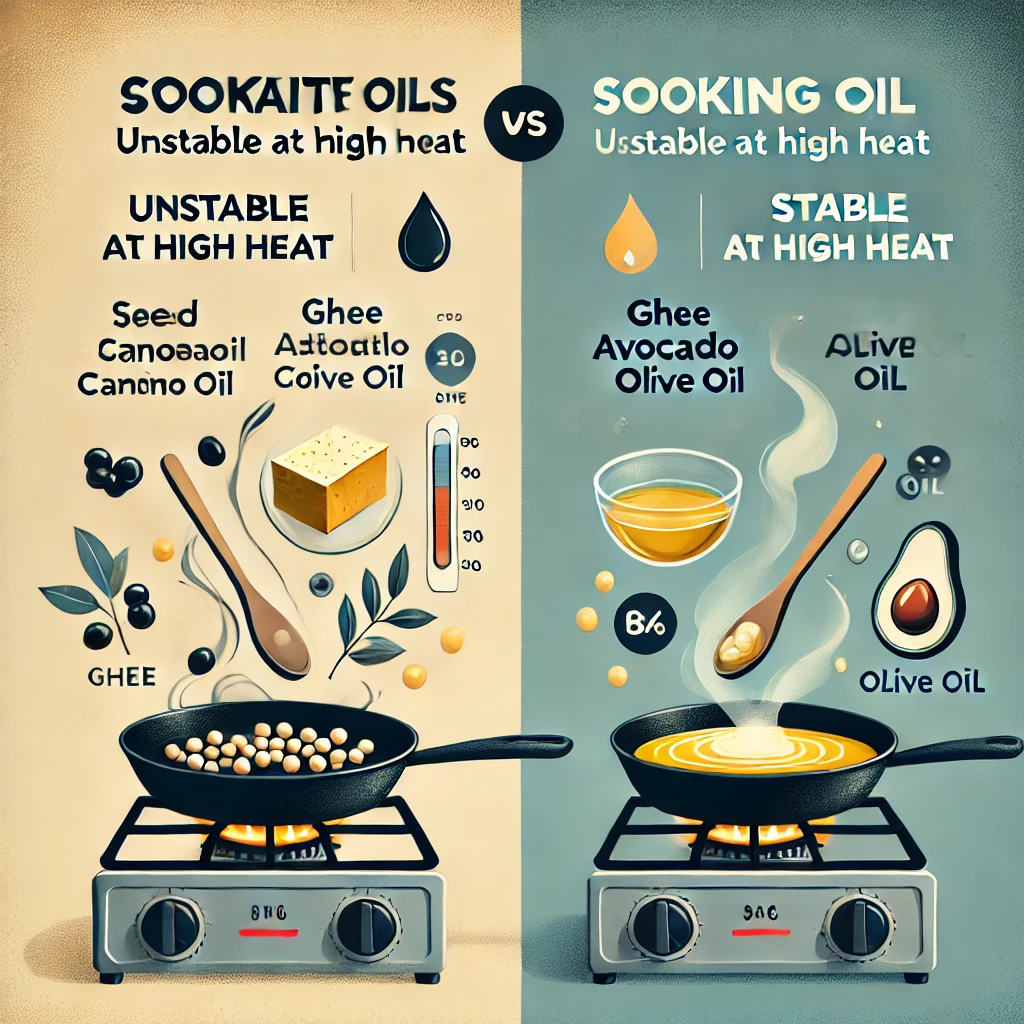
Alt text (SEO): "Cooking with seed oils at high heat vs cold-pressed oil stability"
❓ FAQ: Seed Oils Explained
🥶 Q1: Are seed oils worse when cooked?
A: Yes — especially at high heat. Repeated heating (like in fryers) causes oxidation, forming aldehydes and other harmful byproducts. These can damage cells and contribute to chronic inflammation.
🧴 Q2: Are cold-pressed seed oils safe?
A: Generally, yes — cold-pressed or unrefined oils are less damaged and retain more nutrients. However, they still contain high omega-6 levels, so moderation is key.
🍟 Q3: Is canola oil really that bad?
A: It depends on the form. Industrially refined canola oil may contain trace trans fats and oxidation byproducts. But organic, cold-pressed canola is lower in risk and high in omega-3s.
🧠 Q4: Can seed oils affect brain health?
A: Possibly. High omega-6 intake may disrupt brain lipid balance and influence mood and inflammation, but definitive human studies are still in progress.
🥗 Q5: Should I avoid all processed foods with seed oils?
A: It’s smart to reduce ultra-processed food intake, not obsess over every ingredient. Focus on whole foods, healthy fats, and balance.
🔍 Q6: What oils are safest for cooking?
A: Best options include ghee, avocado oil, coconut oil, and extra virgin olive oil — all more stable at higher heat compared to refined seed oils.


