🔍 TL;DR (3-Sentence Summary)
- Social jet lag is the mismatch between your natural biological clock and your socially imposed schedule, like waking up early on weekdays and sleeping in on weekends.
- This disruption in circadian rhythm is linked to mood disorders, obesity, metabolic disease, and poor cognitive performance.
- Aligning your sleep-wake cycle more closely with your body’s internal clock—by maintaining regular sleep hours and getting morning light—can drastically improve health.
🎙️ Moderator (Nina Lee, Sleep & Circadian Health Writer):
Welcome to The Body Clock Dialogues, where we unpack the science of sleep, time, and health. Today, we’re tackling a sneaky but widespread problem: social jet lag.
Joining us:
- Dr. Adrian Patel, MD, circadian rhythm researcher and sleep medicine specialist
- Dr. Leah Torres, PhD, behavioral neuroscientist focused on light exposure and chronobiology
⏰ Topic 1: What Is Social Jet Lag — and Why Does It Matter?
Nina: Dr. Patel, let’s start from the basics. What exactly is social jet lag?
Dr. Patel:
Social jet lag is when your internal body clock (your circadian rhythm) is misaligned with your social obligations. For example, waking up at 6 a.m. for work on weekdays, but sleeping in until 10 a.m. on weekends — it’s like inducing mini jet lag every week.
Dr. Torres:
And that repeated misalignment has consequences. Studies show that social jet lag is associated with:
- Increased risk of depression and anxiety
- Weight gain and metabolic issues
- Poor academic or work performance
- Higher risk of chronic diseases like diabetes and cardiovascular problems
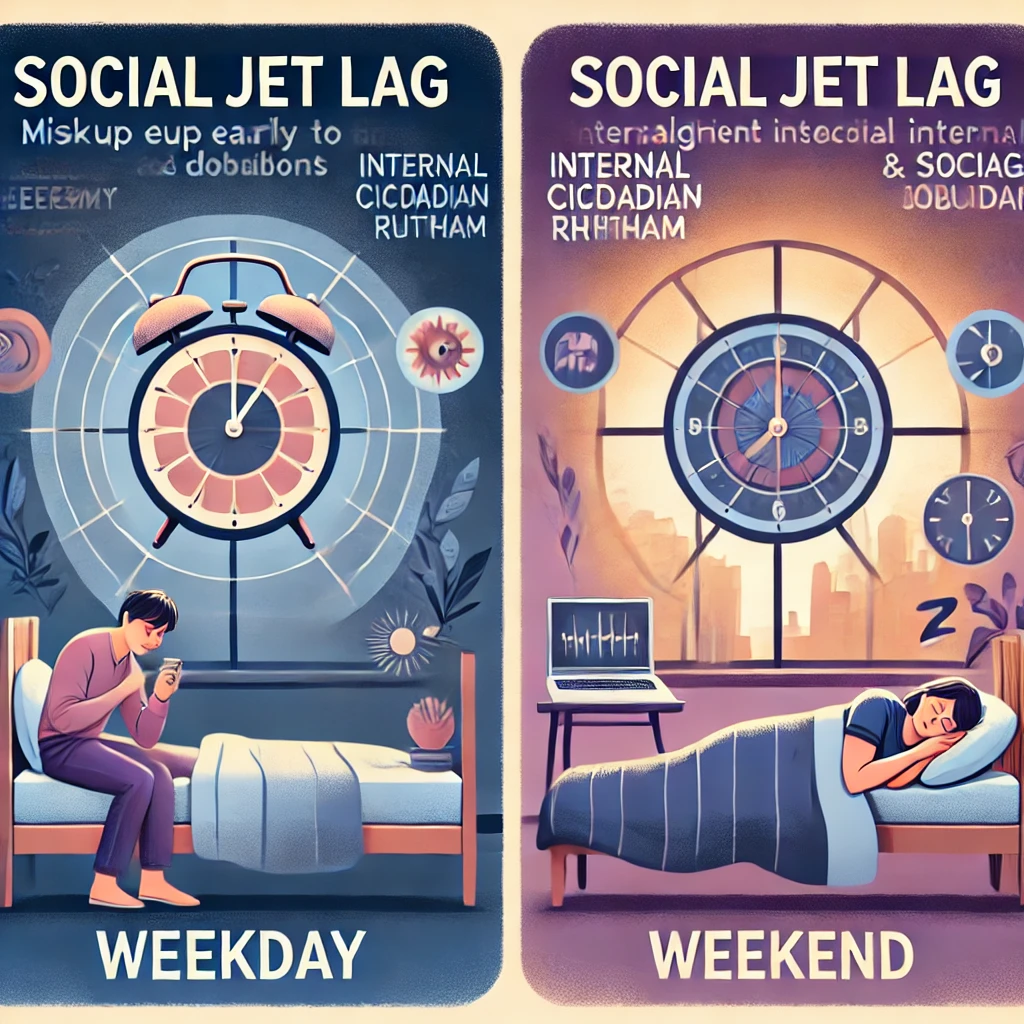
Alt text: "Split-screen diagram showing a biological clock misaligned with a social schedule. On one side: early wake-up with alarm and dark sky (weekday), on the other: sleeping in with sunlight (weekend), illustrating chronic circadian disruption."
🧠 Topic 2: The Science Behind the Body Clock
Nina: What’s happening in the brain when our schedule shifts like that?
Dr. Torres:
The suprachiasmatic nucleus (SCN) in your hypothalamus is your master clock. It gets cues from light, especially morning sunlight, to keep your internal time aligned with the external world. When you shift your sleep by 2–4 hours on weekends, your SCN gets confused.
Dr. Patel:
That confusion leads to:
- Melatonin suppression at the wrong times
- Disruption of the sleep-wake cycle
- Altered hormonal rhythms like cortisol and insulin
- Neuroinflammation and reduced neuroplasticity
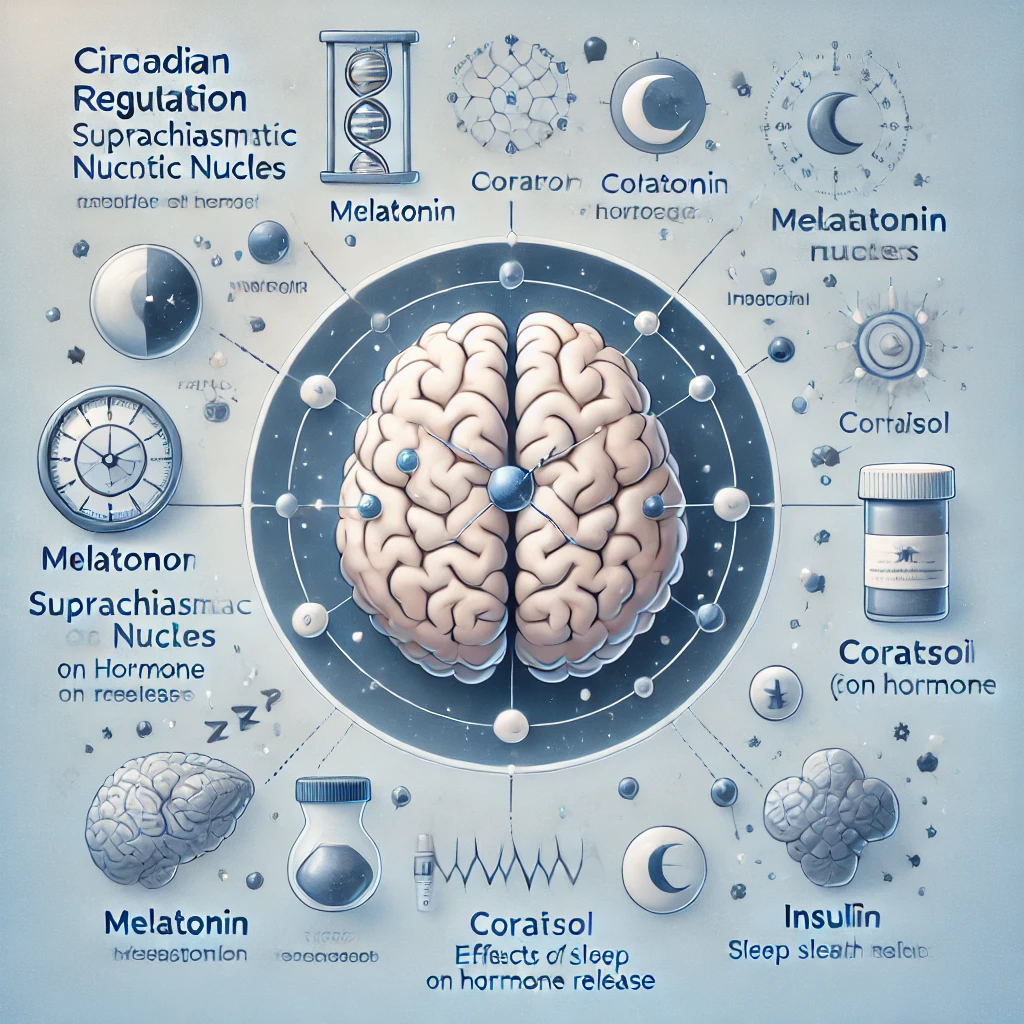
Alt text: "Brain diagram showing circadian regulation centers such as the suprachiasmatic nucleus (SCN), highlighting the impact of irregular sleep schedules on melatonin, cortisol, and insulin release. Designed to explain how social jet lag disrupts hormonal balance and sleep architecture."
🍕 Topic 3: Social Jet Lag and Metabolic Health
Nina: How does this relate to diet and metabolism?
Dr. Patel:
Our metabolism is tightly linked to circadian rhythms. If you eat late at night or shift your meals on weekends, your body doesn’t metabolize nutrients the same way. Studies have linked social jet lag to:
- Increased BMI and insulin resistance
- Elevated fasting glucose
- Disrupted gut microbiome rhythms
Dr. Torres:
Think of your metabolism as being “time-trained.” When you shift your sleep and eating patterns, you’re asking your body to work out of sync — and that creates inefficiency and inflammation.
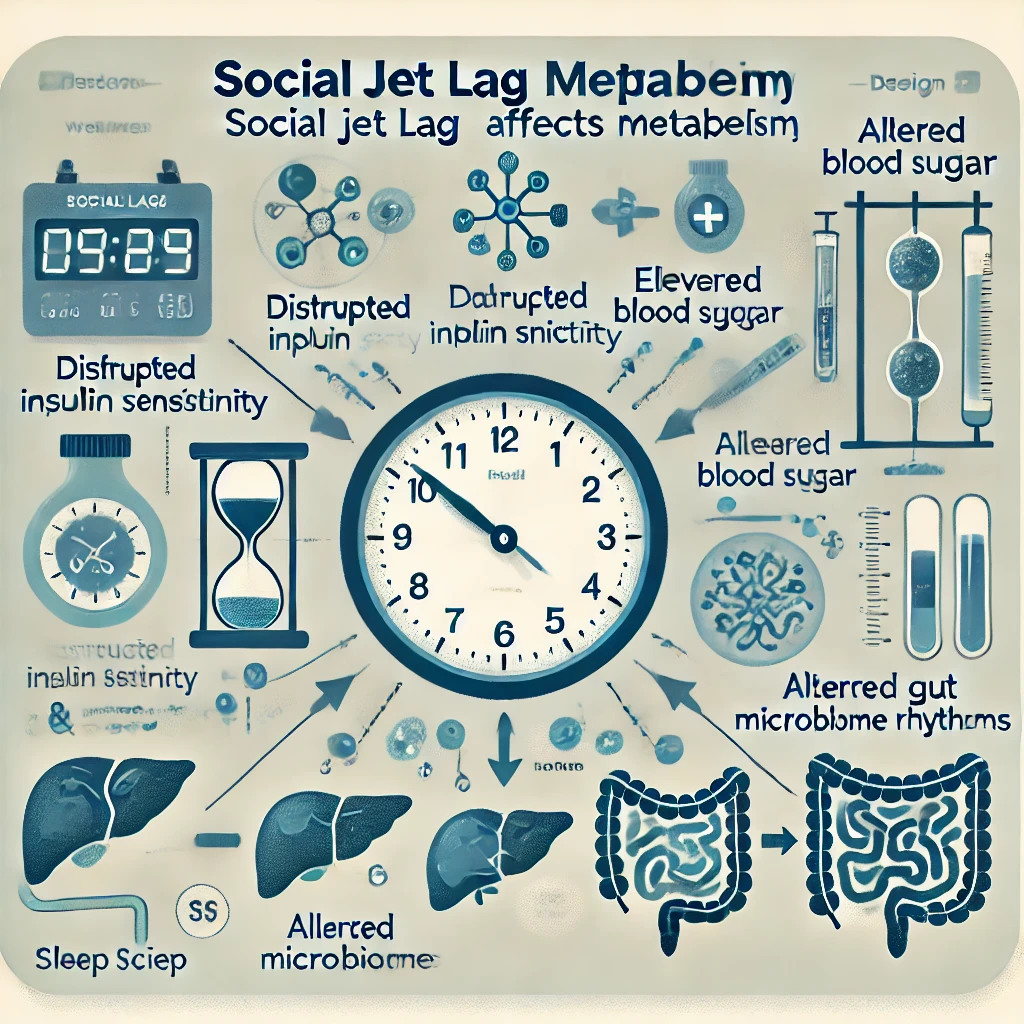
Alt text: "Infographic showing how social jet lag disrupts metabolic processes, including increased insulin resistance, elevated glucose levels, and altered gut microbiome rhythms. Visual elements highlight the impact of irregular sleep and meal timing on metabolic health."
🌞 Topic 4: How to Reset — Practical Solutions
Nina: So how do we fix it?
Dr. Torres:
Consistency is key. Try to:
- Wake up within 1 hour of your usual time on weekends
- Get sunlight within 30 minutes of waking
- Avoid caffeine late in the day
- Maintain regular meal times, especially breakfast
Dr. Patel:
Also helpful:
- Reduce exposure to blue light at night (use filters or glasses)
- Use light therapy if needed in winter
- Keep a sleep log to identify patterns
- Don’t binge sleep on weekends — it backfires long-term
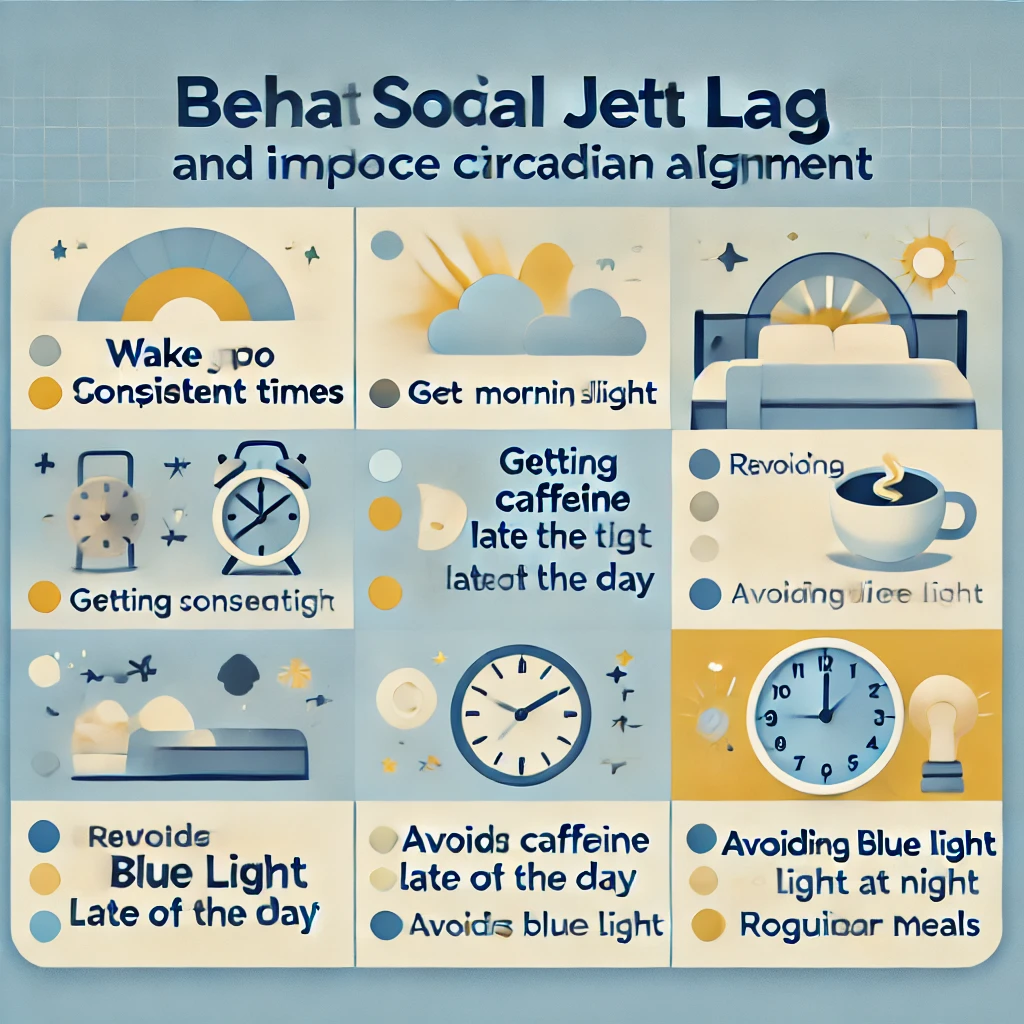
Alt text: “Checklist of behavioral strategies to reduce social jet lag and improve circadian alignment”
❓ FAQ: Social Jet Lag
🕓 Q1: Is social jet lag the same as regular jet lag?
A: Not exactly. Social jet lag is caused by changes in your schedule, not time zones — but the biological effect on your body clock can be similar, especially when repeated weekly.
😴 Q2: Can social jet lag cause long-term health problems?
A: Yes. Chronic misalignment is linked to obesity, insulin resistance, heart disease, and mental health issues. Over time, the body struggles to adapt.
📱 Q3: Does blue light really make it worse?
A: Absolutely. Blue light suppresses melatonin, which shifts your sleep phase later. This deepens the circadian misalignment, especially when used late at night.
🧠 Q4: Why do I feel more clear-headed on weekends?
A: Likely because you're sleeping more in sync with your natural rhythm. But if that shift is too drastic, it still creates internal conflict and worsens weekday fatigue.
🧬 Q5: Can chronotype affect social jet lag?
A: Yes. “Night owls” are especially vulnerable, since social schedules often force them to wake too early. Knowing your chronotype can help you better align your routine.
🌙 Q6: Should I avoid sleeping in completely?
A: Not necessarily. Sleeping in moderately (30–60 minutes) is okay, but drastic shifts confuse your body clock. Aim for consistency instead of extremes.
💬 Have you felt the effects of social jet lag? Share your strategies for staying aligned — let’s learn from each other.


