🎙️ Moderator (Emily Cho, Sleep Health Journalist):
Welcome to another deep-dive edition of Breathe Better Live Better. Today we’re pulling the tape off a trending wellness topic: mouth taping. TikTokers and sleep hackers swear by it, but is sealing your lips at night really a gateway to better health — or just another internet fad?
To help us explore, I’ve invited two experts:
- Dr. Daniel Ross, MD, board-certified otolaryngologist (ENT) and upper airway specialist
- Dr. Jenna Liu, PhD, sleep physiologist and researcher in respiratory biomechanics
Let’s open up the conversation.
😮 Topic 1: Why Mouth Breathing Is More Than Just a Quirk
Emily: Dr. Ross, why is mouth breathing such a big deal?
Dr. Ross:
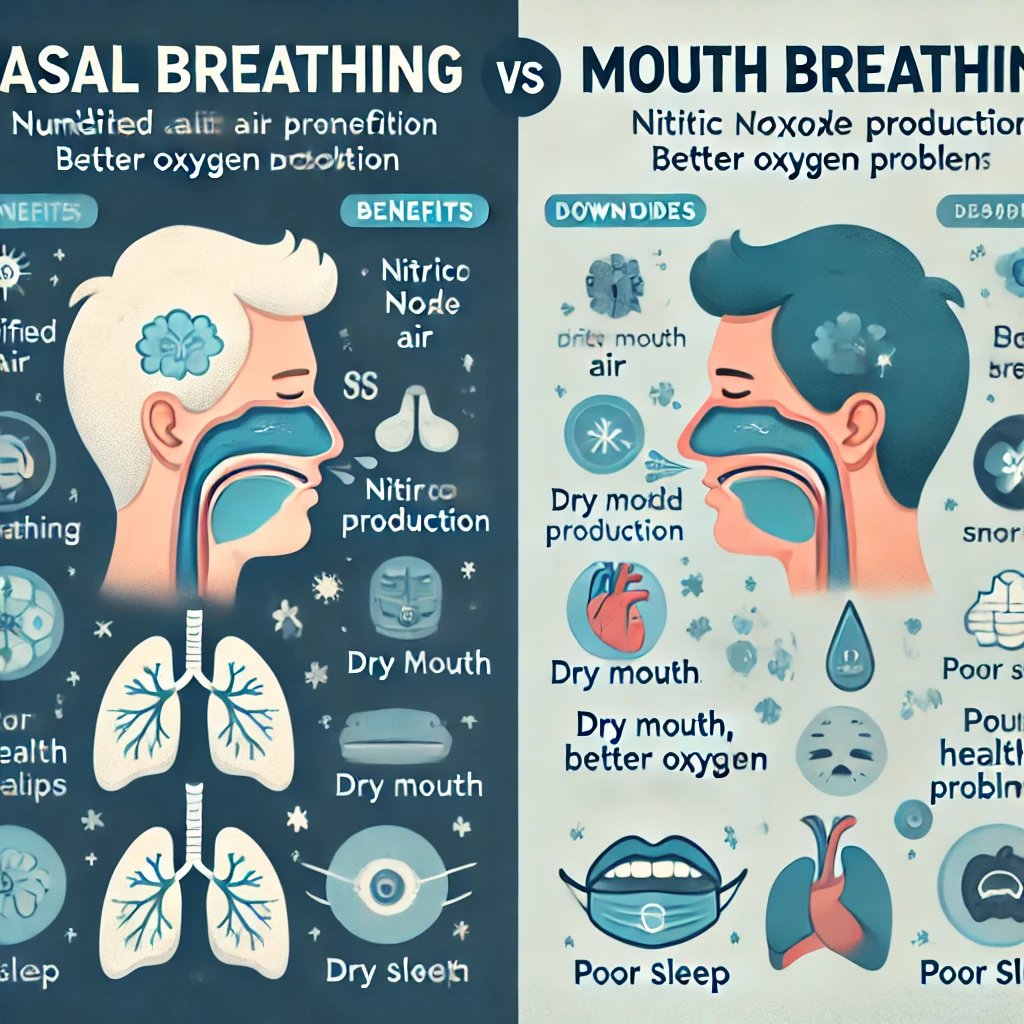
Mouth breathing isn’t just a cosmetic concern or a bad habit — it’s a physiological stressor. Unlike nasal breathing, which filters, warms, and humidifies air, breathing through the mouth bypasses all those defenses. Over time, it can:
- Dry out the oral cavity → leading to cavities, bad breath, and gum disease
- Promote upper airway collapse → worsening snoring and obstructive sleep apnea (OSA)
- Lead to poor tongue posture and altered facial growth in children
- Exacerbate asthma, allergies, and poor sleep quality
Dr. Liu:
That’s right. Nasal breathing also stimulates nitric oxide production, which enhances oxygen uptake and blood vessel dilation. Mouth breathers often experience lower blood oxygen saturation, contributing to fatigue, brain fog, and fragmented sleep.
Alt text (SEO): "Comparison of nasal vs mouth breathing effects on the airway, sleep quality, and oral health"
🧐 Topic 2: Why Do People Mouth Breathe in the First Place?
Emily: So if nasal breathing is clearly better, why don’t people just… do it?
Dr. Ross:
Great question. Mouth breathing usually happens unconsciously, often due to:
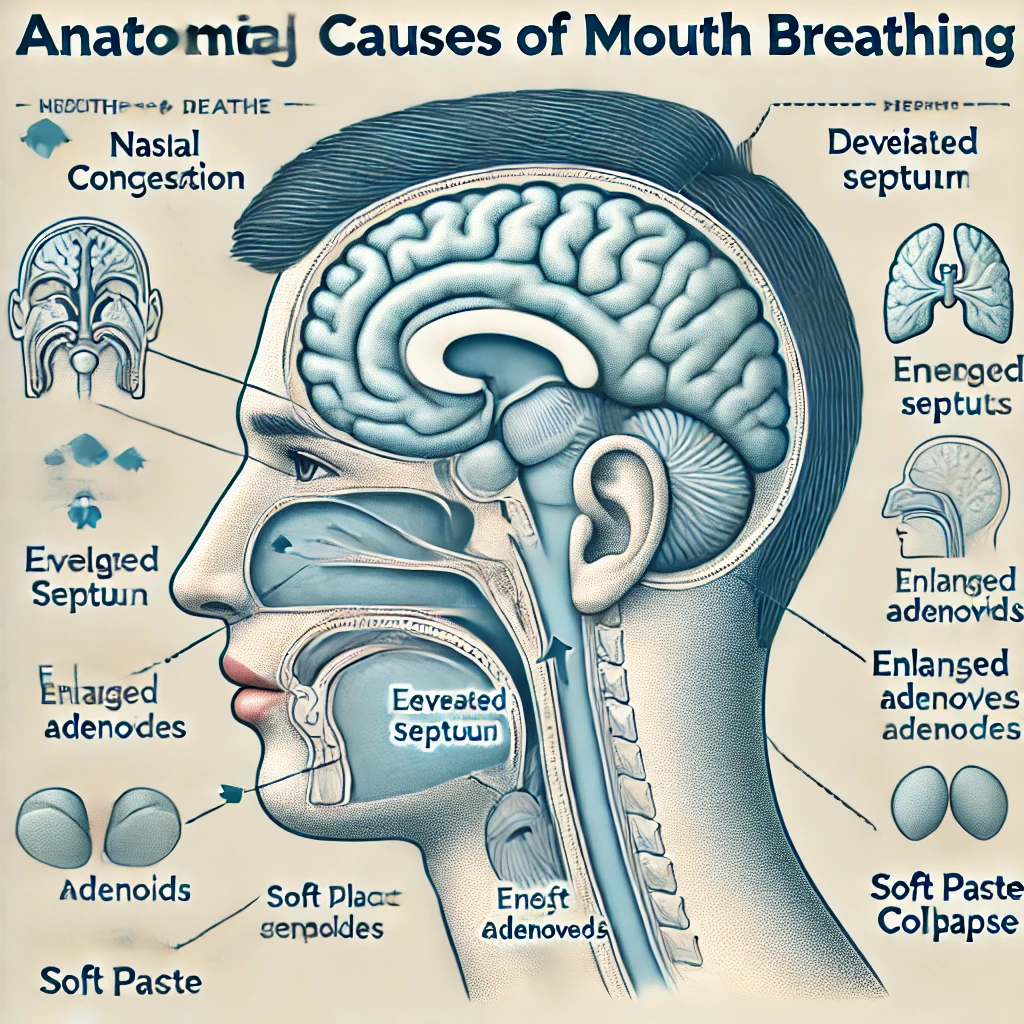
- Chronic nasal congestion (allergies, sinusitis, deviated septum)
- Habitual posture from childhood
- Enlarged tonsils or adenoids
- Overdeveloped soft palate or jaw issues
- Trauma or anxiety-driven hyperventilation
Dr. Liu:
And let’s not forget modern environments. Dry indoor air, poor nighttime posture, and overstimulation before bed can also contribute. The body may default to mouth breathing during deep sleep or when the nose is blocked.
Alt text (SEO): "Anatomical causes of mouth breathing including nasal obstruction (such as chronic congestion or deviated septum), enlarged adenoids, soft palate collapse, and jaw structure abnormalities"
🩹 Topic 3: Can Mouth Taping Fix It? Or Just Mask It?
Emily: Let’s talk about the tape. Is mouth taping a legit intervention?
Dr. Liu:
It depends. Mouth taping works best for those with functional mouth breathing, meaning there’s no major anatomical obstruction. For them, the tape acts as a reminder and barrier, gently encouraging nasal breathing.
Dr. Ross:
But it’s not for everyone. If someone has undiagnosed sleep apnea, taping their mouth can be dangerous, as it could prevent air entry during apneic episodes. That’s why screening first is crucial.
Emily: Are there any studies to back this up?
Dr. Liu:
A few. One 2015 study showed mouth taping reduced snoring in non-apneic individuals. Another found improved oxygenation and reduced respiratory rate. But the evidence is limited and mostly observational.
Alt text (SEO): "Illustration of safe mouth taping technique for sleep with cautions and benefits"
🛌 Topic 4: How to Mouth Tape Safely (If You Choose To)
Emily: So let’s say someone wants to try it. What are the safety tips?
Dr. Ross:
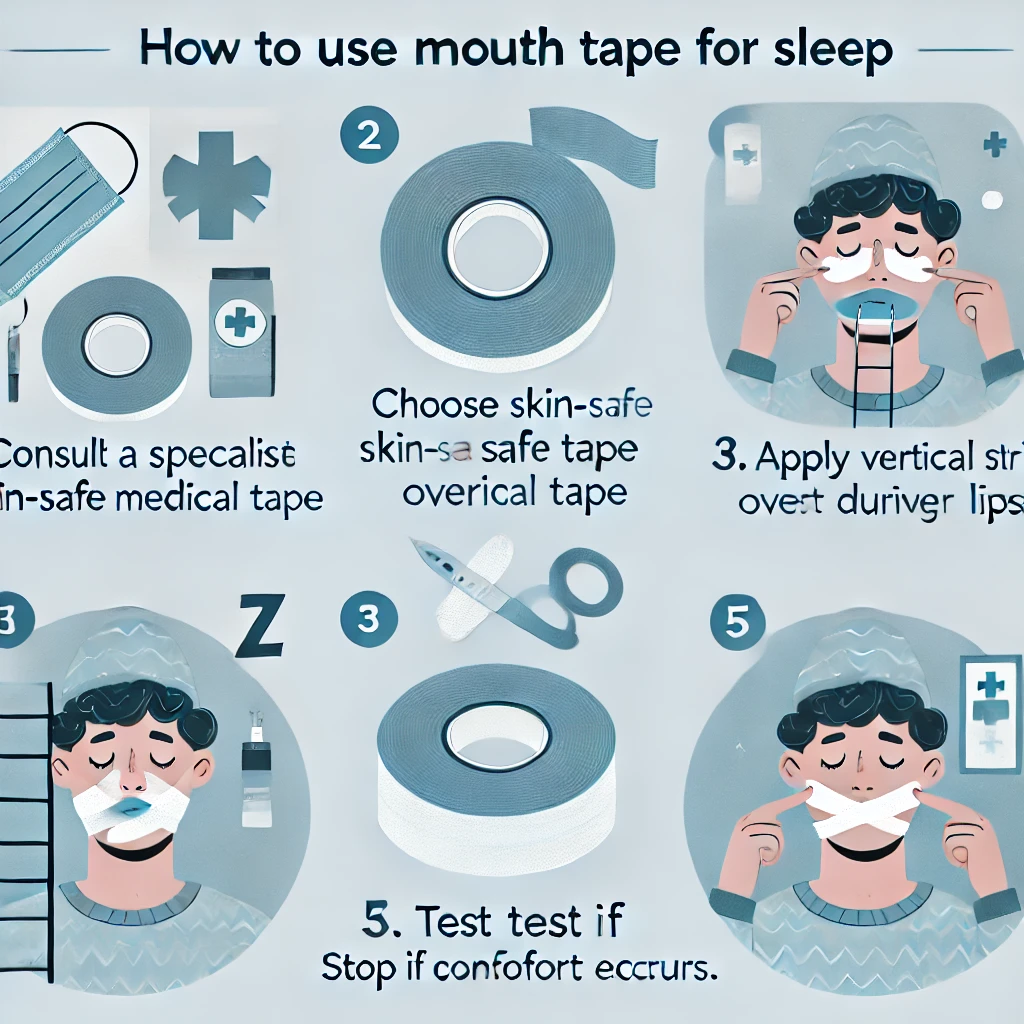
First, rule out major obstruction — see an ENT or sleep specialist. Then:
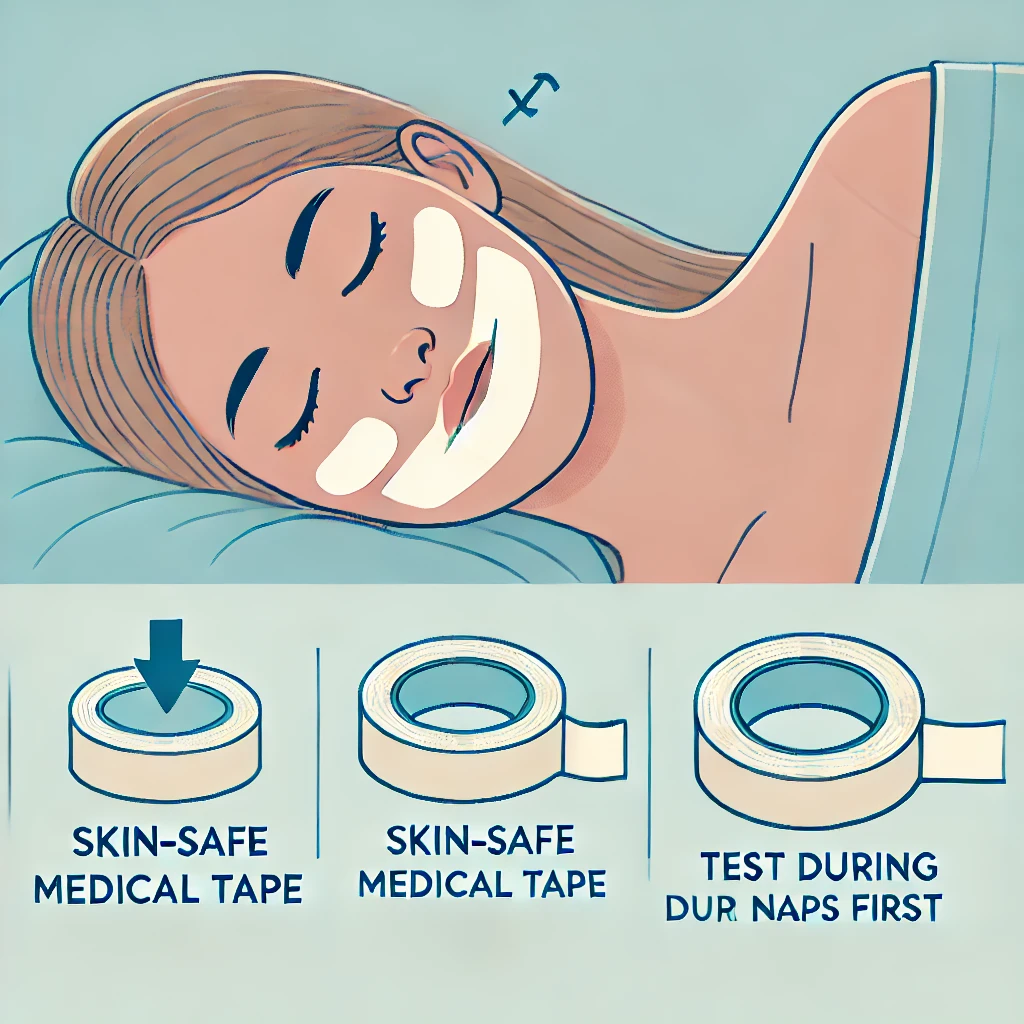
- Use skin-safe medical tape or products like Somnifix
- Tape vertically over the center of the lips (don’t seal the whole mouth shut)
- Try it for short naps first
- If you feel anxious or wake up gasping, stop immediately
Dr. Liu:
Also, consider adjuncts:
- Nasal strips or sprays to open the airway
- Humidifiers to reduce dryness
- Positional therapy to promote nasal flow
Mouth taping should be part of a broader airway hygiene plan, not a magic fix.
Alt text (SEO): "Step-by-step guide for safe and effective mouth taping as part of sleep hygiene"
😷 Mouth Breathing Self-Check
Select the option that applies to you for each question.
❓ FAQ: Mouth Taping & Mouth Breathing
😷 Q1: Is mouth taping safe for everyone?
A: No. People with obstructive sleep apnea, severe nasal blockage, or panic disorder should avoid mouth taping without medical advice.
💨 Q2: What if I can’t breathe through my nose?
A: That must be addressed first. See an ENT for evaluation — you may need treatment for allergies, septum deviation, or chronic sinusitis.
💤 Q3: Can this help with snoring?
A: For non-apneic snorers, mouth taping may reduce open-mouth snoring, but won’t fix anatomical causes like soft palate vibration.
👃 Q4: Does nose breathing really make that much difference?
A: Absolutely. It promotes better oxygen exchange, activates parasympathetic nervous system, and reduces oral inflammation.
🧠 Q5: Can kids benefit from mouth taping?
A: Not recommended unless under medical supervision. Pediatric mouth breathing often stems from developmental or ENT issues that require evaluation.
🛏️ Q6: Will this improve my sleep?
A: Possibly — especially if mouth breathing was contributing to poor sleep quality. But don’t expect it to solve all problems. It’s one piece of the puzzle.


