The revolutionary science behind when you eat—not just what you eat.
✅ TL;DR (3-Line Summary)
- Circadian nutrition aligns eating patterns with your body’s internal clock to enhance metabolic health, energy, and longevity.
- Emerging research shows that timing your meals—especially avoiding late-night eating—may reduce risks of obesity, diabetes, and inflammation.
- By syncing your eating window with your circadian rhythm, you can support hormones, digestion, and fat-burning more effectively.
👩⚕️ Expert Dialogue: Dr. Rachel (Chronobiologist) & Dr. Mason (Clinical Nutritionist)
Dr. Rachel: Mason, for decades we've focused on what to eat. But now, “when” we eat is becoming just as critical. Circadian biology has entered the nutrition world—and it’s changing everything.
Dr. Mason: It really is. The idea behind circadian nutrition is simple but powerful: our bodies run on biological clocks, and our metabolism isn’t constant throughout the day. Eating late at night, for example, increases blood sugar spikes, reduces fat oxidation, and disrupts hormonal balance.
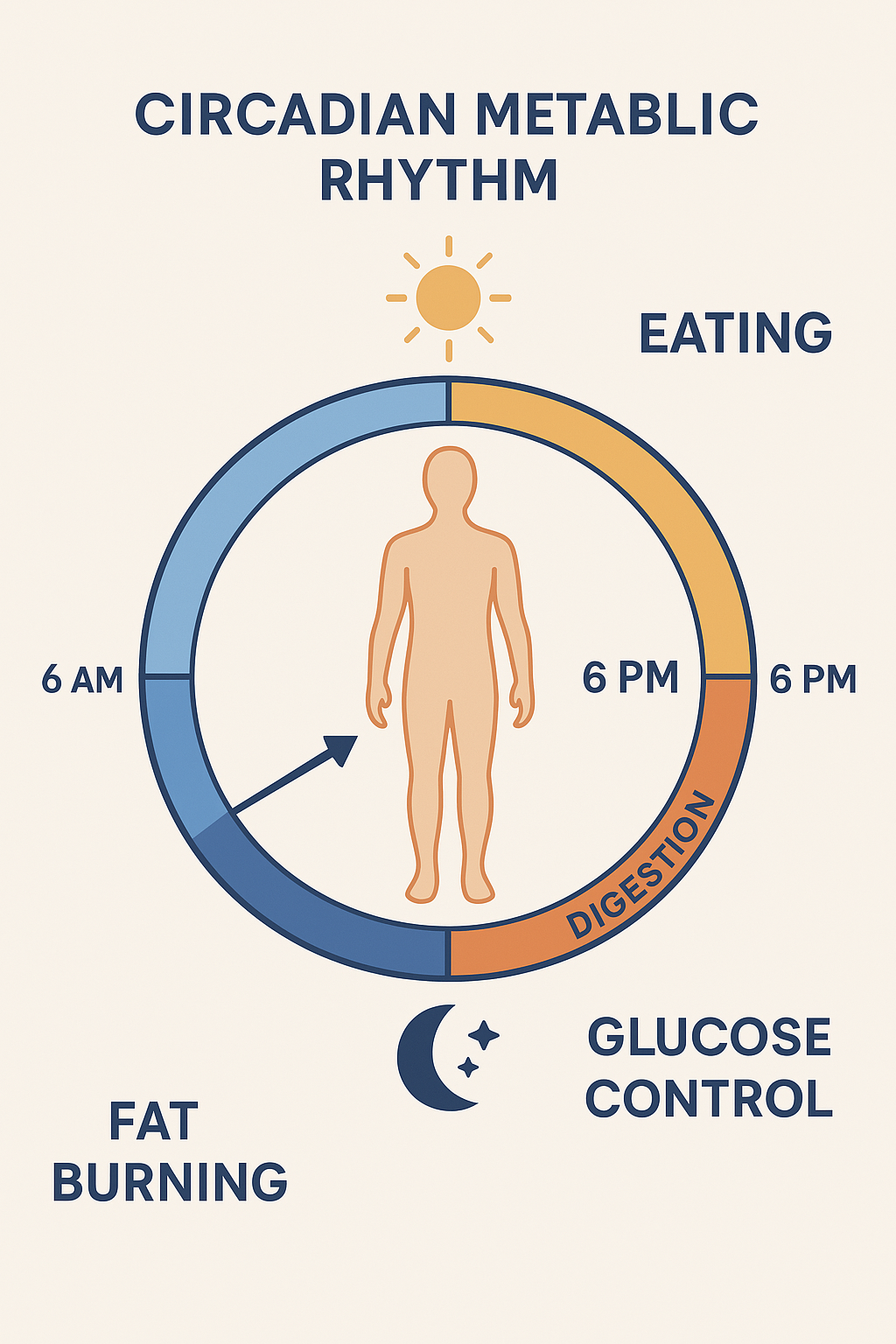
Dr. Rachel: And this isn’t just theory. Studies from Satchin Panda’s lab and others show that even when caloric intake is equal, early time-restricted eating (eTRE) leads to better glucose control and less body fat compared to late eating.
Dr. Mason: Exactly. eTRE usually means eating within an 8–10 hour window, starting with breakfast around 8–9AM and finishing dinner by 5–6PM. That mirrors our insulin sensitivity curve, which is strongest in the morning and declines throughout the day.
Dr. Rachel: Late-night eating is practically anti-circadian. At night, melatonin rises, preparing the body for sleep—not digestion. Night-time eating can suppress autophagy, elevate inflammatory markers, and disrupt the gut microbiome.
Dr. Mason: And don’t forget cortisol. Eating late can delay cortisol clearance, impacting sleep quality and next-day hunger hormones like ghrelin and leptin.
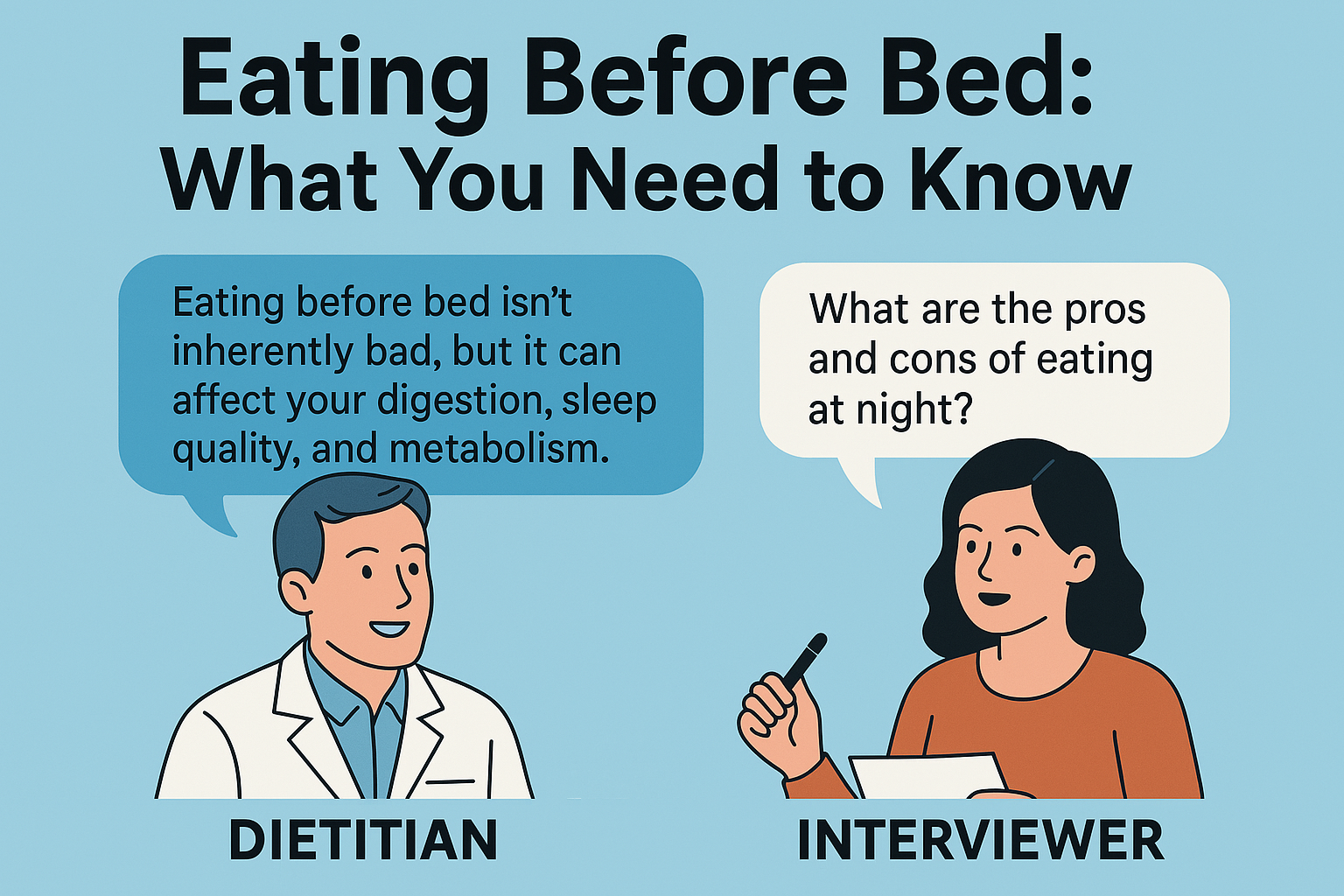
🌙 Why Nighttime Eating Works Against You
- Insulin resistance increases after sunset
- Fat oxidation drops, making fat storage more likely
- Melatonin interferes with pancreatic insulin signaling
- Gut motility slows, leading to indigestion and bloating
- Sleep architecture suffers, increasing hunger the next day
Dr. Rachel: What's fascinating is how even healthy food eaten at the wrong time can become metabolically harmful.
Dr. Mason: Right. A bowl of oats at 8AM? Great. At 10PM? It can spike glucose and suppress melatonin. That’s why circadian rhythm–aligned eating could be a massive lever for managing metabolic syndrome, type 2 diabetes, and even mood disorders.
🔄 The Science Behind Circadian Clocks
- Central clock: Located in the suprachiasmatic nucleus (SCN) of the brain, it’s set by light exposure.
- Peripheral clocks: Found in liver, pancreas, muscle, gut, and more—these respond to food timing.
When we eat outside the light-dark cycle, we create circadian misalignment, which is now considered a chronic stressor.
Dr. Rachel: This is why shift workers, who eat during the night, have higher rates of obesity, diabetes, and cardiovascular disease—even when diets are controlled.
Dr. Mason: The same goes for people who skip breakfast and eat large dinners. It’s not just bad for sleep—it’s pro-inflammatory.

🧪 Recent Research Highlights
- 2022 Cell Metabolism study: Early time-restricted eating improved insulin sensitivity, blood pressure, and oxidative stress markers
- Harvard circadian study: Identical meals at night vs day led to significantly higher postprandial glucose and insulin at night
- NIH review: Circadian rhythm disruption is now considered a risk factor for chronic inflammation and metabolic disease
Dr. Rachel: From a public health perspective, teaching people when to eat may be even easier than telling them what to avoid.
Dr. Mason: I agree. We should be promoting light-aligned eating patterns, especially in children, teens, and those with metabolic issues. Eating when the sun is up is a principle backed by evolution.
🧠 Practical Tips for Circadian-Aligned Eating
- Eat your largest meal earlier in the day (ideally lunch)
- Keep a consistent eating window of 8–10 hours
- Stop eating 3 hours before bed
- Avoid caffeine and alcohol in the evening
- Use natural light in the morning and limit blue light at night
🙋♀️ FAQ – Circadian Nutrition
Q1. What is circadian nutrition?
Circadian nutrition is the science of aligning your eating patterns with your body’s natural biological clock. It emphasizes eating during daylight hours and avoiding late-night meals to optimize metabolism, hormone function, and cellular repair.
Q2. Does intermittent fasting fall under circadian nutrition?
Yes—particularly early time-restricted eating (eTRE). This form of intermittent fasting aligns the eating window with periods of high insulin sensitivity and supports circadian rhythm, unlike random fasting schedules that may prolong fasting into nighttime hours.
Q3. Can eating late at night really cause weight gain?
Yes. Studies show late eating disrupts insulin sensitivity, lowers fat oxidation, and increases hunger the next day. Even with identical calorie intake, people who eat earlier tend to lose more fat and have better blood sugar control.
Q4. What’s the ideal eating window for most people?
An 8–10 hour window starting in the morning—e.g., 8AM to 4PM or 9AM to 6PM—works best for most. Eating consistently within this window allows time for digestive rest, supports autophagy, and aligns with cortisol/melatonin cycles.
Q5. What about night shift workers?
Shift workers face serious circadian disruption. The best approach includes meal prep before shifts, avoiding large meals overnight, and eating primarily during daylight on off-days. Some experts suggest melatonin and light therapy to reduce long-term risks.
Q6. Can circadian eating help with inflammation?
Absolutely. Eating outside of biological rhythms increases oxidative stress and inflammatory markers like CRP and IL-6. Aligning meals with your circadian rhythm reduces systemic inflammation and supports recovery.
Q7. Is this only for weight loss?
Not at all. Circadian nutrition supports metabolic flexibility, cognitive clarity, hormonal balance, gut health, and longevity—even in people with normal body weight.
🧭 Final Thoughts: Eat When Nature Intended
The food you eat matters—but when you eat may matter even more.
Aligning your meals with your circadian biology is one of the most powerful, accessible, and sustainable ways to improve your health. It doesn’t require expensive supplements or complex plans—just consistency and awareness of your body clock.
💬 What’s Your Eating Rhythm?
Do you notice a difference when you eat earlier in the day?
Have you tried early time-restricted eating or circadian fasting?
👉 Share your experience in the comments! Let’s explore the rhythm of nutrition together.


