✅ TL;DR (3-Line Summary)
- Consuming most of your daily calories earlier in the day improves metabolism, blood sugar, and appetite regulation.
- Late-night eating disrupts circadian hormone rhythms, sleep, and fat oxidation, even if total calories stay the same.
- Front-loading calories aligns better with insulin sensitivity, thermogenesis, and digestive efficiency for lasting health.
🧑⚕️ Expert Dialogue: Dr. Claire (Chronobiologist) & Dr. Evan (Functional Nutritionist)
Dr. Claire: Evan, have you noticed that many people still eat most of their calories late in the day—even after all the evidence supporting early eating?
Dr. Evan: Constantly. Most clients skip breakfast, eat a rushed lunch, and then have a heavy dinner followed by snacks around 10 PM. And they wonder why they’re gaining weight despite eating “healthy.”
Dr. Claire: Right. The issue isn’t just what they eat—it’s when. Studies clearly show that our metabolism favors calorie intake earlier in the day. Our bodies are hormonally and enzymatically primed to digest, absorb, and utilize nutrients in the morning and early afternoon.
Dr. Evan: That’s why we see better weight loss, improved glycemic control, and even lower inflammation when calories are front-loaded. The circadian system governs not just sleep and hormones, but how well we burn calories at different times of day.
⏰ The Problem with Late-Night Eating
Late-night eating goes against the body's natural rhythm. In the evening, melatonin rises, insulin sensitivity drops, and digestive processes slow down.
🔍 Here's what happens physiologically:
- Lower insulin sensitivity → higher post-meal glucose levels
- Reduced thermogenesis → fewer calories burned
- Elevated triglycerides → increased fat storage
- Suppressed leptin → less satiety, more hunger the next day
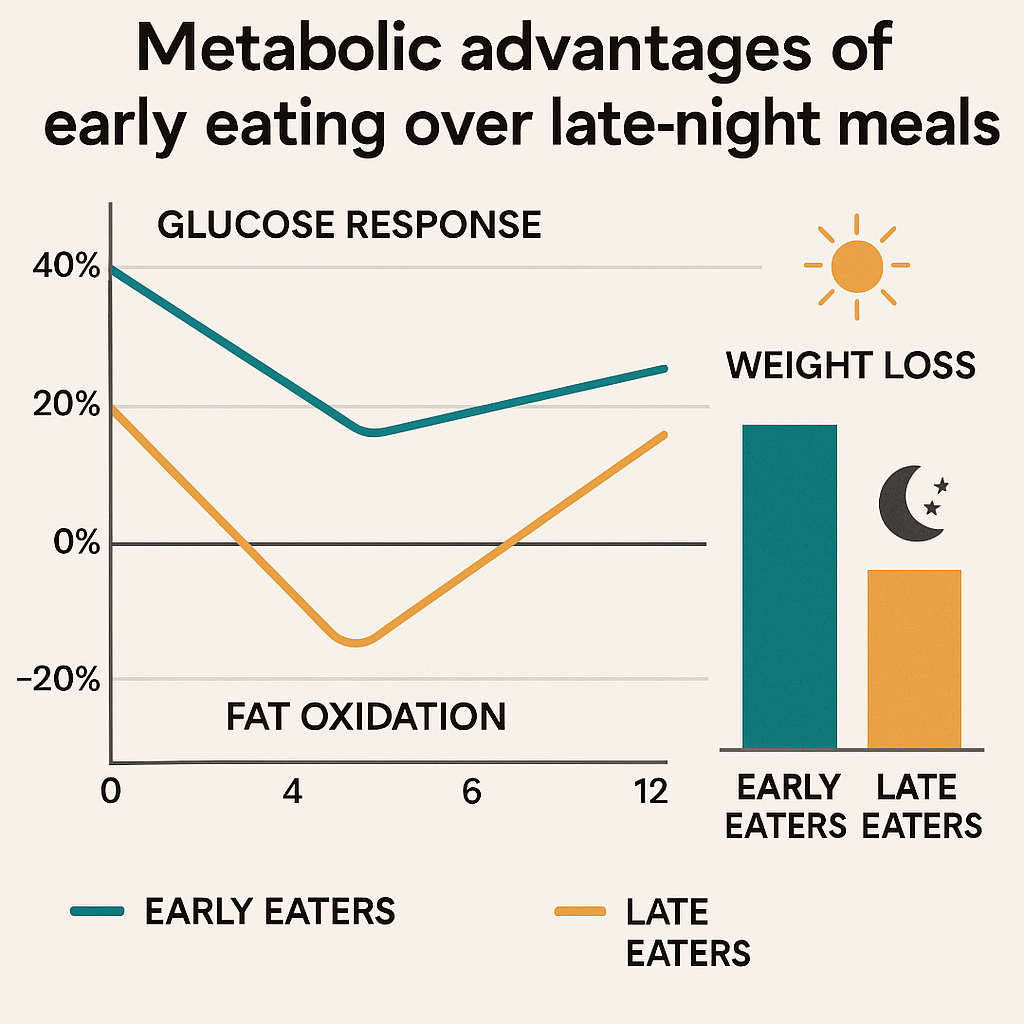
In a controlled study from the University of Murcia, participants who consumed a larger lunch and lighter dinner lost more weight and had better insulin response than those who ate heavier at night, even though total calories were identical.
🧬 Why Front-Loading Calories Works
Dr. Claire: Our digestive system follows a circadian rhythm. The pancreas releases more insulin in the morning, the gut has better motility, and enzymes are more active.
Dr. Evan: Yes, and when we eat early, we experience:
- Higher diet-induced thermogenesis (DIT)
- Faster gastric emptying
- Better glucose and lipid metabolism
- More stable cortisol and ghrelin rhythms
Dr. Claire: Let’s not forget the impact on sleep. Eating late increases nighttime glucose and body temperature, both of which impair deep sleep and melatonin production.
🍽️ The Ideal Daily Caloric Distribution
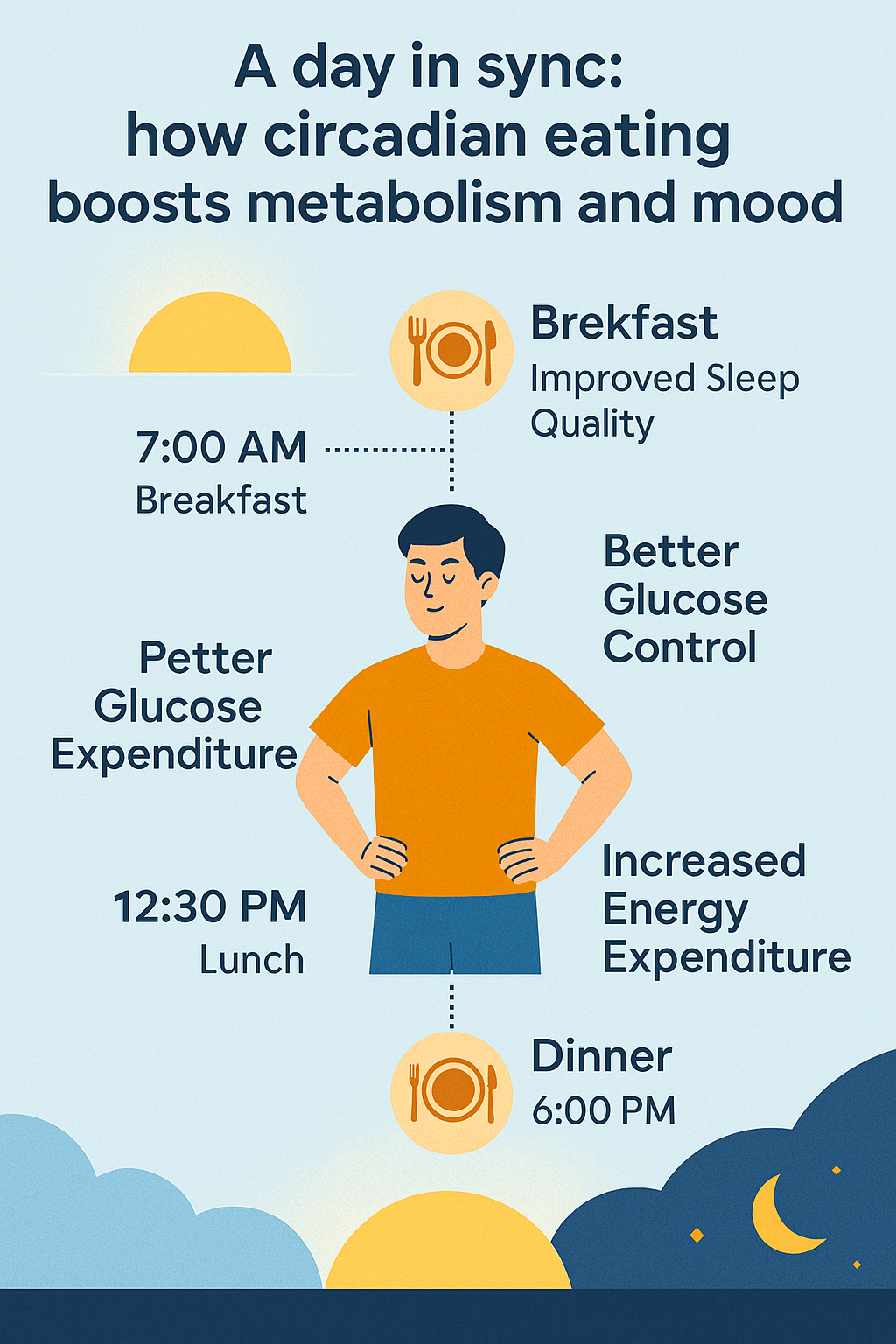
| 7:00–9:00 AM | Breakfast | 30–40% |
| 12:00–2:00 PM | Lunch | 40–50% |
| 5:00–6:30 PM | Dinner | 10–20% |
Front-loading your day with calories maximizes metabolic efficiency. Late eaters, even on calorie-restricted diets, tend to lose less fat and more lean mass.

📊 What the Research Shows
- Early eaters have:
- Lower fasting insulin
- Improved HOMA-IR (insulin resistance marker)
- Reduced hunger hormones (ghrelin)
- Increased energy expenditure
- Late eaters are more likely to:
- Suffer from poor sleep quality
- Experience sugar cravings at night
- Store more visceral fat
- Develop insulin resistance over time
A 2020 randomized trial in Cell Metabolism found that even with identical calories, late eaters gained more fat and showed worsened glucose tolerance than early eaters.
🧠 The Hormonal Advantage of Early Eating
Dr. Evan: Let’s talk hormones. Early eating supports:
- Leptin: Improves satiety and reduces food intake
- Ghrelin: Suppresses appetite at night
- Insulin: Better postprandial response in the morning
- Cortisol: Proper morning spike enhances metabolism
Dr. Claire: Eating late disrupts this balance. It leads to flattened cortisol rhythms, elevated nighttime glucose, and increased ghrelin the next morning—creating a vicious cycle of fatigue and overeating.
🥗 Are You Front-Loading Your Calories Correctly?
This 10-question quiz will help you find out whether your eating pattern supports metabolic health through early calorie intake.
🥣 Common Questions (FAQ)
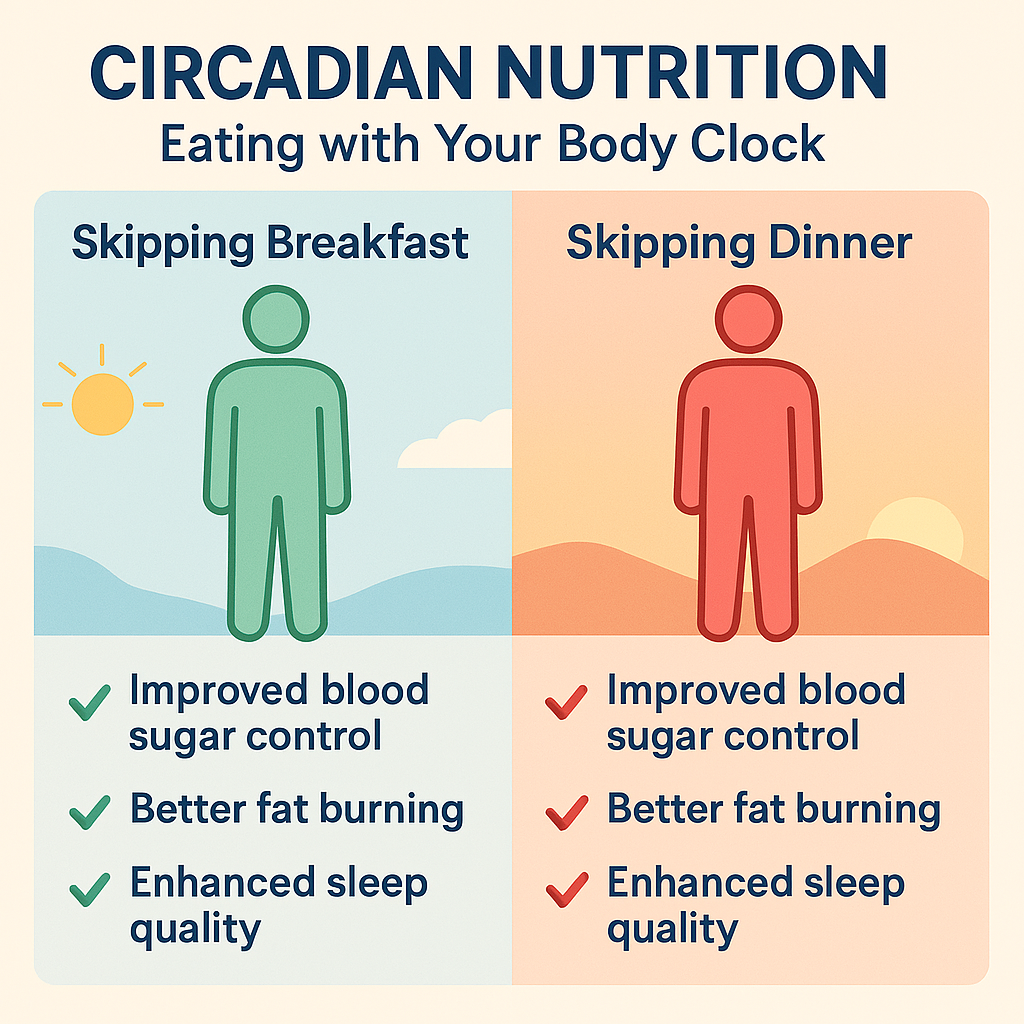
Q1: Is skipping dinner better than skipping breakfast?
Yes. Skipping dinner leads to better blood sugar control, fat oxidation, and sleep. Skipping breakfast increases cortisol, disrupts appetite, and impairs glucose response at lunch.
Q2: Can I eat carbs in the morning?
Absolutely. Your insulin sensitivity is highest in the morning, making it the best time to consume healthy carbs (e.g., oats, fruits, sweet potatoes).
Q3: What if I’m not hungry in the morning?
Gradually shift your dinner earlier and lighter. After 3–5 days, your natural hunger rhythm will shift forward.
Q4: Is this approach safe for diabetics?
Yes, but always under supervision. Early eating and time-restricted windows have shown improved glucose control in both prediabetics and type 2 diabetics.
Q5: Do I need to track calories strictly?
Not necessarily. When your meals are aligned with your circadian rhythm, your hunger cues tend to regulate naturally. Mindful eating replaces calorie obsession.
🔧 Practical Tips to Shift Your Eating Earlier
- Start eating within 1 hour of waking
- Make lunch the biggest meal of your day
- Finish eating by 6:30–7:00 PM
- Avoid nighttime snacking—even "healthy" ones
- Plan high-protein, high-fiber breakfasts to curb late hunger
Dr. Evan: I recommend preparing breakfast ahead of time—overnight oats, egg muffins, or a protein shake. That way, even busy people can start the day metabolically aligned.
Dr. Claire: And use light as a cue. Get morning sunlight to reinforce your circadian rhythm. Avoid screens or bright light at night—it helps regulate appetite hormones, too.

🔚 Final Thoughts: Align the Fork with the Clock
Circadian nutrition isn’t about perfection—it’s about alignment.
When you eat in sync with your body’s internal time zones, every aspect of your health improves:
☀️ Your energy rises in the morning
🌿 Your metabolism works efficiently
🌙 Your sleep deepens at night
So the next time you plan a meal, don’t just ask “What should I eat?”
Ask: “What time is it on my biological clock?”


