Understanding how light, pressure, and seasonal shifts affect your mood and energy
✅ TL;DR (3-Line Summary)
- Seasonal Affective Disorder (SAD) is a clinically recognized form of depression linked to decreased daylight in fall and winter.
- Weather-related fatigue is a more general condition triggered by sudden environmental changes like low pressure, humidity, or cloud cover.
- Both conditions affect energy, mood, and focus—but require different strategies to manage and recover.
👩⚕️ Expert Dialogue: Dr. Eliza (Neuropsychiatrist) & Dr. Harris (Environmental Physiologist)
Dr. Harris: Eliza, every fall I hear people say “I feel off” or “I have no energy lately.” But not all of them meet the criteria for Seasonal Affective Disorder, right?
Dr. Eliza: That’s exactly right. SAD is a subtype of major depressive disorder (MDD) with seasonal patterns. It includes anhedonia, hypersomnia, and social withdrawal, and it must persist for at least two consecutive years to be diagnosed. But many people have weather-related fatigue that’s less severe but still very disruptive.
Dr. Harris: What do we think causes that low-energy, low-motivation fog on overcast or rainy days?
Dr. Eliza: A mix of things. Reduced sunlight exposure lowers serotonin and dopamine production. Cloudy weather also impacts our circadian rhythm—especially melatonin regulation. Plus, shifts in barometric pressure and humidity affect the nervous system more than we once believed.

🌤️ SAD or Weather-Related Fatigue? Self-Assessment
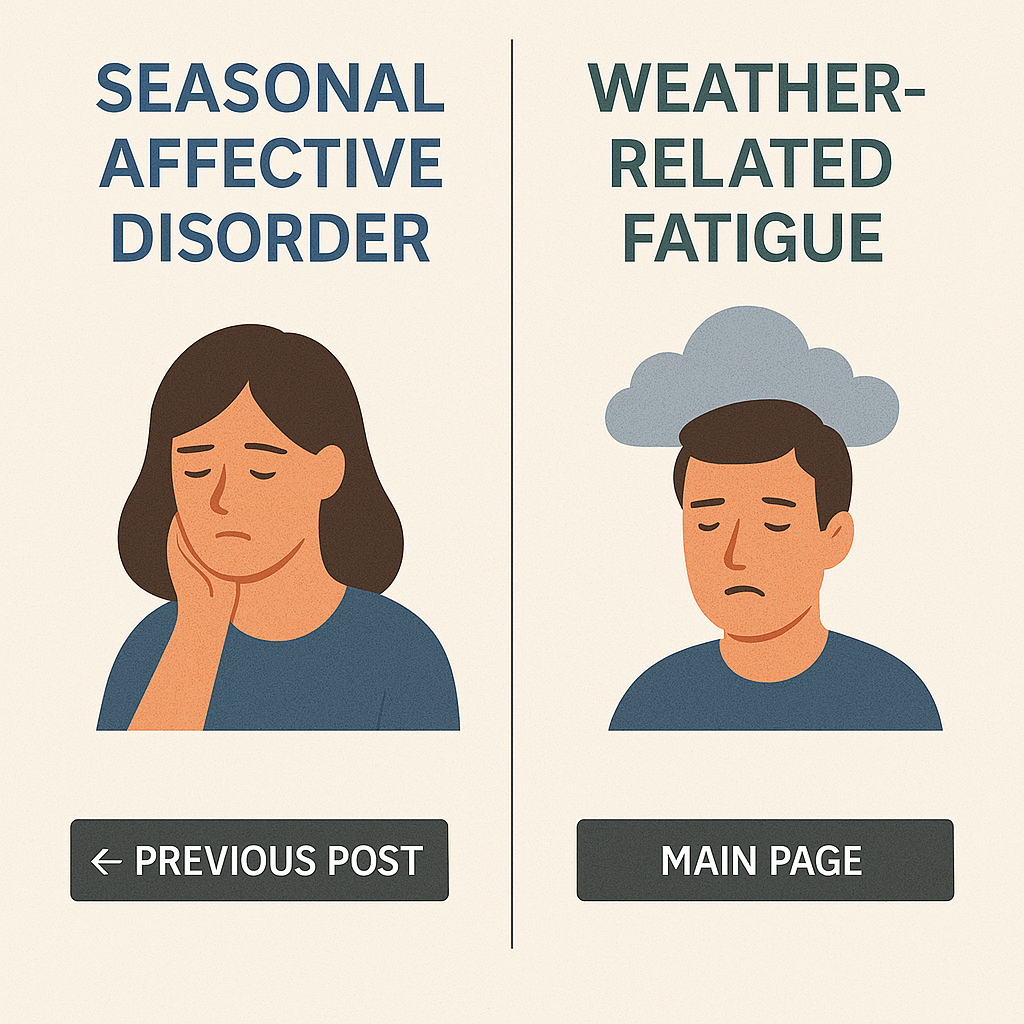
🌦️ What’s the Difference?
| Duration | ≥ 2 weeks, recurring in fall/winter | Hours to days, after weather shifts |
| Cause | Lack of sunlight & circadian misalignment | Humidity, pressure changes, cloud cover |
| Symptoms | Depression, hypersomnia, weight gain, anhedonia | Brain fog, tiredness, heaviness, low focus |
| Diagnostic Criteria | DSM-5 | Not clinical, but widely reported |
| Treatment | Light therapy, antidepressants, CBT | Lifestyle adjustments, hydration, movement |
Dr. Harris: So how do you distinguish between the two in practice?
Dr. Eliza: If a patient reports year-after-year depression beginning in late fall, we suspect SAD. But if they say “I just feel sluggish when it rains,” that’s likely weather-related fatigue—which may still involve autonomic dysregulation and neuroinflammation.
🔬 How the Environment Affects Mood & Energy
- Reduced sunlight = less serotonin → low mood, cravings, sleepiness
- High humidity = poor thermoregulation → fatigue, fogginess
- Low barometric pressure = altered blood oxygenation → sluggishness
- Cold or windy air = increased sympathetic tone → tension, poor sleep
- Disrupted circadian cues = melatonin misfiring → irregular sleep-wake cycles

Dr. Harris: There’s also growing interest in atmospheric pressure sensitivity, which may explain why people feel low energy right before a storm—even if their sleep was fine.
Dr. Eliza: Yes. It’s part of what we call interoceptive weather sensitivity. The body may register external shifts like pressure and moisture as biological stress, triggering a subtle immune or cortisol response.
🧠 The Brain on Clouds: Neurological Impact
- Less light → less hypothalamic stimulation → circadian desynchronization
- Gray skies affect retinal ganglion cells, which feed mood-regulating areas like the amygdala
- Vitamin D synthesis drops, impairing immune and neurotransmitter function
- Cognitive speed slows due to reduced dopamine in prefrontal cortex
🌤️ Ways to Tell If It’s SAD or Just the Weather
Ask yourself:
- Do symptoms last weeks or just a few days?
- Do they repeat every winter or only during certain weather conditions?
- Are you sad and withdrawn, or just tired and foggy?
- Does light therapy improve symptoms?
If your symptoms:
- Last longer than 2 weeks
- Cause significant impairment
- Return every year at the same time
➡️ Consider evaluation for SAD.
🧰 Solutions: Managing Both SAD & Weather Fatigue
Dr. Eliza: Regardless of which it is, light exposure is medicine. Start the day with 20–30 minutes of bright light, ideally 10,000 lux from a light box or morning sun.
Dr. Harris: I also recommend daily movement, cool-adapted showers, and limiting blue light exposure at night. The goal is to strengthen circadian resilience.
✅ Daily Strategies for Energy in Low-Light Conditions
- Bright light exposure (morning sun or light therapy)
- Keep a consistent sleep-wake schedule
- Exercise daily—outdoors when possible
- Eat high-tryptophan foods (eggs, salmon, seeds)
- Use grounding activities (stretching, breathwork)
- Avoid sugar crashes and excessive caffeine
- Track mood patterns with weather apps
🙋♀️ FAQ – SAD vs. Weather Fatigue
Q1. What is the main difference between SAD and weather fatigue?
SAD is a clinical depressive disorder triggered by seasonal light changes, while weather fatigue is a temporary physiological response to environmental shifts like humidity or barometric pressure.
Q2. Can weather-related fatigue be treated with antidepressants?
Not typically. Since it’s transient and non-clinical, it's better managed with lifestyle changes and environmental adaptation.
Q3. How do I know if I need a SAD lamp?
If you experience consistent seasonal mood drops, fatigue, and low motivation for more than 2 weeks in fall/winter, a SAD lamp (10,000 lux, 20–30 min/day) may help.
Q4. Does low pressure cause brain fog?
Yes, for some people. Low barometric pressure can reduce oxygenation, alter cerebral blood flow, and affect the autonomic nervous system—leading to fatigue and mental slowdown.
Q5. Can both SAD and weather fatigue coexist?
Yes—and many people experience both. They share overlapping symptoms but differ in duration, intensity, and response to treatment.
Q6. What role does vitamin D play in seasonal mood?
Vitamin D helps regulate serotonin and dopamine production. Low sunlight leads to deficiency, which may worsen mood disorders and fatigue.
🧭 Final Thoughts: Know Your Seasonal Blueprint
Whether it's full-blown Seasonal Affective Disorder or milder weather fatigue, the environment has a powerful effect on the brain.
By understanding how seasonal cues impact your physiology, you can build resilience through light, movement, and rhythm—and take back your energy even when the skies are gray.
💬 Have You Felt the Fog?
Do gray days bring down your energy or mood?
Have you found a routine that helps?
👉 Share your story in the comments—your insight may help someone else see the light.


