🔐 TL;DR (3-Line Summary)
- Over-the-counter (OTC) drugs are easily accessible but often misunderstood.
- Many assume they're harmless, yet misuse can lead to serious health risks.
- This post breaks down what counts as OTC, how to use them safely, and the line between self-care and self-harm.
👨🎓 Expert Dialogue: Reader vs. Pharmacist
Emily (Health-conscious reader): "I always thought OTC drugs were the 'safe zone.' You just walk into a store and pick what you need. No need to consult anyone. But lately, I’ve heard some worrying stories about side effects and interactions. Should I be more careful?"
Dr. Miles Tan (PharmD): "Absolutely. OTC drugs are accessible for convenience, but that doesn’t mean they’re risk-free. Many of them were once prescription-only. And when used incorrectly, they can lead to liver damage, ulcers, dependency, or dangerous drug interactions."
Emily: "I didn't realize the risk could be that serious. Which ones are the most problematic?"
Dr. Tan: "NSAIDs like ibuprofen or naproxen can cause GI bleeding. Acetaminophen is infamous for liver toxicity if overdosed. Antihistamines can cause drowsiness or cognitive dulling, especially in older adults. Even something as common as a decongestant can elevate blood pressure."
Emily: "Wow. Is there a rule of thumb for safe use?"
Dr. Tan: "Start by reading labels—not just the brand name but the active ingredient. Stick to the lowest effective dose, avoid using multiple products with the same ingredients, and don’t mix with alcohol. Most importantly, if you're taking prescription meds, always check for interactions."
📊 Quick Poll
Do you always read the label before taking an OTC drug?
💬 Leave your opinion in the comments!
🔬 OTC vs. Prescription Drugs: What’s the Difference?
Prescription drugs are authorized by a healthcare provider after assessing your specific needs. OTC drugs, in contrast, are approved by the FDA for general public use without a prescription, under the assumption that users will follow labeled directions carefully.
However, many OTC medications were originally prescription-only. Diphenhydramine, the sleep aid in Benadryl, was prescription in the 1960s. The popular heartburn reliever omeprazole (Prilosec OTC) also made the switch.
Common Misconceptions:
- "If it’s OTC, it must be harmless." ❌ False.
- "Natural = safe." ❌ Not always.
- "Double dose = double effect." ❌ Often dangerous.
⚖️ Regulatory Oversight: FDA's Role
In the U.S., the FDA maintains a list of monograph categories that define what can be sold OTC. These include dosing limits, warnings, age restrictions, and usage guidelines. Products must meet these criteria or undergo separate review.
Some countries have stricter or looser regulations. For example, pseudoephedrine is tightly controlled in the U.S. due to meth production concerns, while it's OTC in some other nations with fewer restrictions.
🧼 Who's Most at Risk from OTC Misuse?
- Older adults – More sensitive to sedatives like antihistamines and pain medications; increased risk of confusion, falls, and memory issues.
- Children – More prone to dosing errors due to weight-based differences; their metabolism handles drugs differently, and even small miscalculations can be harmful.
- People with chronic conditions – Those with high blood pressure, liver, kidney, or gastrointestinal issues may worsen symptoms with OTC decongestants, NSAIDs, or antacids.
- Polypharmacy patients – Individuals taking multiple prescription medications face higher risk of drug interactions, especially with overlapping liver-metabolized drugs or CNS depressants.
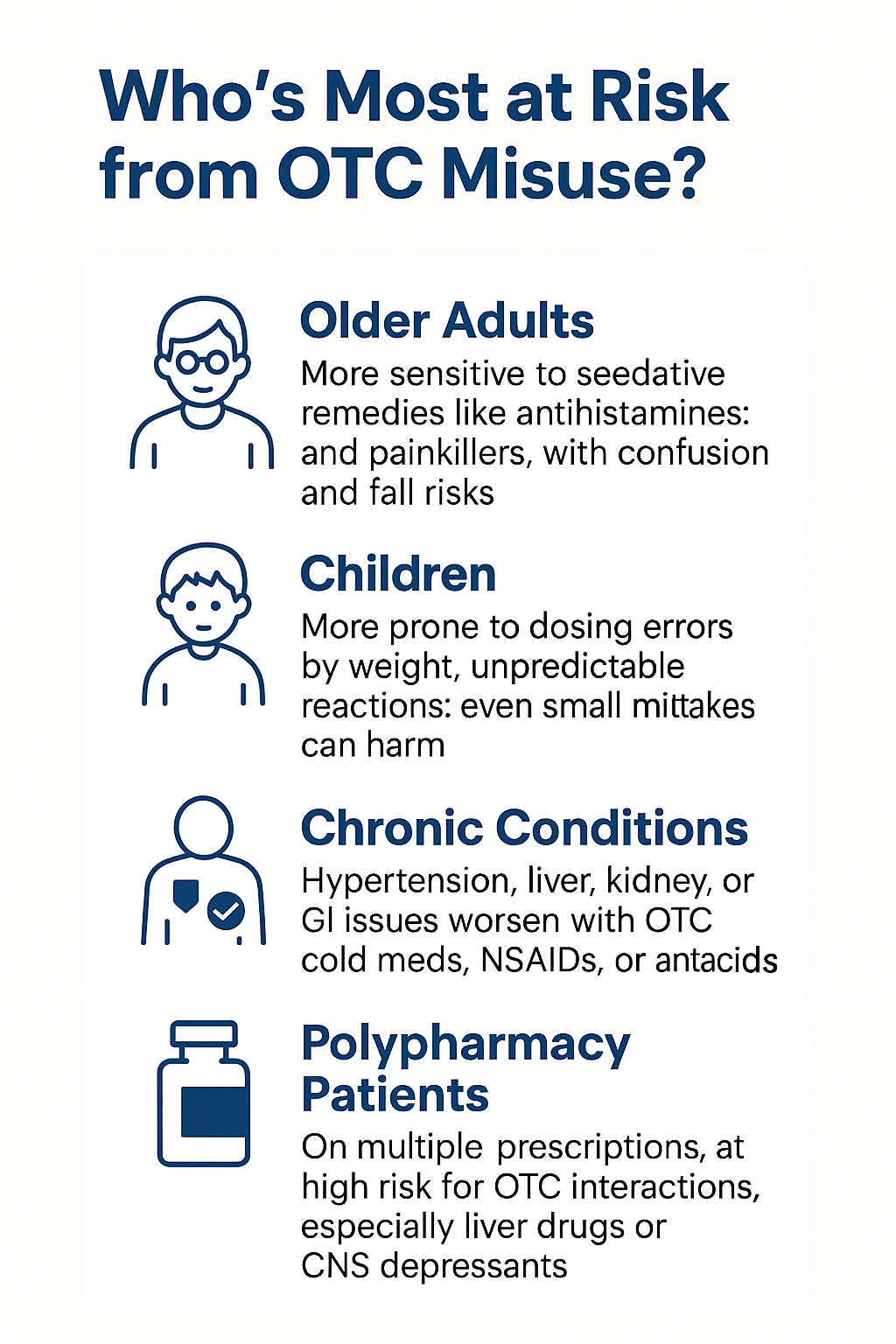
Alt text: "Who's Most at Risk from OTC Misuse?" displaying four high-risk groups—Older Adults, Children, Chronic Conditions, and Polypharmacy Patients—with simple icons and brief safety warnings for each.
📄 Mini Quiz: Are You Overusing OTCs?
- Do you take OTC meds more than 3 times a week?
- Have you used two products with the same active ingredient?
- Do you skip reading the label because you've used it before?
- Do you combine OTCs with alcohol?
- Have you used them longer than the label suggests?
If you answered YES to 3 or more, you may be misusing OTC drugs. Scroll down to explore safe alternatives.
📅 Recommended Practice: Monthly Medicine Cabinet Check
Every 30 days, check your medicine cabinet for:
- Expired drugs
- Duplicate products (e.g. multiple acetaminophen brands)
- Unused prescriptions stored with OTCs
- Children’s medications stored near adult formulas
Use a checklist app or physical chart to track your medications. Dispose of expired items safely (don’t flush).
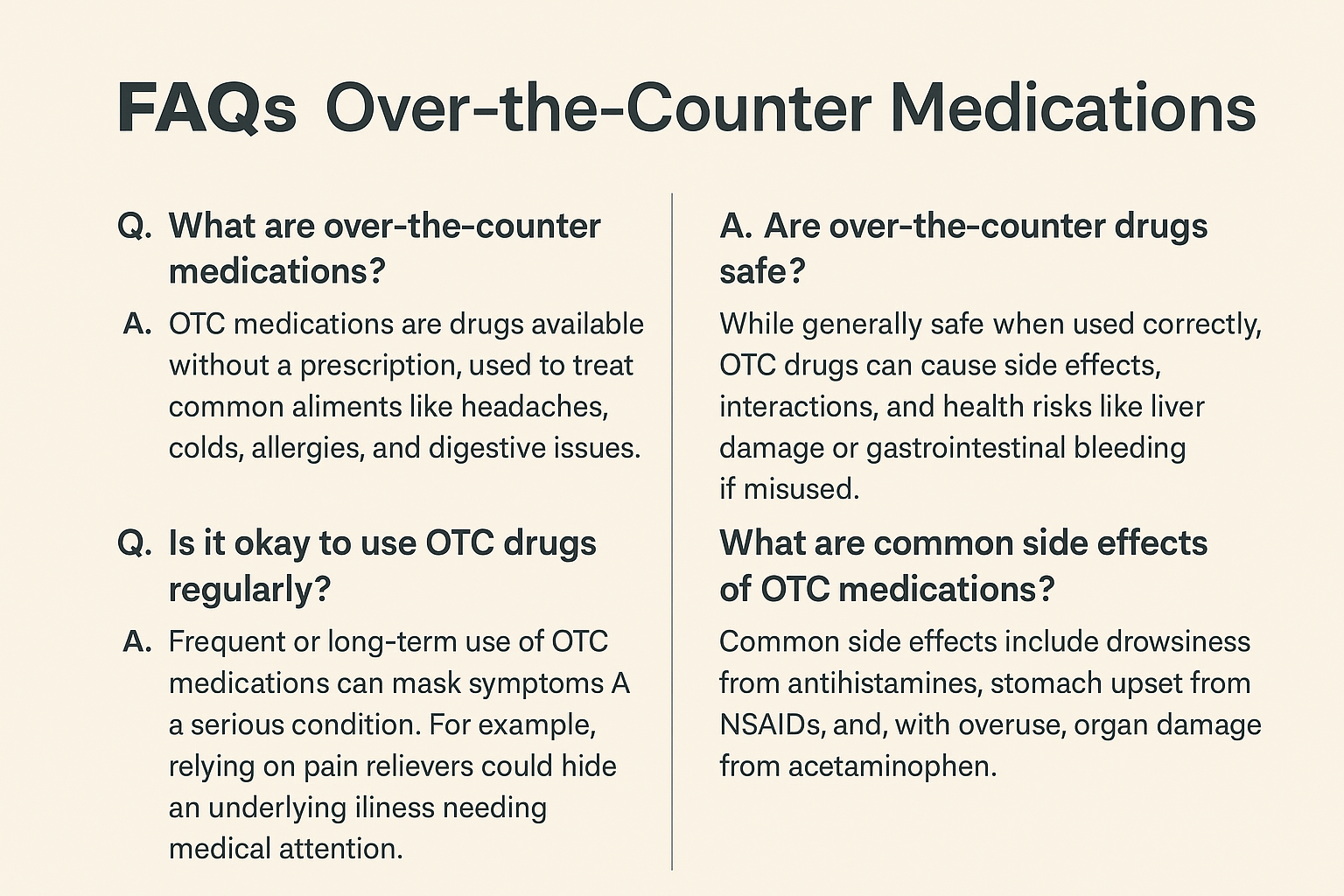
Alt text: Infographic showing four FAQ answers about OTC drugs, including their definition, safety, risks of regular use, and side effects.
🩺 OTC Risk Self-Assessment
Answer all 10 questions to receive personalized advice on your OTC medication habits.
❓ FAQ (Detailed & Specific)
Q1: How many people misuse OTC drugs?
A: Over 60 million Americans report using OTC meds weekly. According to the Consumer Healthcare Products Association, nearly 20% of users exceed dosage guidelines—particularly during flu seasons or when symptoms overlap. This misuse often results from stacking cold, flu, and pain products with duplicate ingredients.
Q2: Is it safe to take Tylenol and NyQuil together?
A: No. Both products commonly contain acetaminophen. Taking them together doubles the acetaminophen load, increasing your risk of liver toxicity or even acute liver failure. This is especially dangerous if taken with alcohol or other hepatotoxic medications. Always read the ingredient panel.
Q3: Can I give adult OTC meds to my child if I lower the dose?
A: Never without a pediatrician's guidance. Children process medications differently due to metabolic rate, liver enzyme development, and body weight. Underdosing may be ineffective, and overdosing—even slightly—can be toxic. Always choose pediatric-specific formulations.
Q4: Are herbal or “natural” OTC products safer than synthetic ones?
A: Not necessarily. “Natural” does not equal safe. For example, St. John's Wort can reduce the effectiveness of birth control pills and SSRIs. Kava and valerian may affect liver enzymes. Herbal products are not always FDA-regulated, and purity varies. Always consult a healthcare provider when combining herbs with medications.
Q5: What’s the most common hidden danger in OTC use?
A: Ingredient duplication. Many consumers unintentionally take multiple products (cold + flu + pain relief) containing the same active ingredients—especially acetaminophen or diphenhydramine. This increases risk for overdose, sedation, or toxic reactions. Keep a log and use only one product per symptom when possible.
🛎️ Sticky CTA
What’s Really in Your Medicine Cabinet? Check labels. Audit your OTCs. Ask a pharmacist. Your liver, heart, and brain will thank you.
🩺 OTC Safety Self-Check
Answer honestly to assess your over-the-counter medication habits.


