Digestive issues like constipation, heartburn, and indigestion are common in daily life. Over-the-counter (OTC) medications are often the first line of defense because they are easily accessible at pharmacies or grocery stores. However, choosing the right product for your symptoms is essential for effective relief.
Let’s explore how to select the appropriate OTC medicine for each type of symptom.
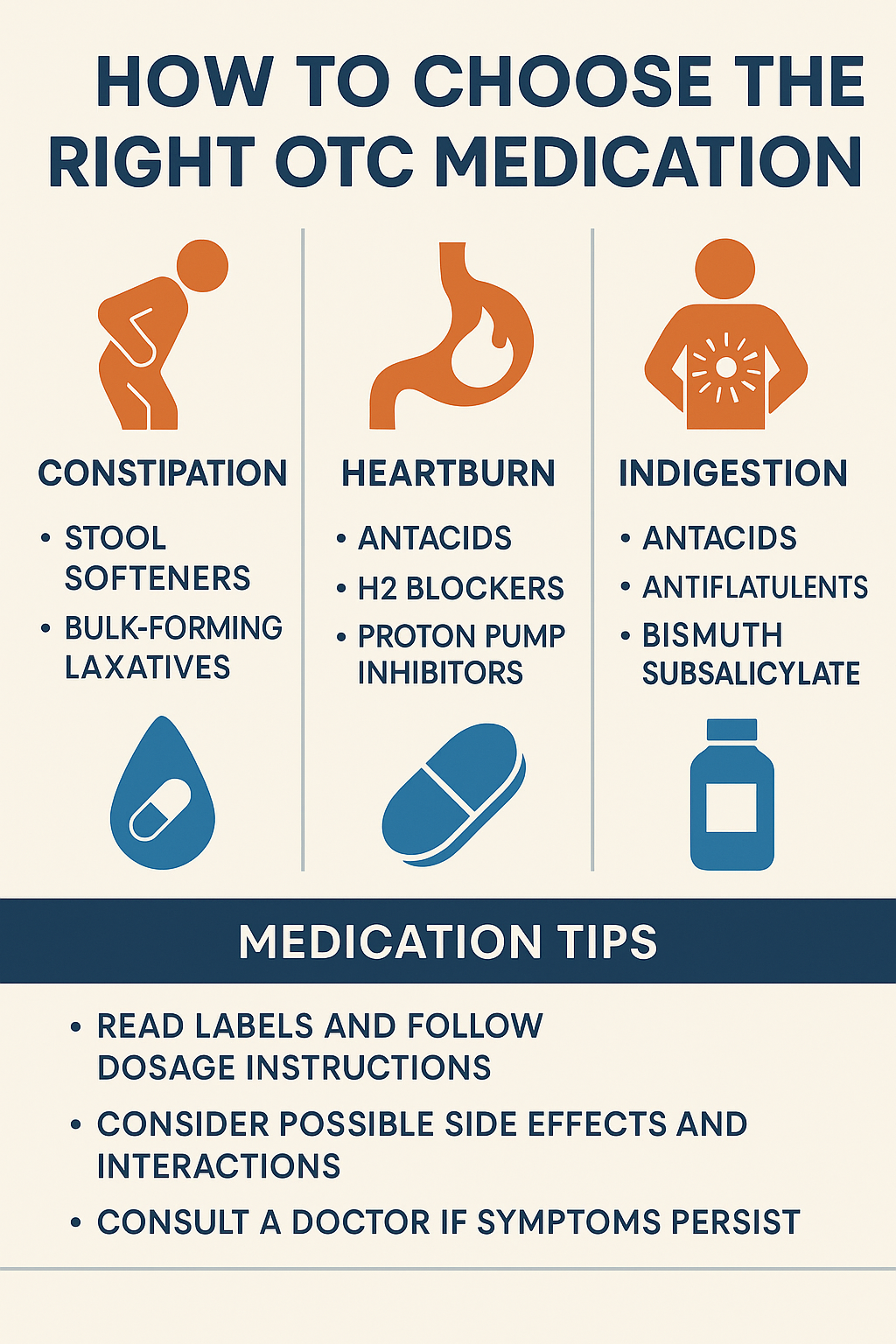
Alt Text: A clean and informative infographic visually explaining how to choose the right over-the-counter (OTC) medication based on common digestive symptoms such as constipation, heartburn, and indigestion, with icons and medication tips categorized by symptom.
🔹 1. When You Have Constipation
Recommended Medications:
- Osmotic laxatives (e.g., polyethylene glycol, milk of magnesia): Ideal for occasional constipation.
- Stool softeners (e.g., docusate): Helpful when stools are hard or painful to pass.
- Stimulant laxatives (e.g., senna, bisacodyl): Effective for fast relief.
Cautions:
- If you haven’t had a bowel movement for a day but feel fine, there’s no need to use a laxative immediately.
- Prolonged use may cause dependence. If constipation lasts over a week, consult a doctor.
📝 OTC Medication Self-Assessment
🔹 2. When You Have Heartburn or Acid Reflux
Recommended Medications:
- Antacids (e.g., calcium carbonate, magnesium hydroxide): For quick relief of occasional heartburn.
- H2 blockers (e.g., ranitidine, famotidine): For frequent symptoms (some require a prescription).
- For nighttime symptoms: Choose long-acting antacids or H2 blockers.
Cautions:
- If you're using antacids multiple times a day, it might be GERD (gastroesophageal reflux disease). See a healthcare provider.
- People with kidney issues should avoid certain ingredients like magnesium or aluminum.
🔥 Heartburn & Acid Reflux Self-Check
🔹 3. When You Feel Bloated or Have Indigestion
Recommended Medications:
- Digestive enzymes or anti-gas agents (e.g., simethicone): For bloating or gas after meals.
- Combination digestive aids (enzymes + antacids): For persistent fullness and frequent belching.
Cautions:
- Determine whether symptoms are occasional or chronic.
- Recurring indigestion may indicate a deeper issue like gastritis or peptic ulcers, so proper diagnosis is important.
💨 Bloating & Indigestion Self-Check
✅ Basic Guidelines for Choosing OTC Medications
- Check the label: Always read active ingredients, dosage, side effects, and warnings.
- Limit duration: OTC medications are designed for short-term use only.
- Know your medical history: Conditions like hypertension, diabetes, kidney disease, or pregnancy may limit your options.
- Watch for multiple symptoms: A single medication may not be sufficient if multiple symptoms overlap.
💡 While OTC medications are a convenient and effective way to relieve symptoms, they are not a cure. If symptoms are severe or recurring, professional medical advice is essential.


