TL;DR
- Over-the-counter (OTC) mood products like diphenhydramine and CBD are popular, but often misused.
- Adolescents and adults are vulnerable to side effects like cognitive decline, dependency, and mood instability.
- This article explores deeper layers of risk and misuse trends in both age groups, with expert guidance.

alt text: "OTC mood support infographic highlighting risks in teens and adults including cognitive issues, dependency, and long-term health concerns. Shows a hand holding a pill bottle and floating pills."
🎙️ Expert Dialogue: Teen Use, Brain Health & the OTC Trap
Dr. Erica Lien (Neuropharmacologist): "When teenagers begin using OTC meds like Benadryl or CBD gummies to calm anxiety or sleep, they don't realize the brain is still in development. These substances can interfere with neurotransmitter formation."
Dr. Isaac Lee (Child & Adolescent Psychiatrist): "Absolutely. The prefrontal cortex – responsible for decision-making and emotion regulation – isn't fully developed until the mid-20s. That makes teens more vulnerable to the cognitive effects of sedative antihistamines."
Dr. Lien: "And the rebound effect is real. Teens who stop using OTC sleep aids often experience worse anxiety, disrupted sleep, and increased irritability."
Dr. Lee: "In adults, long-term misuse leads to subtle but significant cognitive issues: memory lapses, reduced processing speed, and emotional blunting."
Dr. Lien: "The paradox is that what starts as relief can reinforce a cycle of dependency. Without medical oversight, individuals adjust doses on their own – often leading to misuse."
📊 The Adolescent Brain vs OTC Products
1. Developmental Vulnerability
- Dopamine and serotonin pathways are still calibrating in teens.
- Sedating antihistamines (e.g., diphenhydramine) suppress these systems.
- Cannabinoid systems, influenced by CBD, are also sensitive during adolescence.
2. Behavioral Patterns
- Teens often seek quick fixes, increasing the risk of habitual use.
- Peer influence and online trends amplify OTC misuse.
3. Cognitive Consequences
- Reduced academic performance
- Impaired short-term memory
- Lower emotional regulation thresholds
🚨 Warning Signs in Adults
- Regular daytime grogginess or brain fog
- Needing OTC products to function socially or professionally
- Mixing multiple OTCs to amplify effects
- Using OTCs despite negative side effects (e.g., mood swings, dry mouth, GI upset)
📘 Real Case Snapshot: Emma, 17
"I was taking CBD gummies from a vape shop to help me relax after school. It worked at first. But after a few weeks, I felt more anxious when I didn't take them. My sleep got worse, and I started forgetting things during exams."
Emma’s story is not rare. OTC mood products, especially when unregulated or poorly dosed, can backfire quickly in young brains.
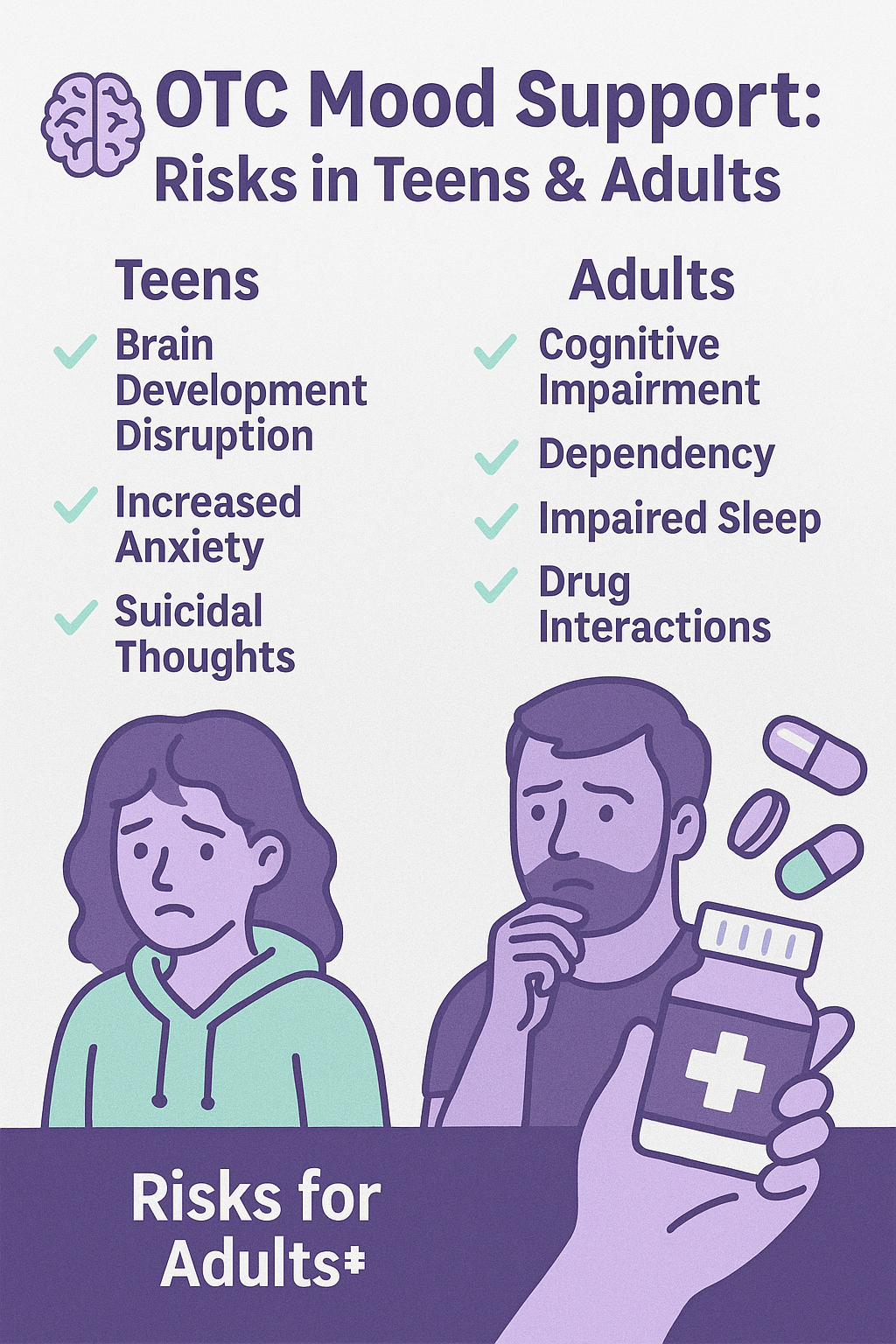
alt text: "Informative infographic illustrating the effects of over-the-counter mood aids like antihistamines and CBD on brain function and mental health, especially in teens and adults.
🔍 Red Flags for Dependency (Teen & Adult)
- ☑️ Increase in dosage without medical supervision
- ☑️ Justifying OTC use as "natural and harmless"
- ☑️ Use linked to emotional triggers (e.g., loneliness, stress)
- ☑️ Decline in academic, work, or social performance
🧠 OTC Mood Support Self-Check
🧠 Summary
OTC mood products are easily accessible but can pose serious risks, especially to developing brains. Teens and adults alike should be cautious of dependency, cognitive disruption, and emotional instability. Clinical guidance and informed use are key.
📲 CTA
Have you or someone you know relied on OTC mood aids? Share your experience or questions in the comments. Let’s spread awareness together.


