🔍 TL;DR (3-Line Summary)
Low-grade inflammation disrupts brain function long before chronic disease sets in.
It impairs neurotransmitter balance, weakens memory, and contributes to anxiety and depression.
You might not “feel inflamed,” but your brain might already be paying the price.
🎙️ Expert Dialogue: “Is My Brain Fog Actually Inflammation?”
Emma (Reader):
I’m 35, and I forget names, lose focus, and get random anxiety spikes. I thought it was burnout. Could this really be inflammation?
Dr. Greene (Integrative Health MD):
Absolutely. The brain is highly sensitive to inflammation. Even mild elevations in markers like IL-6 or TNF-alpha can slow down cognition, alter mood, and affect memory.
Emma:
But I haven’t had any infection or fever recently…
Dr. Greene:
That’s the trick—this isn’t an infection. It’s silent inflammation. Your immune system is subtly overactive, and that chronic signaling messes with brain chemistry.
Emma:
So I might not be “mentally off”—just biologically inflamed?
Dr. Greene:
Exactly. And the good news is: once you fix the fire, the brain often recovers fast.

alt text: "Infographic showing brain fog, anxiety, and mood changes linked to inflammation – https://mynote7226.tistory.com/
🧠 Inflammation’s Impact on the Brain: A Breakdown
Silent inflammation doesn’t just affect your joints or gut—it directly alters how your brain works.
1. Neurotransmitter Disruption
Inflammation interferes with the synthesis of serotonin, dopamine, and GABA—the chemicals that regulate mood and focus.
- IL-6 and TNF-alpha reduce serotonin availability
- Low dopamine = low motivation and memory
- Low GABA = increased anxiety and restlessness
🧪 A 2023 study in “Nature Neuroscience” showed patients with elevated CRP had 32% lower serotonin transporter availability.
2. Hippocampal Shrinkage
Your hippocampus—key for memory—can physically shrink under chronic inflammatory stress.
- Silent inflammation reduces BDNF (brain-derived neurotrophic factor), which supports brain plasticity
- Associated with early memory decline and cognitive aging
- Inflammation-related depression is strongly linked to hippocampal atrophy
3. Blood-Brain Barrier Breakdown
The blood-brain barrier (BBB) is your brain’s security gate. Inflammation makes it leaky.
- Toxins, immune cells, and inflammatory molecules infiltrate
- Leads to neurotoxicity and mood dysregulation
- Linked to multiple sclerosis and Alzheimer’s in advanced stages
🧪 Lab mice exposed to high-fat diets + IL-1β showed BBB permeability within 6 weeks.
4. Mood Disorders as “Inflammatory Disorders”
Many modern researchers now classify depression and anxiety as inflammatory diseases.
- SSRI-resistant depression often overlaps with elevated IL-6 and CRP
- Anti-inflammatory interventions (like omega-3, curcumin) show mood-lifting effects
- Stress, poor sleep, and gut health directly influence inflammation-related mood swings
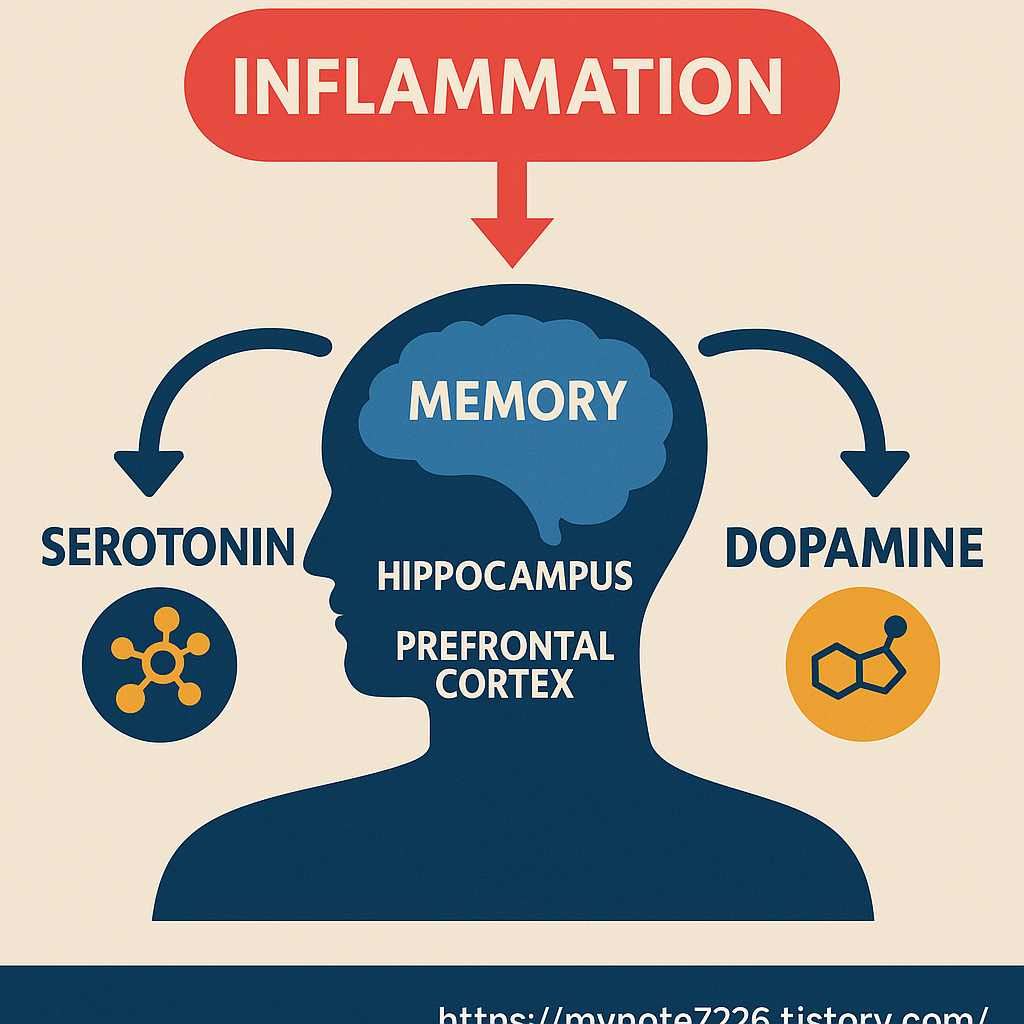
alt text: "Diagram showing inflammation affecting serotonin, dopamine, and brain regions related to memory – https://mynote7226.tistory.com/"
❓ FAQ: Brain + Inflammation
Q1. Can inflammation cause anxiety even if I don’t feel “sick”?
A: Yes. Chronic low-level inflammation elevates cortisol and disrupts neurotransmitters.
➡ It can feel like anxiety, even without external stress.
Q2. What labs can I ask for?
A:
- hs-CRP
- IL-6
- Homocysteine
- Omega-3 Index
➡ These give insight into your inflammatory and brain health status.
Q3. Is brain fog related to inflammation?
A: Yes. Brain fog is often the first neurological sign of systemic inflammation.
➡ It reflects reduced BDNF and sluggish mitochondrial energy in brain cells.
Q4. Are antidepressants effective for inflammation-based depression?
A: Sometimes. But anti-inflammatory diets, exercise, and gut health often outperform SSRIs alone in inflammation-driven cases.
➡ A 2022 review found a 41% remission rate from dietary interventions in “inflammatory depression.”
Q5. Can young adults be affected too?
A: Yes—especially with poor sleep, processed diets, or chronic stress.
➡ Even teens with high CRP show increased risk of mood disorders by age 25.
👤 Reader Story: “My Anxiety Wasn’t Mental—It Was Inflammation”
“I had panic attacks and couldn’t sleep. I did therapy, meds… nothing worked. Then I tried an anti-inflammatory diet, fixed my gut, and started omega-3s. My brain came back.”
– Jasmine, 29, Portland
<
📊 Quick Poll
Have you experienced brain fog or mood swings without clear reason?
💬 Let us know your experience in the comments below!
🧪 Self Check: Brain Inflammation Risk
💡 If you answered yes to at least 4 of these symptoms—brain fog, irritability, poor memory, sudden anxiety—you may be dealing with neuroinflammation.
📌 Try the full 10-Question Self-Check to see where you stand.
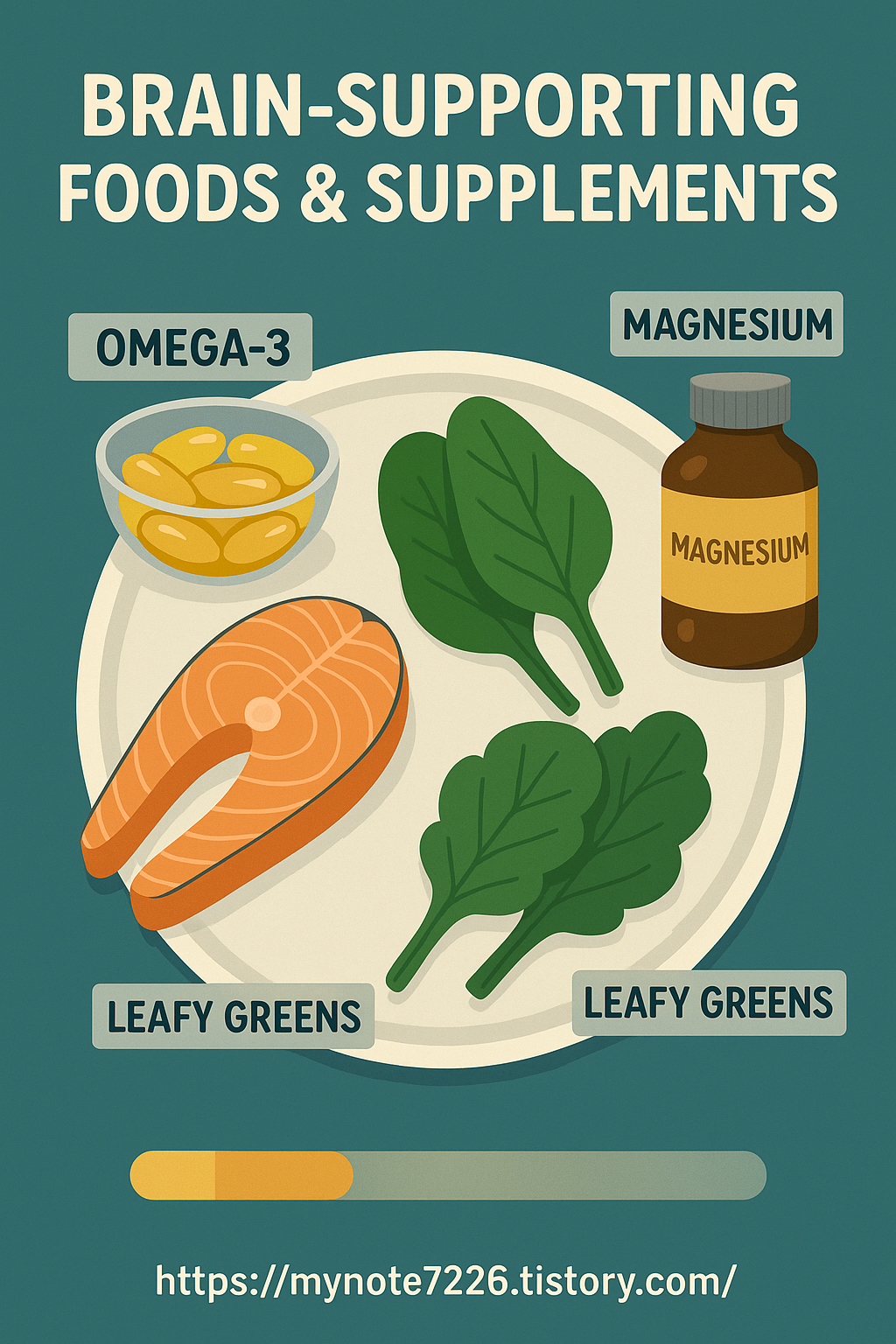
alt text: "Brain-supporting foods and supplements including omega-3, magnesium, and leafy greens – https://mynote7226.tistory.com/"
📣 Coming Next
In Part 3: Gut on Fire, we’ll explore how inflammation starts in your gut—often years before any symptoms show up. Leaky gut, dysbiosis, and bloating are all signs you shouldn't ignore.
💬 Final Word
Mental health isn’t just mental. Your brain reflects your biology—and inflammation could be the hidden villain. Ready to calm the fire?


