🔍 TL;DR (3-Line SEO Summary)
Silent inflammation can quietly erode your joints and trigger autoimmune diseases like rheumatoid arthritis and lupus.
This blog explores how the immune system becomes misdirected—and how to stop it before long-term damage occurs.
Discover symptoms, mechanisms, and healing strategies backed by science and functional medicine.
🎙️ Expert Dialogue: “Why Do My Joints Hurt Even When I’m Not Active?”
Emma (Reader):
I wake up stiff and sore—even on days I don’t exercise. Is this just aging?
Dr. Greene (Integrative Health MD):
Not necessarily. That kind of joint pain can be a sign of low-grade inflammation, especially when it comes with fatigue or brain fog.
Emma:
But my X-rays are normal, and it’s not arthritis. My doctor says I’m fine.
Dr. Greene:
That’s often how it starts. Autoimmune diseases like rheumatoid arthritis, Hashimoto’s, or lupus begin as silent inflammation—long before damage shows up on a scan. We call this pre-autoimmunity.

Alt Text: "Illustration of immune cells attacking joint tissue, representing early autoimmune response and silent inflammation in rheumatoid arthritis."
📊 Quick Poll
Do you have joint pain with no diagnosis?
💬 Share your experience in the comments below!
🔬 When Inflammation Turns Against You
Your immune system’s job is to defend your body—but chronic inflammation can confuse it.
Over time, the immune system may mistake healthy tissues for threats, and begin attacking them. This is autoimmunity.
1. Rheumatoid Arthritis (RA)
RA is one of the most common autoimmune diseases affecting the joints.
- Caused by chronic inflammation triggering T-cell–mediated joint attack
- Early signs: morning stiffness, fatigue, joint warmth
- Often starts years before diagnosis with low CRP or normal X-rays
🧪 A 2023 study in “Autoimmunity Reviews” found that intestinal permeability (leaky gut) often precedes RA diagnosis by 2–5 years.
2. Autoimmune Thyroid (Hashimoto’s & Graves’)
The thyroid is highly vulnerable to inflammatory immune attacks.
- Hashimoto’s: hypothyroid + fatigue + weight gain
- Graves’: hyperthyroid + anxiety + heart palpitations
- Often linked to gut dysbiosis, gluten sensitivity, and stress
3. Lupus & Mixed Connective Tissue Diseases
Lupus (SLE) affects skin, joints, kidneys, and brain through autoantibodies.
- Common symptoms: rashes, joint pain, fatigue, sun sensitivity
- Linked to overactive cytokine cascades (IL-6, TNF-alpha)
4. The Inflammation–Autoimmunity Connection
- Chronic silent inflammation primes the immune system to become dysregulated
- Leaky gut, poor detox, chronic infections (EBV, mold, etc.) worsen immune confusion
- Women are 4x more likely to develop autoimmune diseases—likely due to hormonal–immune cross-talk
🧪 Silent inflammation may trigger autoantibody production years before symptoms emerge.
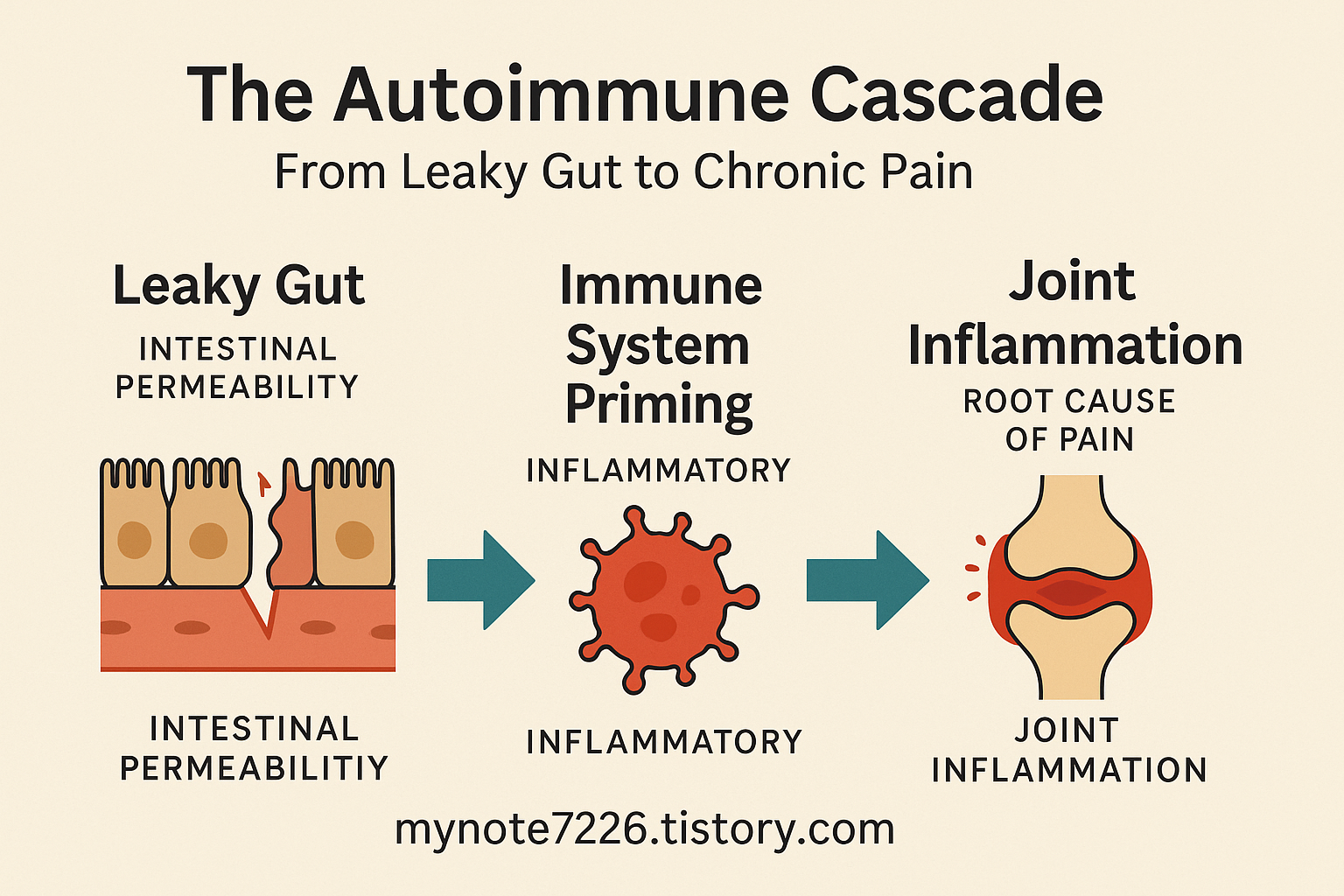
Alt Text: "Infographic showing the autoimmune cascade from leaky gut to immune system priming and joint inflammation, highlighting root causes of chronic pain."
❓ FAQ: Joint Pain & Autoimmunity
Q1. Can joint pain be inflammatory without arthritis?
A: Yes. Silent inflammation often causes morning stiffness, muscle aches, and fatigue before joint damage is visible.
➡ It’s common in “pre-autoimmunity” and can persist for years.
Q2. What are early signs of autoimmunity?
A:
- Brain fog
- Cold hands/feet
- Digestive issues
- Hair thinning
- Chronic fatigue
➡ These are red flags of immune dysregulation—even with normal labs.
Q3. Can I reverse early autoimmune markers?
A: Yes, especially in early stages.
➡ Healing leaky gut, improving nutrient status (vitamin D, zinc), and removing triggers can stop progression.
Q4. What foods worsen joint inflammation?
A:
- Gluten
- Dairy (in some)
- Refined sugar
- Processed meats
➡ These can trigger inflammatory cytokines and worsen symptoms.
Q5. Is testing for autoimmunity reliable?
A: ANA, TPO antibodies, and ESR/CRP are helpful—but not always definitive.
➡ Functional medicine often uses symptom patterns + gut testing for early detection.
👤 Reader Story: “My Joints Hurt, But My Labs Were ‘Normal’”
“I was 29 with knee pain, brain fog, and exhaustion. Doctors said it wasn’t arthritis. But once I addressed inflammation—healed my gut, managed stress—it all started improving.”
– Noah, 29, Austin
🦴 Self-Check: Inflammatory Joint Risk
👉 Take this 10-question self-assessment to find out your inflammation risk.

Alt Text: "Flat lay of anti-inflammatory foods and supplements for joint health, including turmeric, collagen, omega-3s, and leafy greens."
📣 What’s Next?
In Part 6: Blood Sugar & Inflammation, we’ll explore how insulin resistance and sugar spikes silently fuel chronic inflammation—and what you can do about it.
💬 Final Word
If your body is attacking itself, it’s time to ask: Why is it confused?
Inflammation holds the answer—and you can reclaim control.


