TL;DR (3-Line Summary)
- Brain inflammation, or neuroinflammation, is linked to brain fog, memory loss, mood disorders, and fatigue.
- Chronic stress, poor sleep, gut issues, and toxins are major contributors to hidden brain inflammation.
- Use the 10-question self-assessment below to discover your risk level and how to respond.
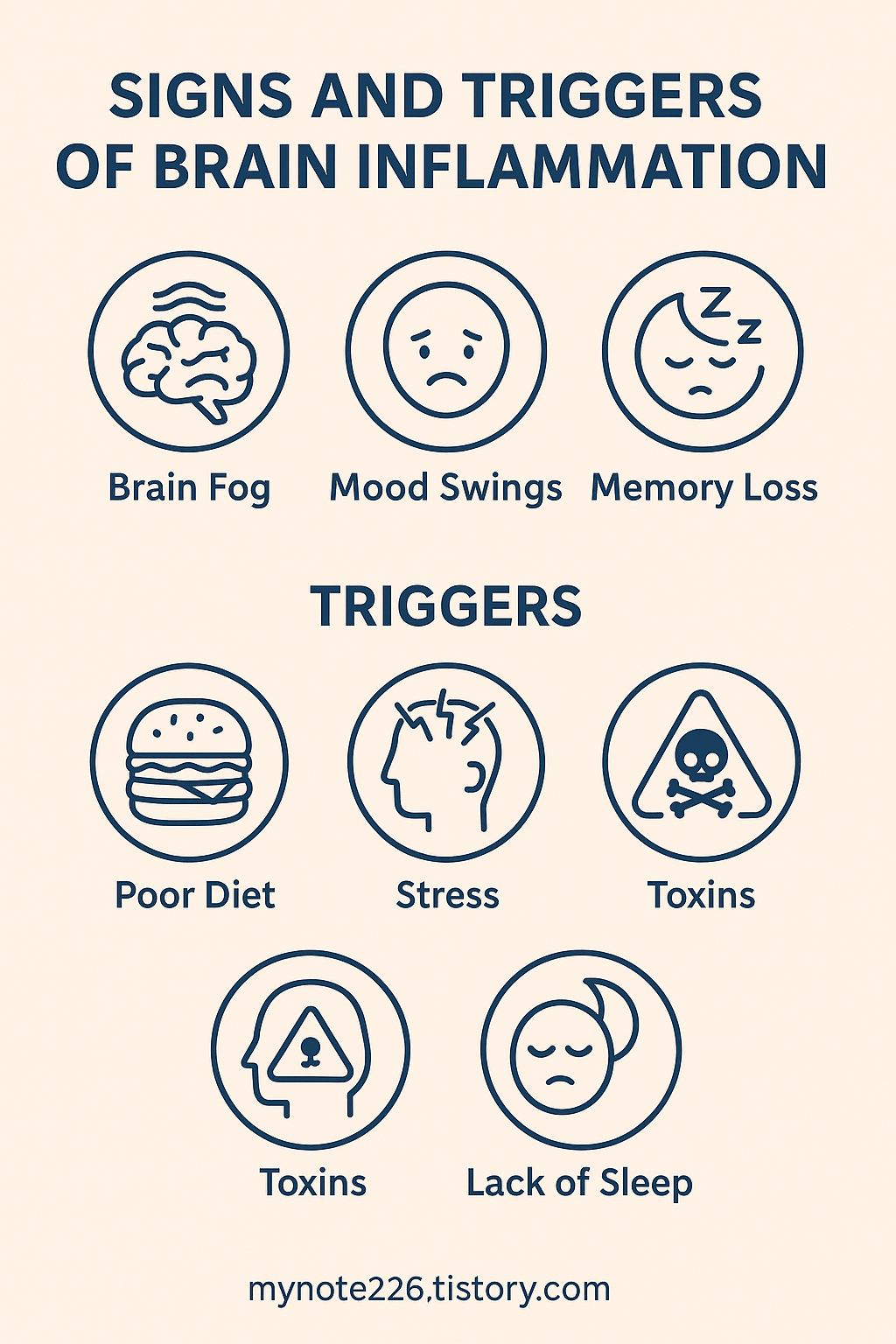
alt text : "Illustrated infographic showing signs and triggers of brain inflammation, including icons for brain fog, mood swings, memory loss, poor sleep, and stress. Designed for a health blog article on neuroinflammation risk."
🔍 What Is Neuroinflammation?
Neuroinflammation is the immune system's response within the central nervous system (CNS), especially in the brain and spinal cord. While acute inflammation helps heal injuries or infections, chronic neuroinflammation can silently damage neurons and impair mental performance over time.
It’s now considered a root factor in:
- Brain fog and poor focus
- Anxiety and depression
- ADHD-like symptoms
- Alzheimer's and Parkinson's risk
🧬 What Triggers Brain Inflammation?
- Leaky gut and systemic inflammation
- Chronic psychological stress
- Environmental toxins (e.g., mold, pollution)
- Nutrient deficiencies (especially omega-3s, B vitamins)
- Blood sugar imbalances
When the blood-brain barrier is compromised, immune cells (microglia) become overactive, releasing inflammatory cytokines that can disrupt neurotransmitter function and brain chemistry.
🧠 Common Signs of Brain Inflammation
- Do you feel mentally slower or more forgetful lately?
- Have you lost your emotional resilience or feel more irritable?
- Do you wake up tired or crash in the afternoon?
- Does your brain feel "foggy" even when you sleep enough?
If these sound familiar, it may be time to assess your risk.
🧠 Self-Check: Brain Inflammation Risk
📌 If you answered "Yes" to at least 4 of these, you may be dealing with neuroinflammation.
✅ Action Steps Based on Your Score
- Low Risk: Maintain Mediterranean-style eating, regular movement, good sleep hygiene.
- Moderate Risk: Add curcumin, magnesium threonate, omega-3s, and reduce tech exposure at night.
- High Risk: Get CRP, IL-6, and omega-3 index tested. Consider gut-brain healing protocols.
🗣️ Join the Conversation
Have you ever experienced brain fog or mood changes that felt deeper than stress?
💬 Share your story or questions in the comments below. Let’s bring awareness to the silent epidemic of brain inflammation.


