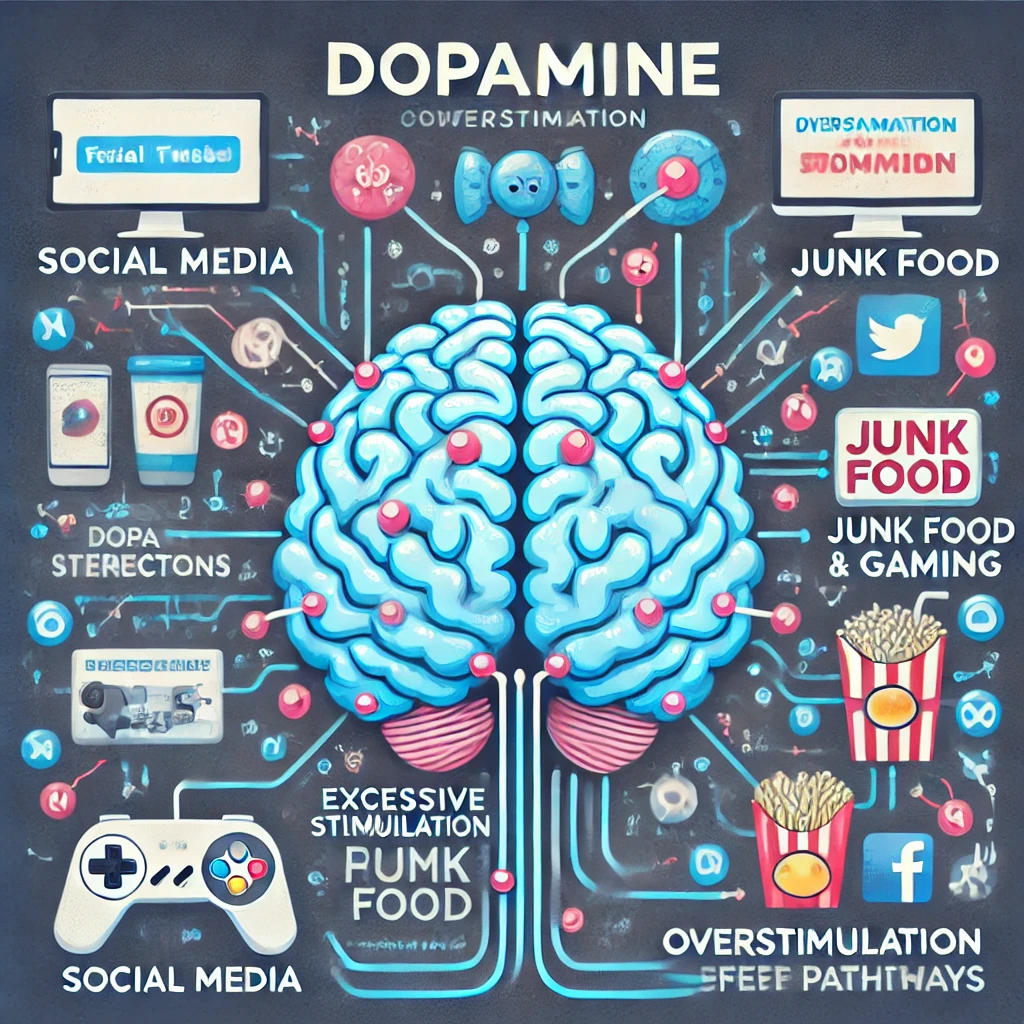
We live in a world full of constant stimulation—social media, fast food, streaming services, and instant gratification. But have you ever wondered how all this affects your brain? Dopamine fasting has emerged as a growing trend, promising better focus, mental clarity, and emotional balance. But does it really work? Let’s dive into the science behind it through an engaging conversation!
💬 A Conversation on Dopamine Fasting
Olivia:
Liam, have you heard about dopamine fasting? It’s trending as a way to reset the brain and improve focus!
Liam:
Yeah, I saw something about it on social media. But isn’t dopamine essential for pleasure and motivation? Why would we want to “fast” from it?
Olivia:
That’s a great question! Dopamine itself isn’t the problem—it’s how we overstimulate it with modern-day distractions. Every time we check our phone, eat junk food, or binge-watch a show, our brain releases dopamine. The more we seek instant gratification, the less sensitive our brain becomes to natural rewards.
Liam:
So you’re saying that by constantly flooding our brain with dopamine, we’re making ourselves less motivated and less happy in the long run?
Olivia:
Exactly! Dopamine fasting is about reducing these artificial dopamine spikes so our brain can reset and regain sensitivity to real-life experiences like deep conversations, exercise, and creativity.
🔍 The Science Behind Dopamine Fasting
1. What is Dopamine Fasting?
- Not an actual "fast" from dopamine—that’s impossible, since dopamine is a crucial neurotransmitter.
- Instead, it’s about reducing overstimulation from activities like social media, processed foods, video games, and excessive entertainment.
- The goal is to train the brain to appreciate natural, meaningful rewards instead of quick dopamine hits.
2. How Overstimulation Affects Your Brain
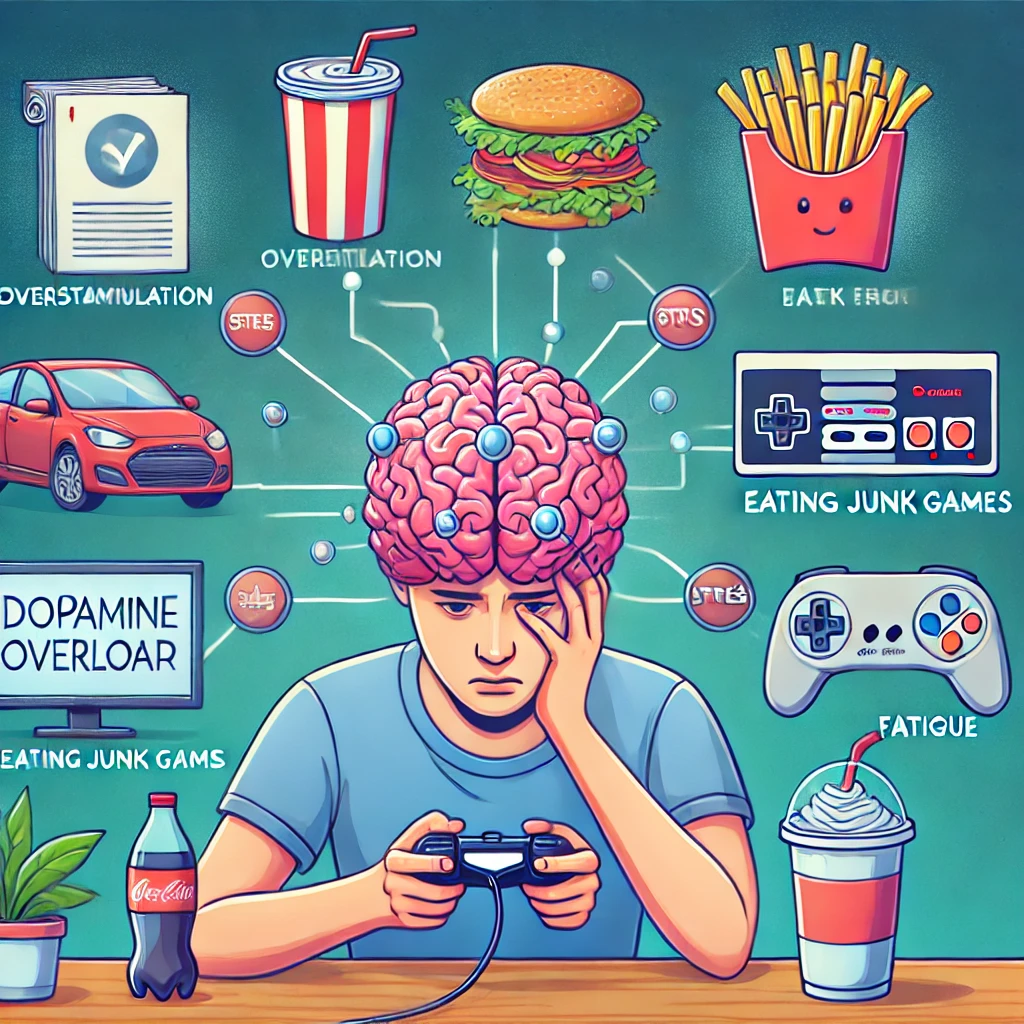
- Instant gratification weakens motivation—Over time, constantly seeking high-dopamine activities can make ordinary tasks feel boring or difficult.
- Increased stress and anxiety—Too much stimulation can lead to restlessness and difficulty concentrating.
- Reduced enjoyment of simple pleasures—Things like reading a book, spending time in nature, or having deep conversations may seem less satisfying compared to fast-paced digital entertainment.
🧠 Are You Overstimulating Your Brain? (Self-Check)
🌞 How to Practice Dopamine Fasting

Liam:
Okay, this actually makes sense. So how do you do a dopamine fast?
Olivia:
Here are some steps you can take:
1️⃣ Identify overstimulating activities—Social media, junk food, video games, and binge-watching are common culprits. 2️⃣ Take a break from them for a set period—Some people do a few hours, a full day, or even a week without these distractions. 3️⃣ Replace them with low-dopamine activities—Go for a walk, read a book, meditate, or engage in creative hobbies. 4️⃣ Be mindful of cravings—Notice when you feel the urge to check your phone or eat out of boredom. Acknowledge it and let it pass. 5️⃣ Slowly reintegrate stimulating activities in moderation—Once your brain has reset, reintroduce digital and pleasurable activities with better self-control.
Liam:
So, the goal isn’t to remove all pleasure, but to train the brain to enjoy deeper, more meaningful experiences?
Olivia:
Exactly! Dopamine fasting helps reset your reward system so that you find joy in simple things again. It’s like hitting the refresh button on your brain.
🔥 Conclusion: Can Dopamine Fasting Improve Your Life?
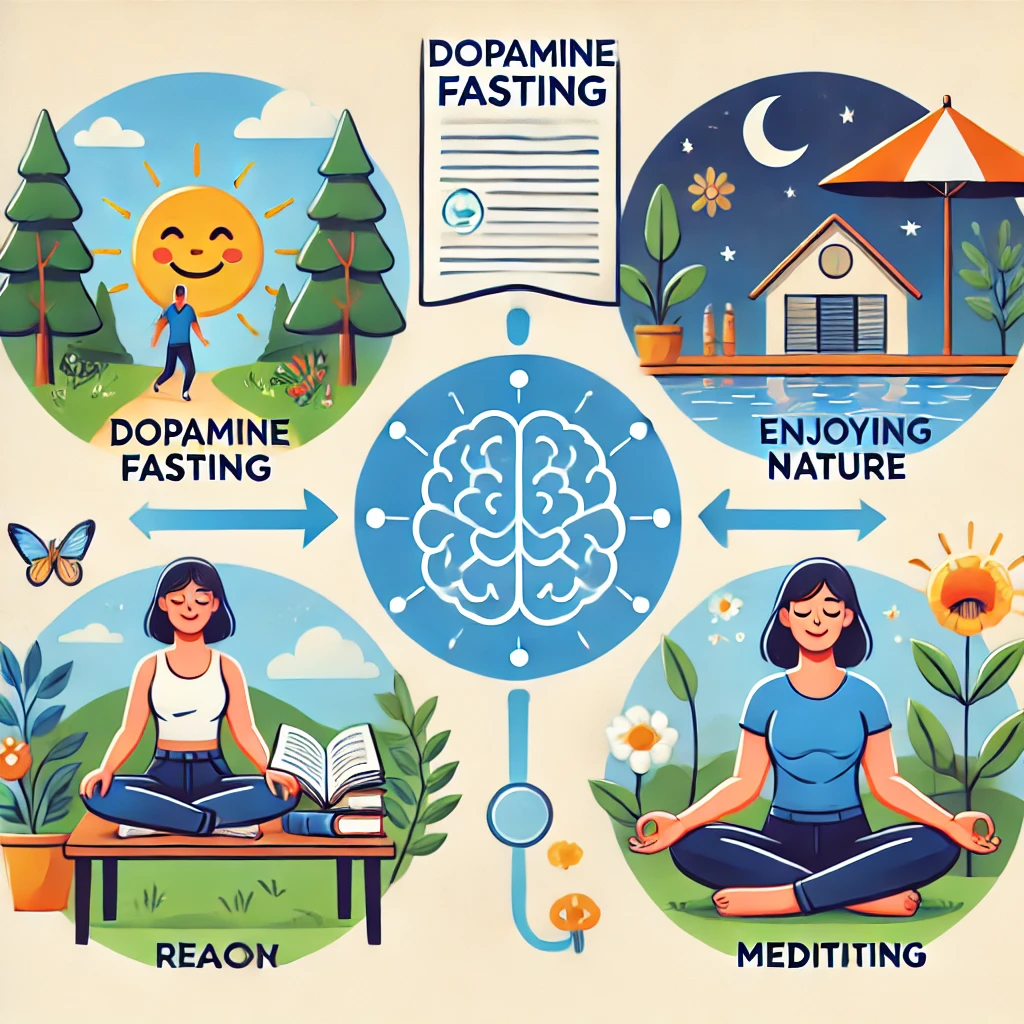
Dopamine fasting isn’t about depriving yourself—it’s about regaining control over what stimulates your brain. By reducing artificial dopamine spikes, you can improve focus, increase motivation, and find more satisfaction in everyday life.
💬 Have you ever tried limiting digital distractions? What changes did you notice? Share your experiences in the comments!


