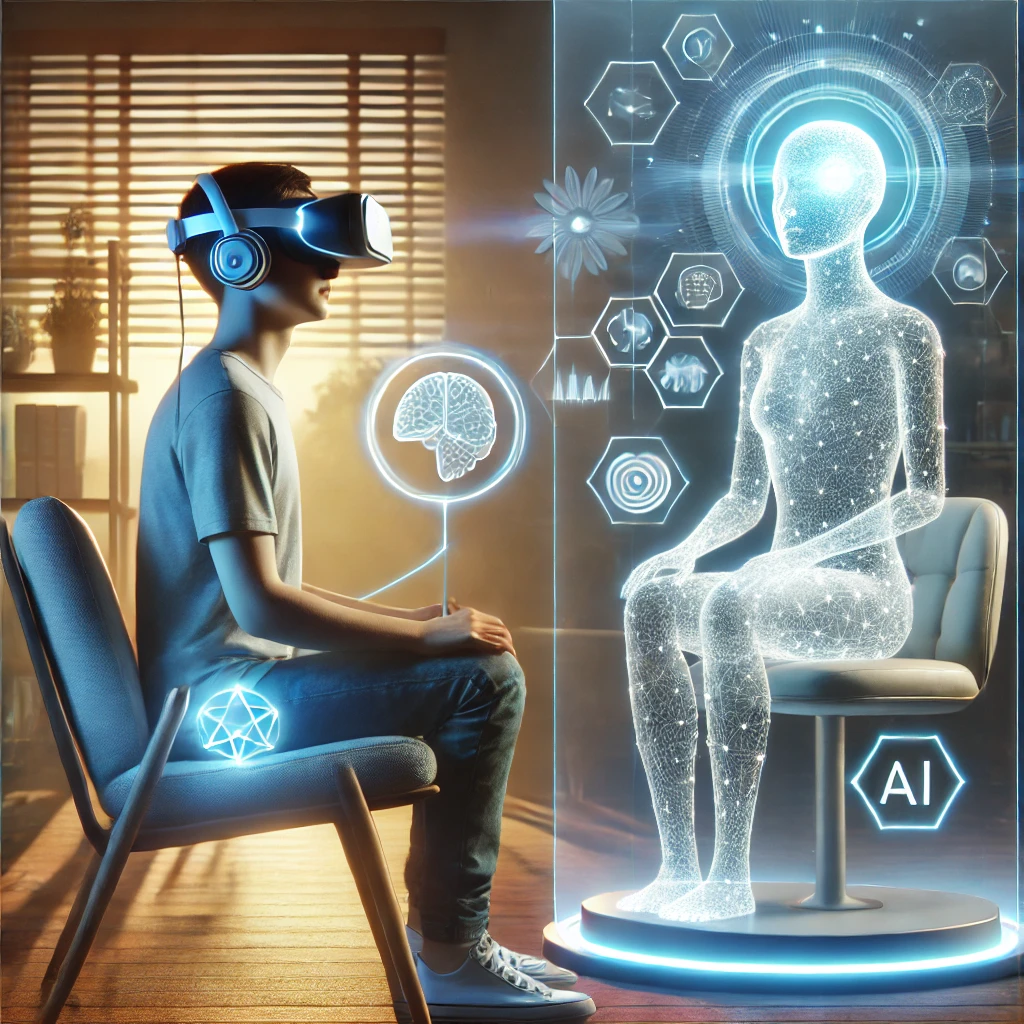
📌 Introduction: The Digital Revolution in Mental Health
📱 Jake: "I've been struggling with anxiety, but therapy sessions are expensive, and finding the right therapist takes forever. Is there a better way?"
🧑⚕️ Dr. Patel: "You're not alone, Jake. The demand for mental health support is rising, but technology is transforming how we approach therapy. AI, VR, and digital mental health platforms are making therapy more accessible and effective."
🤖 AI-Powered Therapy: Chatbots and Virtual Counselors
AI is revolutionizing mental health care by providing 24/7 support through chatbots and virtual counselors. These tools offer an accessible first step for those hesitant to seek traditional therapy.
✔️ AI Chatbots: Apps like Woebot and Wysa use AI to simulate conversations, provide CBT (Cognitive Behavioral Therapy) techniques, and track mood patterns. ✔️ AI-Powered Diagnosis: Machine learning can analyze speech patterns, facial expressions, and social media activity to detect early signs of depression or anxiety. ✔️ Ethical Concerns: While AI therapy is effective for mild cases, it cannot replace human therapists for severe mental health conditions.
📊 Quick Poll
Would you pay for a full-day biohacking experience?
💬 Vote in the comments or in the embedded poll!
🕶️ VR Therapy: Treating Anxiety, PTSD, and Phobias
📱 Jake: "VR therapy? That sounds like something from a sci-fi movie! How does it work?"
🧑⚕️ Dr. Patel: "It’s real, and it's proving to be a game-changer. Virtual Reality Exposure Therapy (VRET) helps people confront fears in a controlled, immersive environment."
✔️ PTSD Treatment: VR simulations help veterans and trauma survivors relive experiences in a safe, guided setting. ✔️ Anxiety & Phobia Therapy: VR can simulate social situations for individuals with social anxiety or create exposure scenarios for phobias like heights or public speaking. ✔️ Mindfulness & Meditation: Apps like TRIPP use VR to create immersive relaxation experiences.
📲 Mental Health Apps: Can They Replace Traditional Therapy?
Digital mental health apps are booming, but do they work?
✔️ Self-Guided Therapy Apps: Calm and Headspace offer meditation and stress relief techniques. ✔️ Therapist-Connected Platforms: BetterHelp and Talkspace connect users with licensed therapists through text, voice, and video sessions. ✔️ Gamified Mental Health: Apps like Happify use interactive exercises based on positive psychology.
🚀 The Future of Mental Health Tech: What’s Next?
📱 Jake: "So, what does the future hold? Are we heading towards AI therapists replacing humans?"
🧑⚕️ Dr. Patel: "Not quite, but we are moving toward a hybrid model where AI enhances human therapy rather than replacing it."
✔️ Brain-Computer Interfaces (BCIs): Devices that can monitor brain activity and provide real-time mental health feedback. ✔️ Personalized AI Therapy: AI systems that learn from your behaviors and provide customized mental health support. ✔️ VR Group Therapy: Social VR environments where people can connect and support each other.
🕰️ Circadian Health Self-Check
Answer honestly to find out how well your lifestyle aligns with your body clock.
💡 Final Thoughts: Should You Try Mental Health Tech?
📱 Jake: "This sounds promising, but can I trust technology with my mental health?"
🧑⚕️ Dr. Patel: "Technology can be a powerful tool, but it's best used alongside traditional therapy, not as a replacement. If you’re considering mental health apps or AI therapy, choose evidence-based platforms with strong privacy policies."
💬 Engage with Us!
What’s your opinion on AI and VR in mental health care? Have you tried any mental health apps? Share your thoughts in the comments below!


