🔍 TL;DR (3-Sentence Summary)
- The 2024–25 respiratory virus season is expected to bring moderate waves of flu, RSV, and COVID-19, though lower in intensity than previous pandemic peaks.
- Updated vaccines, early symptom awareness, and layered prevention strategies remain key to minimizing severe illness.
- Schools, workplaces, and families should prepare with flexible, science-informed plans that prioritize protection without panic.
🎙️ Moderator (Sophia Grant, Public Health Writer):
Welcome to Respiratory Roundtable, where we unpack what seasonal illness trends really mean for our lives. Today we’re discussing what to expect this fall and winter with flu, RSV, and COVID-19 in the 2024–25 season.
Our expert guests:
- Dr. Rafael Kim, MD, infectious disease specialist and vaccine advisor
- Dr. Priya Nasser, PhD, epidemiologist focused on population-level prevention strategies
📊 Topic 1: What’s Different This Season?
Sophia: Dr. Kim, let’s start with the big picture — how is this year different?
Dr. Kim:
We’re entering a more stable phase, but these viruses aren’t gone. The CDC projects that flu and RSV will follow seasonal patterns again, while COVID will continue to behave more erratically. Expect:
- A typical flu surge from November to February
- An RSV wave in infants and seniors starting early fall
- Localized COVID-19 spikes depending on immunity and variant circulation
Dr. Nasser:
The good news? Population immunity is higher than before. But many people skipped last season’s vaccines, and immunity wanes over time. That’s why updated boosters — especially for COVID and RSV — are important this fall.
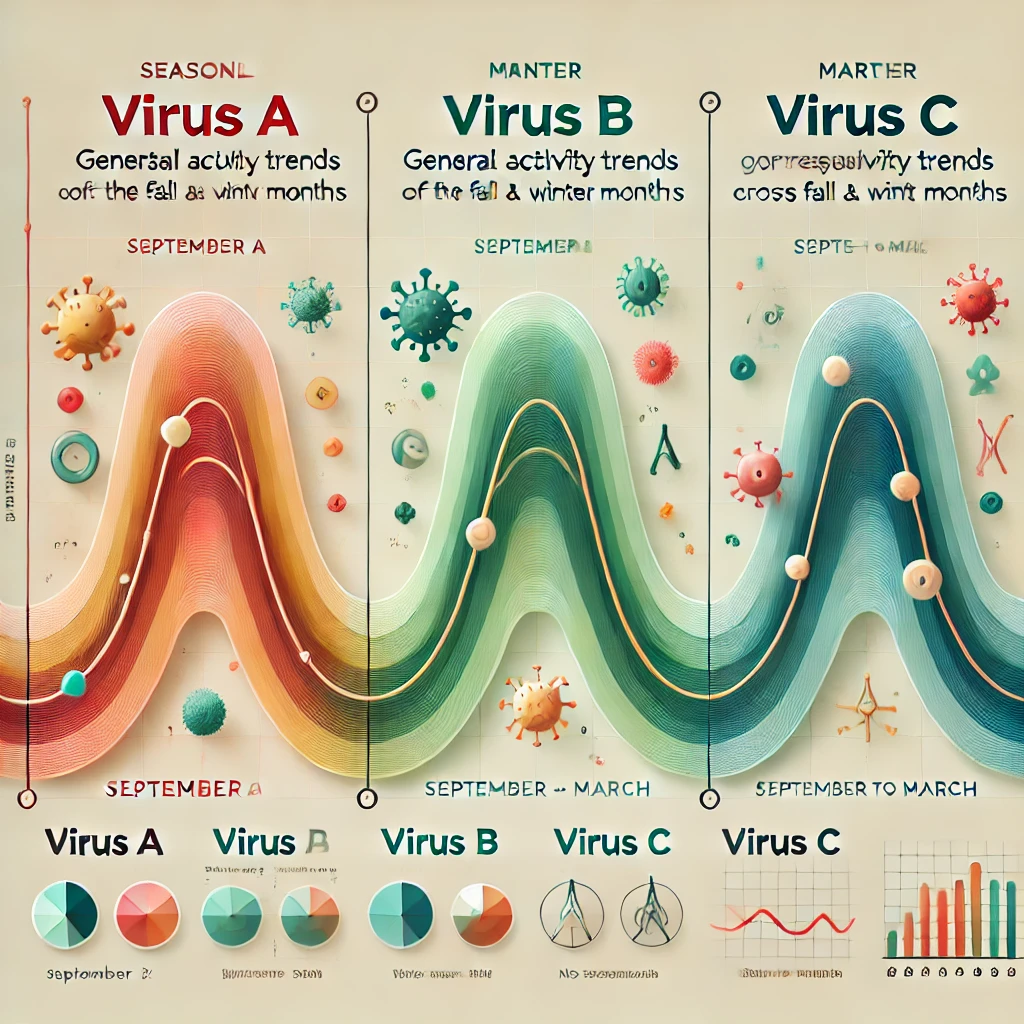
Alt text: “Timeline chart showing typical flu, RSV, and COVID-19 activity peaks throughout the season”
🦠 Topic 2: Symptoms — How to Tell Them Apart
Sophia: Let’s break down the symptoms. How do people know what they’ve caught?
Dr. Kim:
It’s not easy, because they overlap. But here’s a basic guide:
SymptomFluCOVID-19RSV
| Fever | High, sudden | Mild to moderate | Mild or absent |
| Cough | Dry, persistent | Dry or productive | Wet, deep |
| Fatigue | Severe | Variable | Mild to moderate |
| Body Aches | Common | Common | Rare |
| Runny Nose | Sometimes | Common | Very common |
| Loss of Smell | Rare | Common (early) | Uncommon |
Dr. Nasser:
Testing is still the only way to confirm. Rapid flu tests, at-home COVID tests, and RSV panels at clinics can help — especially for children, elderly, or those with chronic illness.
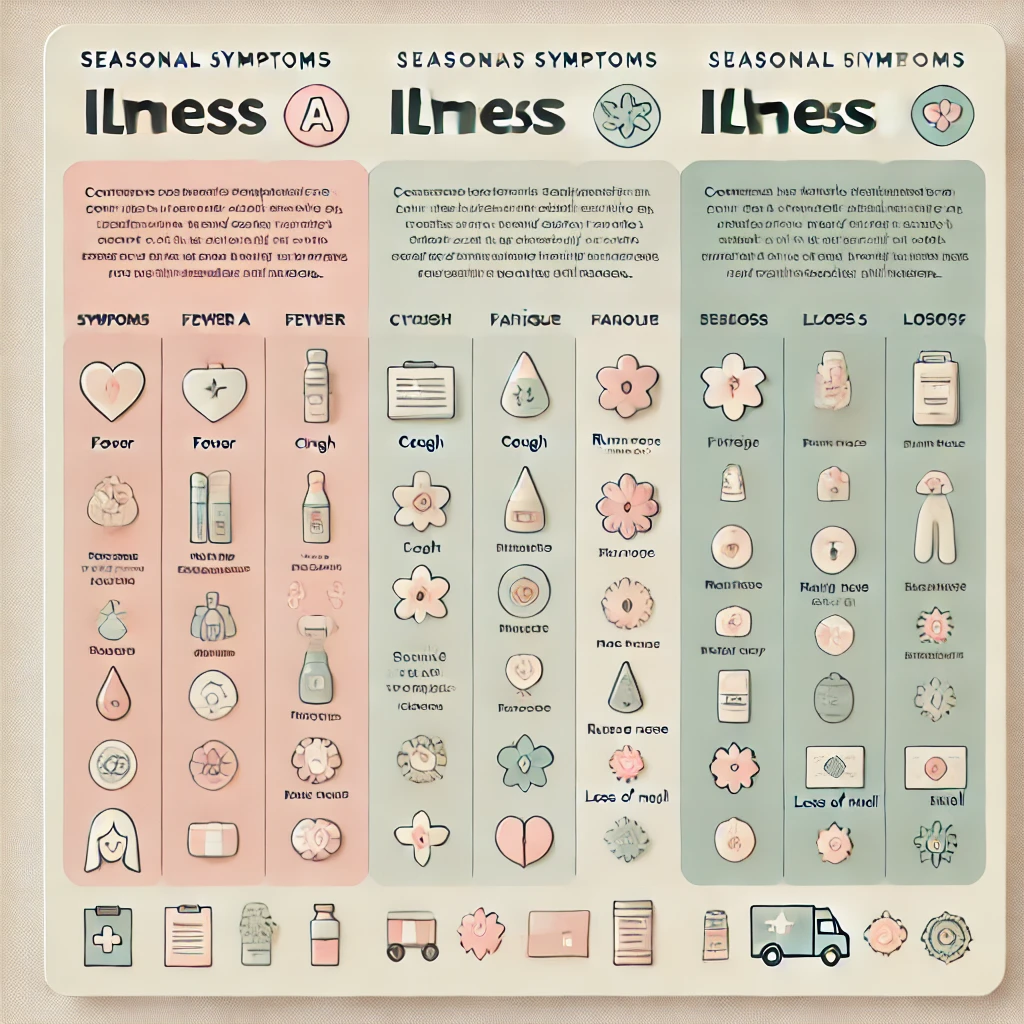
Alt text: “Side-by-side comparison chart of flu, COVID-19, and RSV symptoms in a clean infographic style”
💉 Topic 3: Vaccines — What’s Available and Who Needs Them
Sophia: What’s new with vaccines this year?
Dr. Kim:
Here’s the 2024–25 lineup:
- Flu vaccine: Updated quadrivalent formula
- COVID-19 booster: Targeting new XBB lineage variants
- RSV vaccines: Approved for adults 60+ and infants under 8 months, including maternal immunization during pregnancy
Dr. Nasser:
It’s important to space them out if needed. For example:
- Flu + COVID vaccines can be taken together
- RSV vaccines are more specific and should be discussed with your doctor
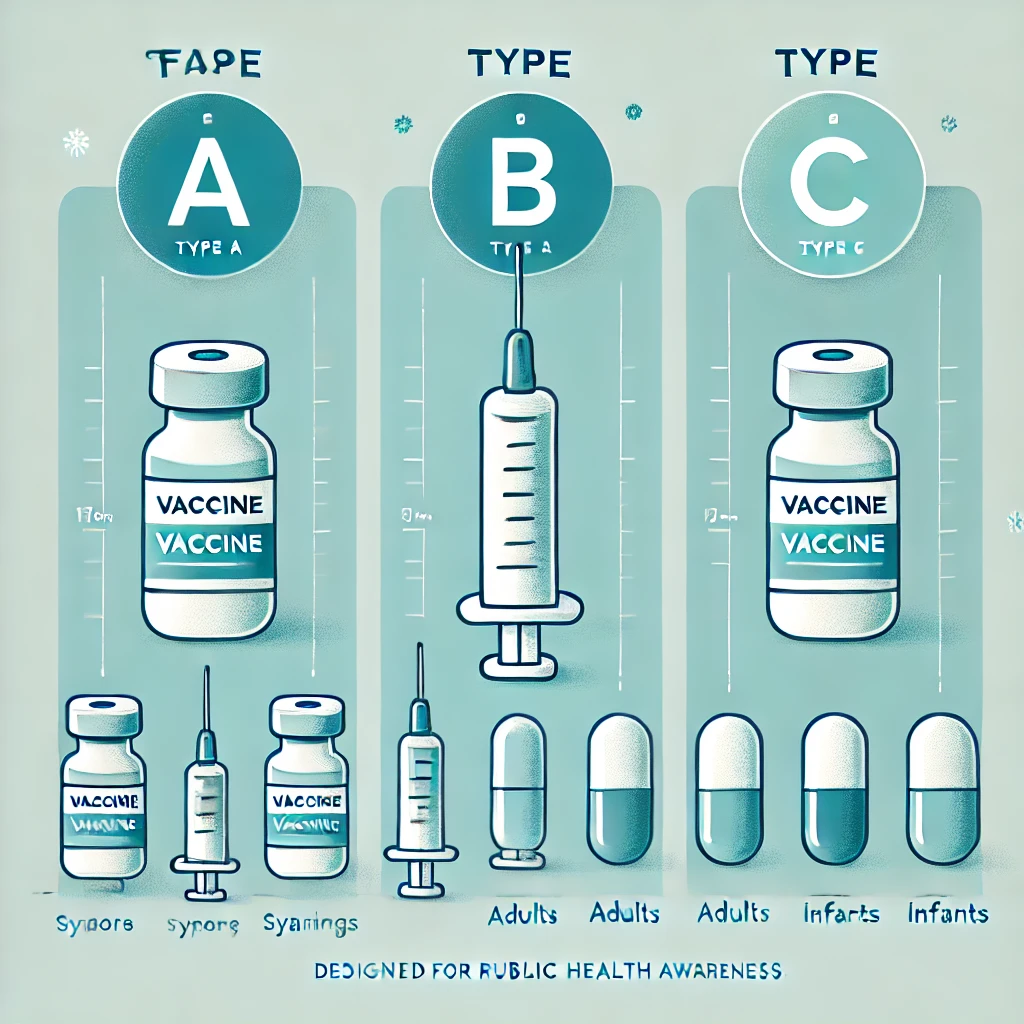
Alt text: “Illustration of 2024–25 seasonal vaccine lineup with icons for flu, COVID-19, and RSV”
🧠 Topic 4: Prevention Beyond Vaccination
Sophia: What else can people do to protect themselves and their families?
Dr. Nasser:
Vaccines are essential, but layered protection works best:
- Ventilation: Open windows, use air purifiers
- Masks: Still useful in crowded or high-risk areas
- Hand hygiene: Simple but powerful
- Stay home if sick: Avoid spreading to others
Dr. Kim:
Also:
- Test before gatherings if you have symptoms
- Prioritize protection in childcare centers and nursing homes
- Plan for sick days — don’t “push through” when contagious
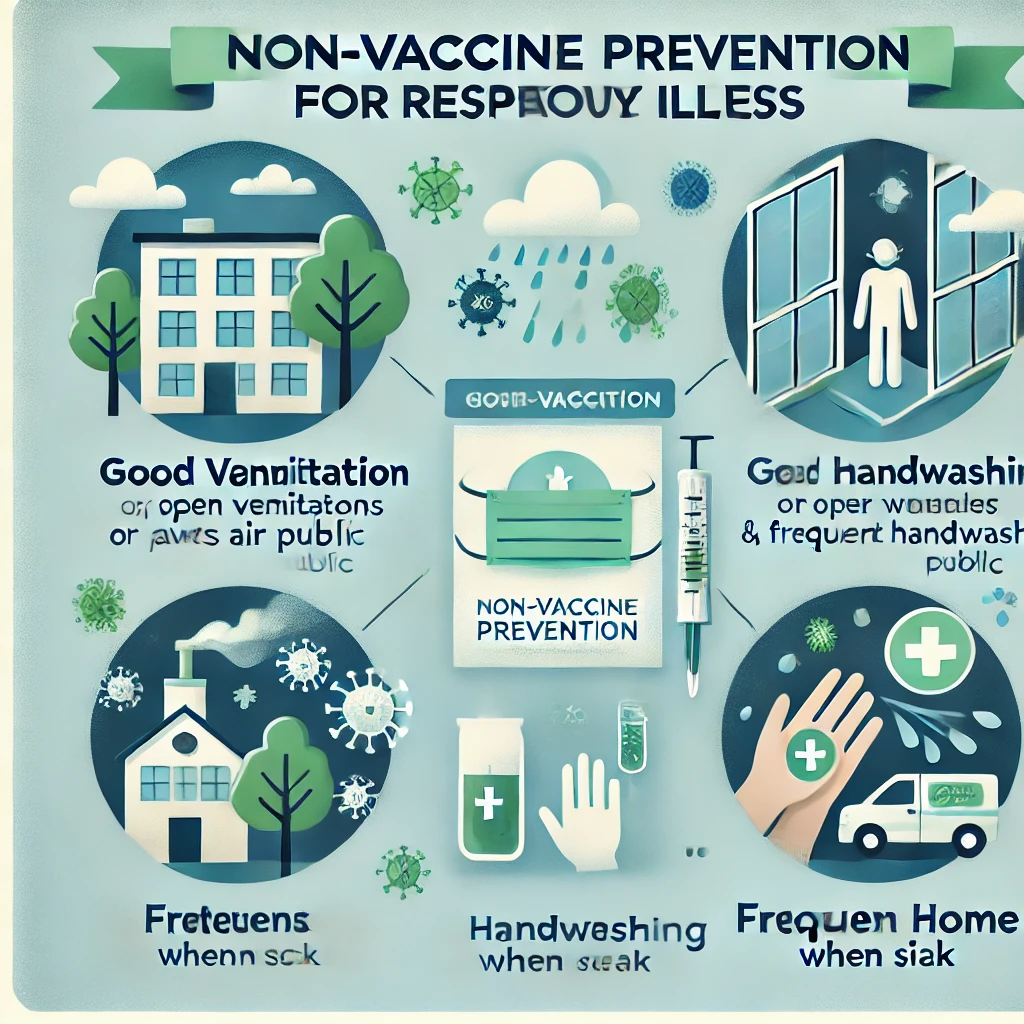
Alt text: "Educational infographic showing simple non-vaccine prevention strategies for seasonal respiratory illnesses, including proper ventilation, use of face masks in crowded spaces, regular handwashing, and staying home when sick. Designed to encourage community-level prevention without relying solely on medical interventions."
👨👩👧 Topic 5: How Families, Schools, and Workplaces Can Prepare
Sophia: Let’s talk preparation — what practical steps should institutions take?
Dr. Nasser:
For schools and childcare:
- Use flexible absence policies so parents can keep kids home
- Improve indoor air quality (HEPA filters, outdoor time)
- Educate kids on hygiene in age-appropriate ways
Dr. Kim:
For workplaces:
- Normalize sick leave
- Enable hybrid or remote options when needed
- Provide on-site testing or PPE in high-risk seasons
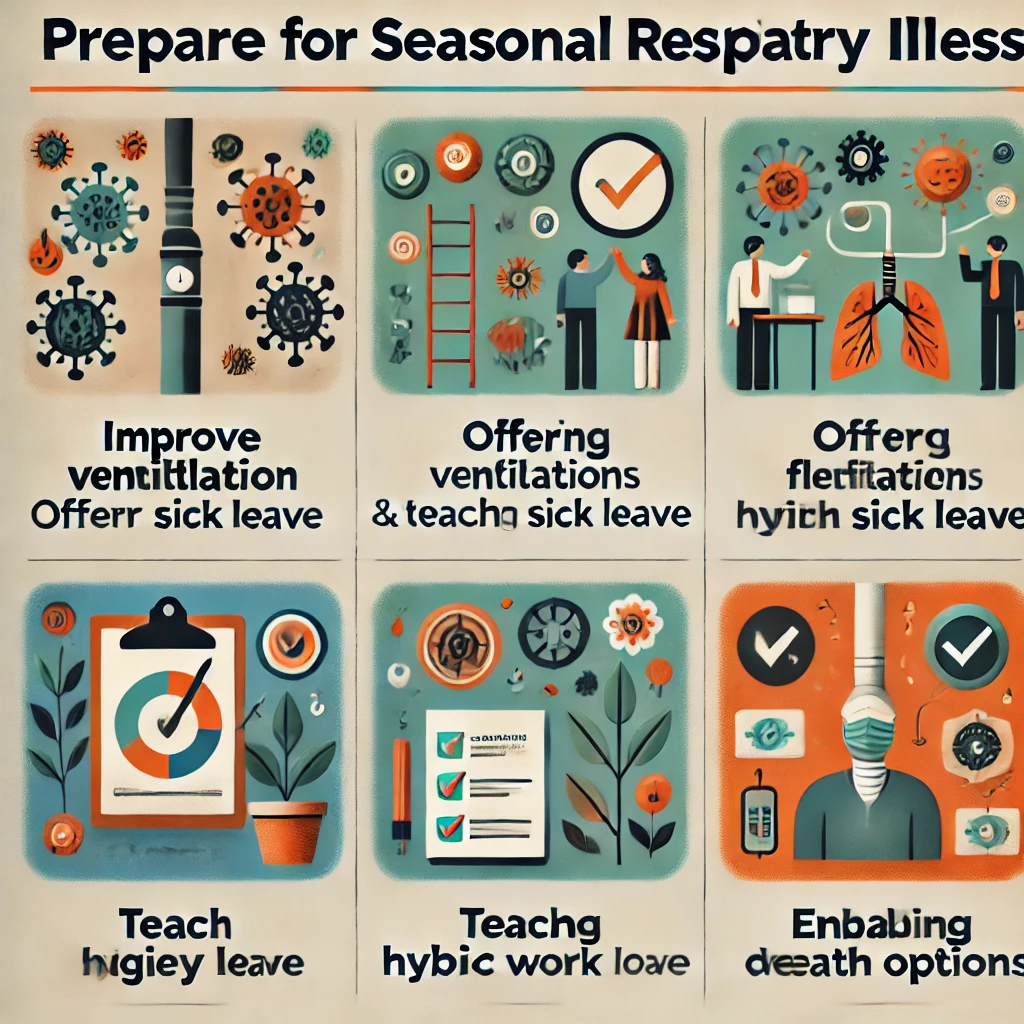
Alt text: "Checklist-style infographic showing practical steps for schools and employers to prepare for respiratory illness season, including ventilation, flexible sick leave, hygiene education, and hybrid work options. Designed to visually guide institutions through layered prevention strategies."
❓ FAQ: Flu, RSV, and COVID-19 (2024–25 Season)
🧪 Q1: Can I get all three vaccines at once?
A: You can get flu and COVID vaccines together. RSV vaccines should be spaced based on individual risk — check with your doctor.
👶 Q2: Is RSV dangerous only for babies?
A: No — RSV is also risky for older adults and those with lung or heart conditions. It’s a serious illness across the age spectrum.
😷 Q3: Do I still need to wear a mask?
A: Not always — but it’s smart in crowded indoor areas, on public transport, or when symptoms start. It’s a personal risk-balancing tool now.
🤧 Q4: What’s the biggest difference in symptoms?
A: Flu tends to hit fast and hard. COVID has more variability and loss of smell. RSV brings more nasal congestion and is wet sounding.
🔁 Q5: How long should I stay home when sick?
A: General rule: 24 hours fever-free without meds, and at least 5 days for COVID. When in doubt, test and mask.
💼 Q6: How can workplaces support employees better?
A: By encouraging sick leave, offering testing access, and respecting personal health boundaries. Healthy workers = productive teams.
💬 Have you made a seasonal plan for your family, school, or workplace? Share your tips below — small steps make a big difference.


