🔍 TL;DR (3-Sentence Summary)
- Nature Deficit Disorder is not a clinical diagnosis, but it describes the wide-ranging consequences of limited contact with the natural world.
- Reduced time in nature is linked to rising rates of anxiety, depression, attention issues, and lower physical health.
- Reconnecting with green spaces can boost cognitive performance, mood, immune health, and even social skills—especially in children.
🎙️ Moderator (Jenna Park, Environmental Health Writer):
Welcome to Green Mind, Better Life, where we explore the link between environmental exposure and human wellbeing. Today’s focus is a term that’s gaining renewed attention in a post-pandemic world: Nature Deficit Disorder.
Here to guide us are two experts:
- Dr. Marcus Lane, MD, pediatrician and advocate for nature-based interventions
- Dr. Naomi Ellis, PhD, environmental neuroscientist
🌳 Topic 1: What Exactly Is Nature Deficit Disorder?
Jenna: Dr. Lane, is this actually a medical condition?
Dr. Lane:
Not in the formal sense. Nature Deficit Disorder (NDD) isn’t in the DSM or ICD, but it was coined by author Richard Louv in his 2005 book Last Child in the Woods. It refers to the negative physical and psychological outcomes of spending too little time in nature—especially for children.
Dr. Ellis:
We’re seeing a real cost to indoor, screen-dominated lifestyles:
- Less movement and increased sedentary behavior
- Reduced attention span and impulse control
- Declining mental health and stress resilience
- Weakened immune regulation
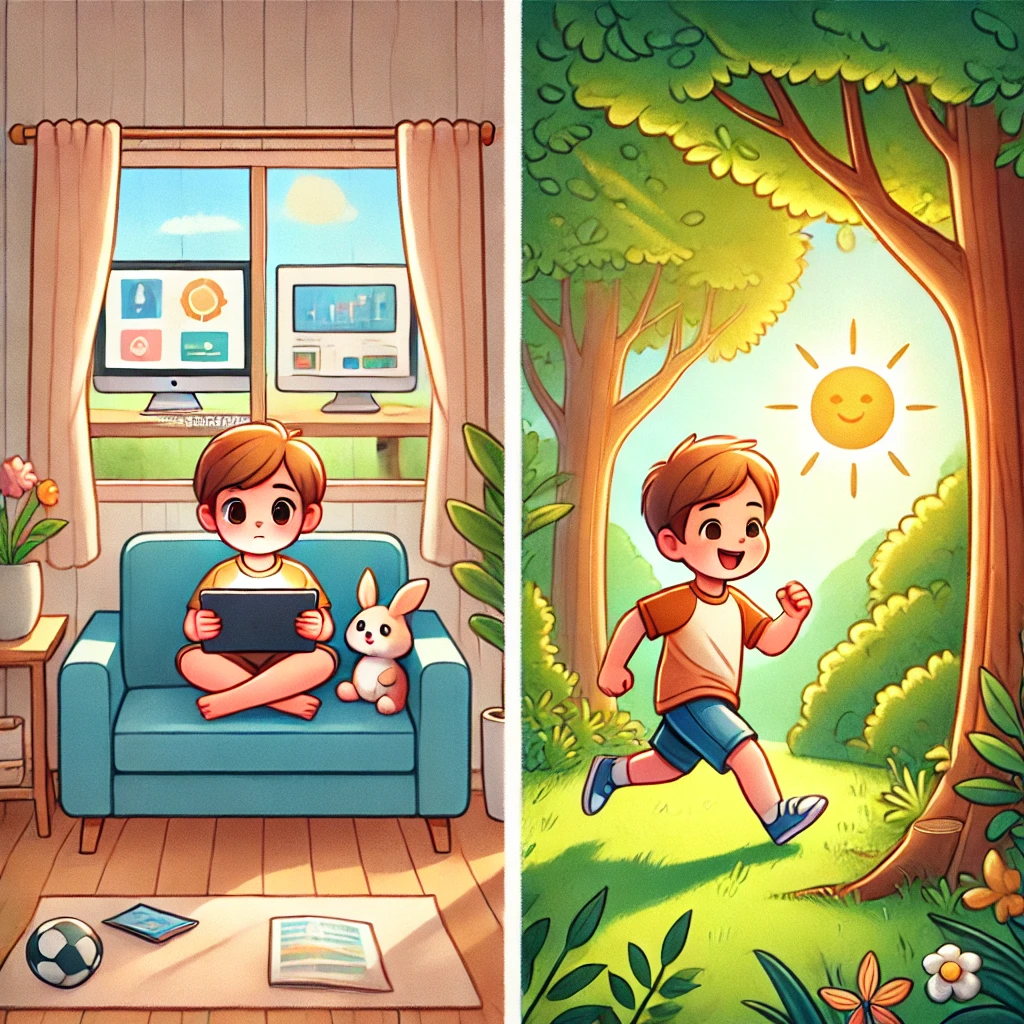
Alt text: “Illustration showing contrast between a child indoors with screens vs. playing outdoors in nature”
🧠 Topic 2: How Nature Affects the Brain and Behavior
Jenna: So what’s happening neurologically when we spend time in green space?
Dr. Ellis:
It’s fascinating. Studies using fMRI and EEG have shown:
- Nature exposure reduces activity in the subgenual prefrontal cortex, a brain region associated with rumination and depression.
- Increases in alpha wave activity suggest deeper states of calm and relaxation.
- Children in nature-rich schools show enhanced executive functioning and emotional regulation.
Dr. Lane:
There’s also the Vitamin N hypothesis—nature as a kind of “nutrient” the brain evolved to require. We see it in:
- Lower cortisol levels
- Higher heart rate variability
- Better sleep quality
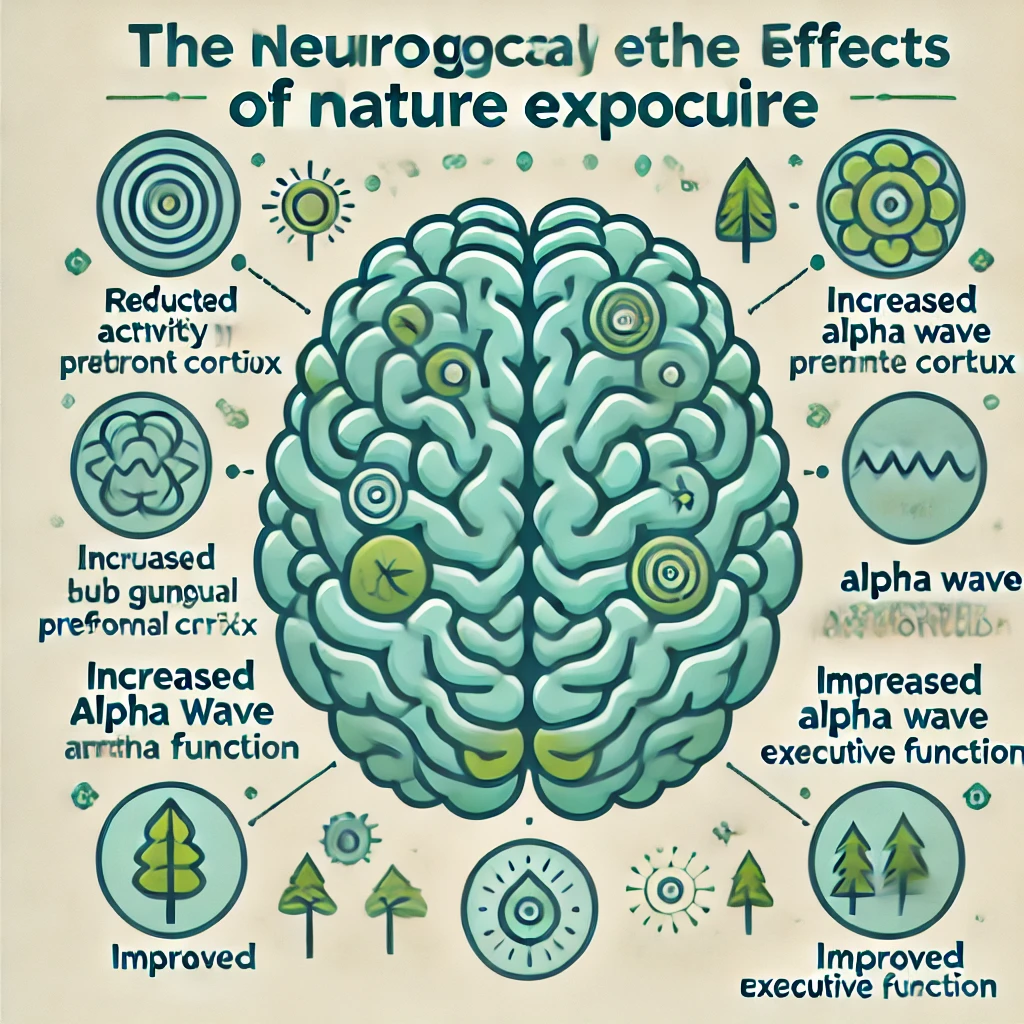
Alt text: “Brain diagram showing neural effects of nature exposure: reduced stress, enhanced mood, better focus”
🧒 Topic 3: Why Children Are Most at Risk
Jenna: Why does this seem to impact kids so strongly?
Dr. Lane:
Because their brains—and behaviors—are still developing. When kids don’t climb trees, touch soil, or explore unpredictability, they lose out on sensorimotor learning, risk assessment, and immune calibration.
Dr. Ellis:
And let’s not forget: early nature contact is linked to:
- Lower rates of ADHD symptoms
- Fewer behavioral conduct issues
- Better prosocial behavior and peer cooperation
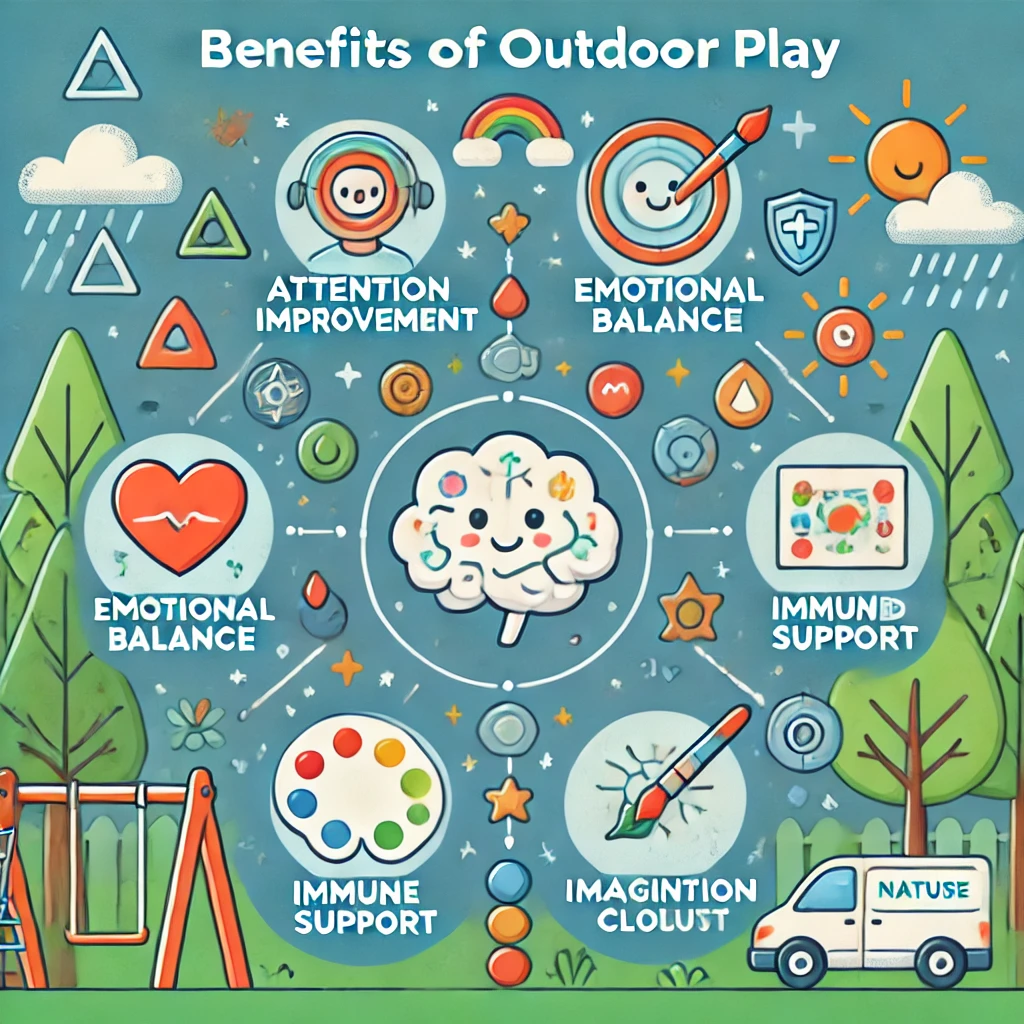
Alt text: “Infographic showing benefits of outdoor play for children: attention, emotion, immunity, creativity”
🏙️ Topic 4: Modern Barriers to Green Time
Jenna: So why aren’t we outside more?
Dr. Ellis:
It’s a combination of factors:
- Urbanization and lack of green access
- Digital entertainment and screen addiction
- Safety concerns from parents
- Overscheduling and academic pressure
Dr. Lane:
COVID-19 made this worse, but it also taught us the value of outdoor space. Ironically, many rediscovered parks during lockdowns.
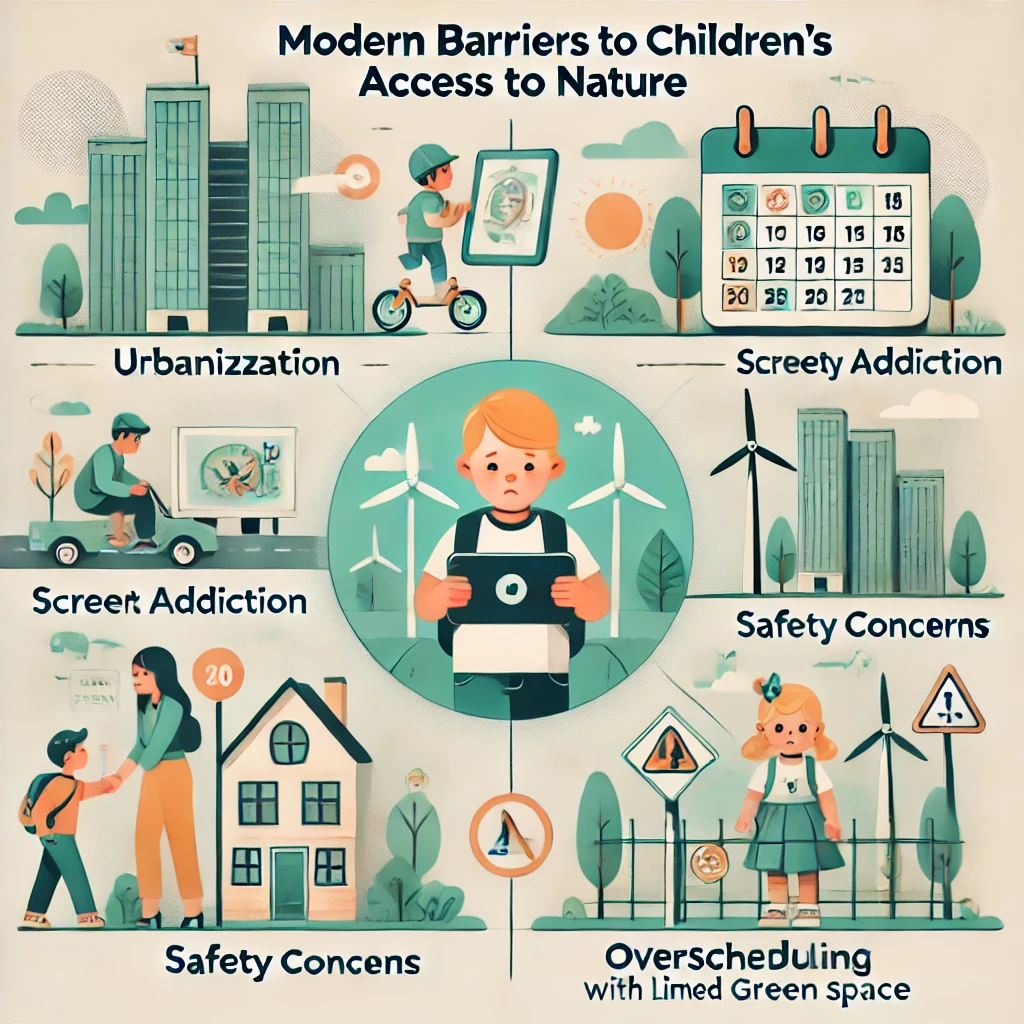
Alt text: "Infographic showing modern barriers to outdoor access, including crowded urban environments, excessive screen time, packed school schedules, and parental safety concerns. Designed to visually highlight how modern life limits children's interaction with nature."
🌱 Topic 5: Rewilding the Human Mind — What We Can Do
Jenna: What strategies can help reverse this deficit?
Dr. Lane:
Start small. Encourage:
- Daily outdoor time — even 20 minutes in a park
- Nature-based schooling or forest kindergarten
- Weekend family hikes
- Gardening, even on a balcony
Dr. Ellis:
Also:
- Design cities with walkable green corridors
- Protect school recess and outdoor learning
- Prescribe “nature time” like exercise or medication
Jenna: Are there tools to track this?
Dr. Ellis:
Apps like NatureDose or GoGreen can help you monitor and plan outdoor time. Even biofeedback devices show nature’s impact on heart rate or stress.
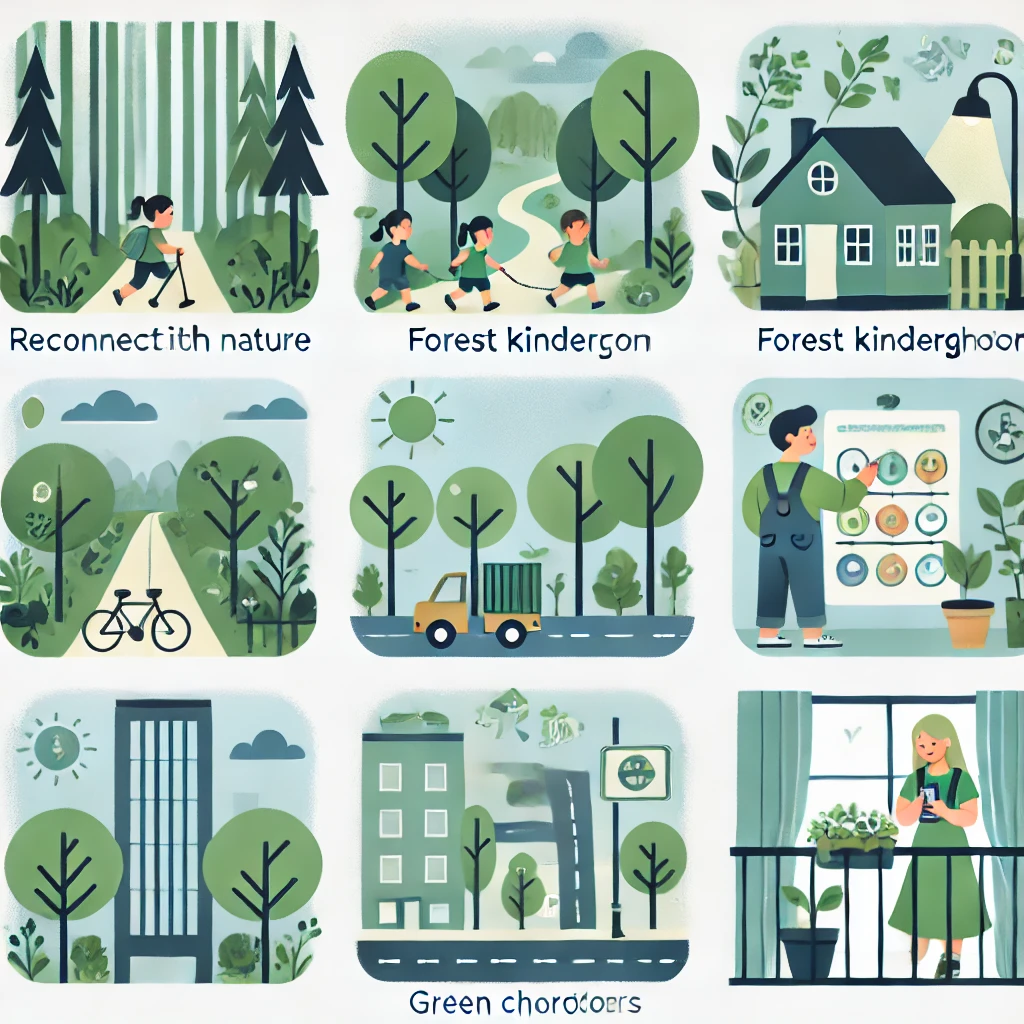
Alt text: "Educational illustration showing strategies to reconnect with nature, including walking in parks, attending forest schools, incorporating green infrastructure in urban design, and using mobile apps to track outdoor time. Designed to visually encourage practical ways to reduce Nature Deficit Disorder."
❓ FAQ: Nature Deficit Disorder
🌿 Q1: Is Nature Deficit Disorder a real diagnosis?
A: No, it's not an official medical diagnosis. However, it reflects a very real phenomenon where individuals, particularly children, exhibit symptoms such as anxiety, attention deficits, and poor physical health due to insufficient exposure to nature. The term was popularized to raise awareness about the health consequences of increasingly indoor, screen-based lifestyles.
🌳 Q2: How much time in nature is “enough”?
A: At least 120 minutes per week in green environments is recommended. Studies show that two hours of nature contact—whether spread out or in one block—can significantly reduce stress, boost mood, and improve cognitive performance.
🧠 Q3: Does nature really help with anxiety or focus?
A: Yes, there's strong scientific evidence supporting nature’s positive effects on mental health. Time in natural settings can lower cortisol (the stress hormone), improve attention restoration, and reduce symptoms of anxiety and ADHD—especially in children and urban dwellers.
🧒 Q4: What if I live in a city?
A: You can still benefit from nature even in urban environments. City parks, green rooftops, community gardens, and even tree-lined sidewalks provide measurable benefits. It's not about wilderness—it's about intentional, restorative contact with green space.
📱 Q5: Can apps really help?
A: Yes, especially for people with busy lifestyles. Apps like NatureDose or GoGreen can help you set outdoor goals, track your time outside, and remind you to take nature breaks—making green time as trackable as steps or sleep.
👨👩👧 Q6: How can families build nature time into busy lives?
A: Make it simple, intentional, and consistent.
Families don’t need elaborate outings to reap nature’s benefits. Even 15-minute walks after dinner, planting herbs on the balcony, or visiting a weekend park can provide mental and physical renewal. The key is to create small habits that integrate outdoor time into daily life — nature time should feel like a shared joy, not a chore.
💬 What’s your relationship with nature these days? Comment below and let’s talk about rewilding our lives — one green step at a time.
'Environmental Health' 카테고리의 다른 글
| Mycotoxins and Chronic Illness: The Hidden Health Threat in Our Homes and Food (0) | 2025.03.24 |
|---|---|
| Flu, RSV, and COVID in the 2024–25 Season: What You Actually Need to Know (1) | 2025.03.24 |
| Mycotoxins in Food: Invisible Enemies or Overblown Hype? (0) | 2025.03.23 |
| 🌍 Microplastics and Human Health: The Hidden Crisis (0) | 2025.03.17 |
| ☣️ The Hidden Health Dangers of 'Forever Chemicals' (PFAS) (0) | 2025.03.16 |


