Summary
⚠️ Babesiosis cases are increasing sharply across the Northeastern and Midwestern United States.
🧬 Spread by ticks, this malaria-like illness is raising new public health concerns in 2025.
🛡️ This blog explores where babesiosis is spreading, how to protect yourself, and why it's being called “American malaria.”
1. What Is Babesiosis? A Quick Overview 🧪
Babesiosis is a tick-borne parasitic disease caused by Babesia microti. This microorganism infects red blood cells, similar to malaria, and is transmitted primarily through the bite of infected blacklegged ticks (commonly known as deer ticks).
Symptoms may include:
- High fever
- Chills and sweats
- Muscle and joint pain
- Fatigue
- Hemolytic anemia (destruction of red blood cells)
In severe cases, especially in the elderly or immunocompromised, babesiosis can lead to organ failure and even death.
2. Where Is Babesiosis Spreading? 📍
Once considered rare, babesiosis is now a reportable disease in the U.S. According to the CDC, over 2,300 confirmed cases were reported in 2023 alone—a record high.
🧭 Geographic Hotspots:
- New York (particularly Long Island and Hudson Valley)
- Massachusetts
- Connecticut
- Wisconsin and Minnesota
- New Jersey and Rhode Island
Infection rates have increased 25%–40% over the past five years in these areas, attributed largely to climate change, which allows ticks to remain active for longer periods throughout the year.
“We’re seeing infections in places that were considered low-risk just a decade ago.”
— Dr. Lillian Frey, infectious disease specialist at Harvard Medical School
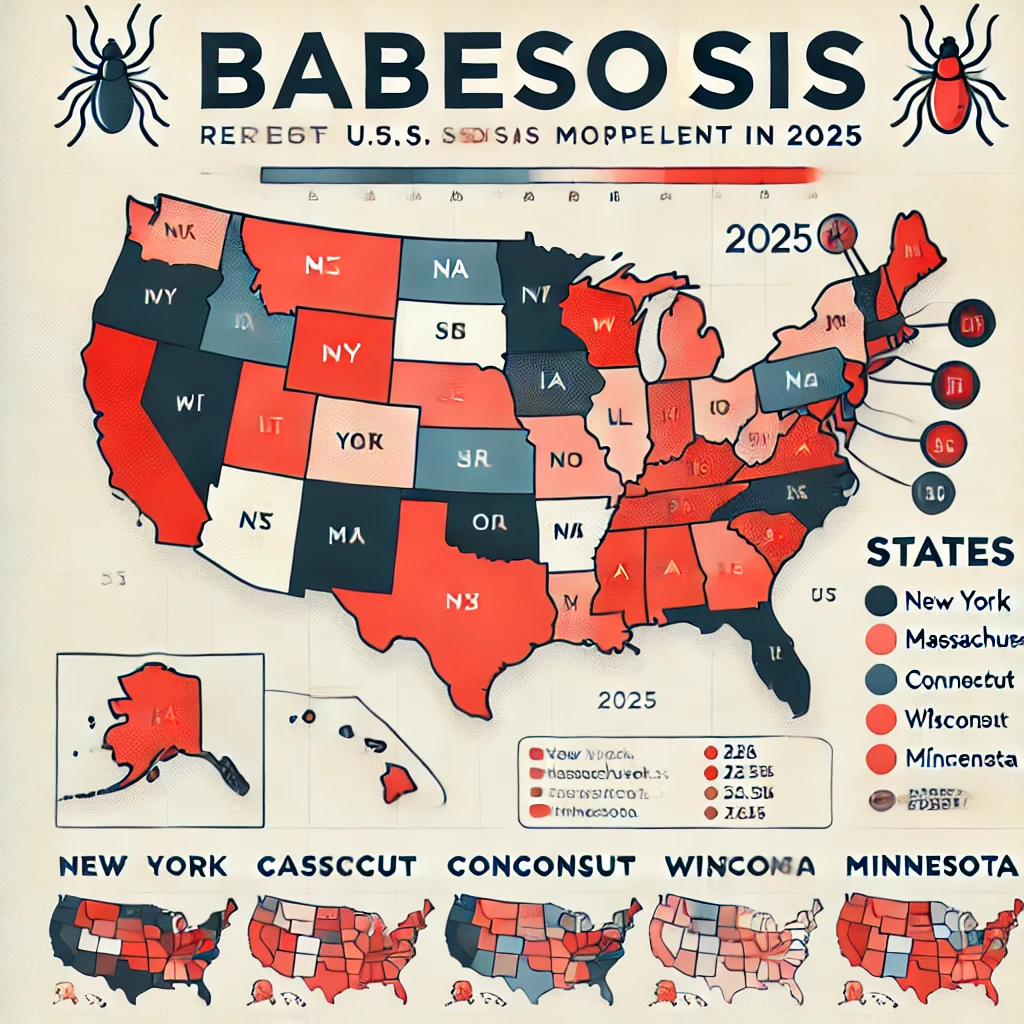
A U.S. map highlighting tick-borne disease hotspots with emphasis on babesiosis spread zones
3. What Are the Symptoms and Who’s at Risk? 🤒
Most people infected with babesiosis will develop symptoms within 1–4 weeks of a tick bite. However, up to 20% of adults may remain asymptomatic, silently carrying the parasite.
Common Symptoms:
- Fatigue and weakness
- Fever, chills, and night sweats
- Shortness of breath
- Nausea
- Dark-colored urine
High-Risk Groups:
- Adults over 65
- Individuals with weakened immune systems (e.g., organ transplant recipients)
- Those without a spleen
- People with other tick-borne co-infections like Lyme disease
Babesiosis is particularly dangerous in people with underlying conditions like cancer or HIV.

Microscopic image of Babesia-infected red blood cells + symptom diagram
4. How Is Babesiosis Diagnosed and Treated? 🧬
Babesiosis is diagnosed through blood smears, PCR tests, or antibody detection. However, misdiagnosis is common due to symptom overlap with:
- Lyme disease
- Malaria
- COVID-19 fatigue symptoms
Treatment Protocol:
- Mild cases: May resolve on their own or require atovaquone + azithromycin
- Severe cases: Treated with clindamycin + quinine and sometimes blood transfusion
“The rise in treatment-resistant strains is concerning. Early detection is key.”
— Dr. James Kim, CDC Parasitology Division
5. Real Cases From the U.S. 👥
Case A: Linda, 62, New York (pseudonym)
After gardening in early May, Linda developed flu-like symptoms. Within two weeks, she was hospitalized for hemolytic anemia due to babesiosis. Her recovery took over a month.
Case B: Michael, 34, Minnesota (pseudonym)
An avid camper, Michael ignored a tick bite until fever hit. His co-infection with Lyme disease delayed diagnosis. Babesiosis was finally detected after a second hospital visit.

A middle-aged patient being treated for a tick-borne disease in a hospital room
6. How to Prevent Tick-Borne Infections Like Babesiosis 🛡️
🏞️ When Outdoors:
- Wear long sleeves and pants
- Tuck pants into socks when hiking
- Use EPA-approved insect repellents with DEET or picaridin
- Stay on trails, avoid tall grass and brush
🏠 At Home:
- Check your skin, scalp, and clothes after outdoor activity
- Shower within 2 hours of coming indoors
- Use dryer heat to kill ticks on clothes
- Treat pets with tick prevention medications
Fact: Ticks need 36–48 hours of attachment to transmit babesiosis. Early removal is crucial.
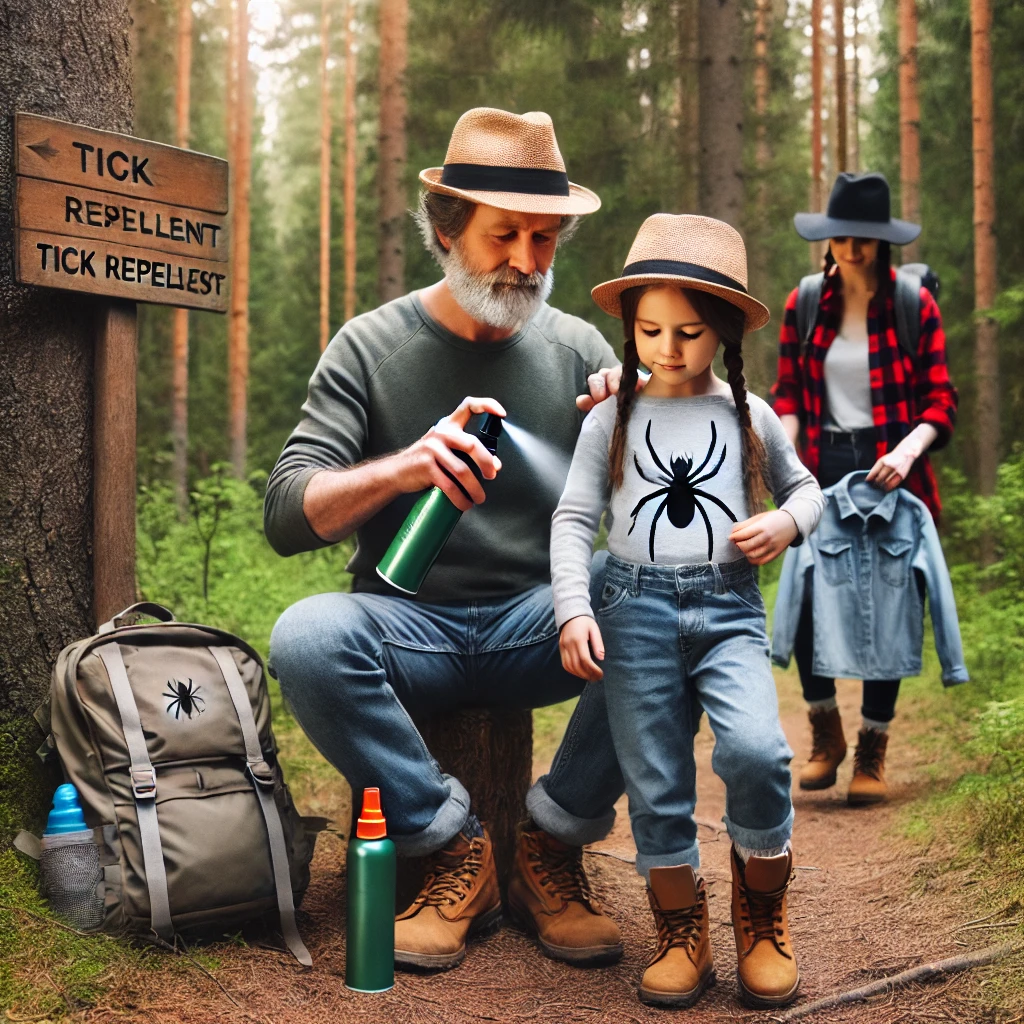
A family spraying tick repellent before a forest hike + tick check diagram
🦠 Babesiosis Self-Check: Are You at Risk?
7. FAQ: What You Really Need to Know About Babesiosis ❓
❓ Can I get babesiosis from a blood transfusion?
Yes, though rare. Babesia parasites can survive in donated blood. The FDA has introduced new screening protocols since 2022.
❓ Is babesiosis contagious person-to-person?
No. It does not spread through casual contact—only through tick bites or contaminated blood.
❓ Can I get babesiosis twice?
Yes. Immunity after infection is not lifelong. Reinfection is possible.
❓ How do I remove a tick safely?
Use fine-tipped tweezers, grasp the tick close to the skin, and pull upward gently but firmly. Do not twist or crush.
❓ Can pets carry Babesia?
Pets, especially dogs, can carry other Babesia species—but Babesia microti, the human strain, is not usually transmitted by pets.
❓ What if I’m pregnant?
Tick-borne diseases may increase risks during pregnancy. Consult your OB/GYN if bitten or symptomatic.
❓ Is babesiosis seasonal?
Yes. Cases spike during late spring through early fall, when tick activity is highest.
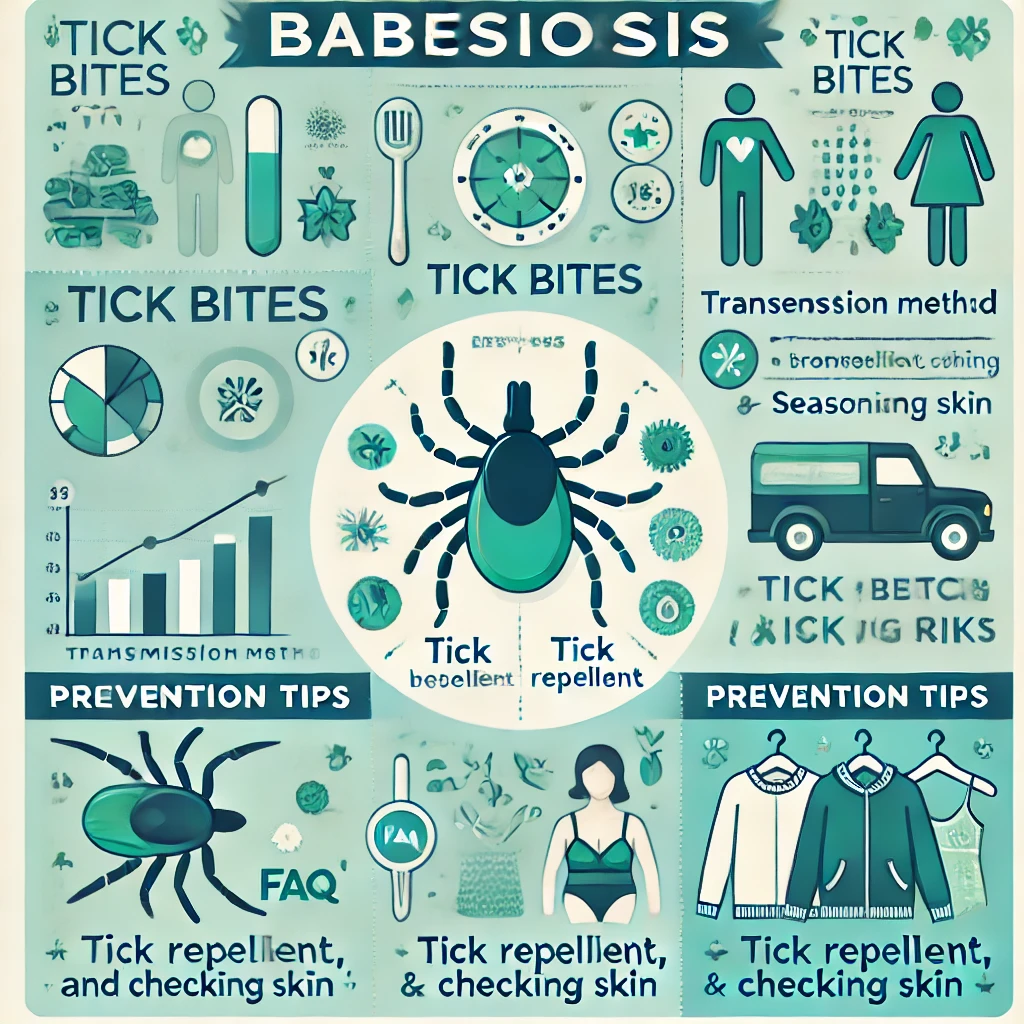
Infographic showing symptoms, prevention steps, and tick safety tips
8. Final Thoughts: The Rise of “American Malaria” 🌍⏳
As climate shifts and human interaction with nature intensifies, tick-borne diseases like babesiosis are becoming more common—even in urban areas.
But prevention is possible:
✅ Educate your community
✅ Protect yourself outdoors
✅ Support policies on vector surveillance and vaccine development
🗣️ Have you or someone you know experienced a tick-borne illness? Share your story or tips below. Let’s build awareness—one reader at a time. 👇


