TL;DR
Sleep evolves dramatically with age, but that doesn’t mean we’re doomed to poor rest. In this recap of episodes 1–8 from the Sleep & Aging series, we explore why sleep changes, how lifestyle, nutrition, and technology can help, and what you can do to sleep better after 60. Each episode below includes a short summary and direct link to the full post.
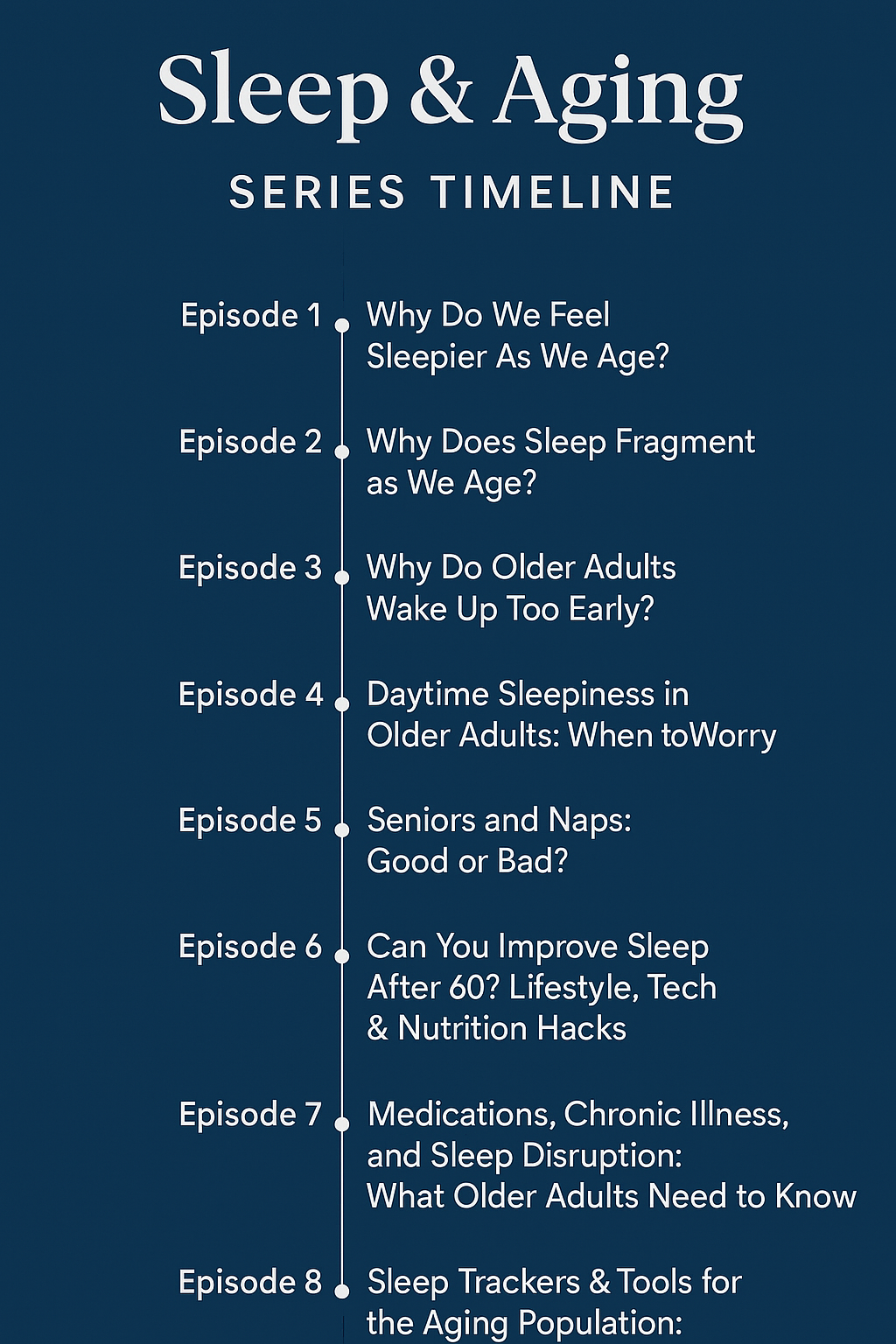
📚 Series Introduction
This blog series was created to answer a critical question: Why does sleep decline as we age, and what can we do about it? Many older adults assume that poor sleep is an unavoidable part of aging. But science shows otherwise. From circadian rhythm shifts to smart trackers and naps done right, each part of this series is built to empower older adults — and the people who care for them.
Let’s recap what we’ve uncovered so far.
1️⃣ Why Do We Feel Sleepier As We Age?
Summary: This episode unpacks the biological reasons why older adults feel sleepier — from reduced melatonin to weakened sleep drive and lifestyle-related misalignments.
Key Insight: Daytime sleepiness isn’t just about age. It’s a physiological signal we can work with and manage.
2️⃣ Why Does Sleep Fragment as We Age?
Summary: Older adults often wake up more during the night. This post explains the science behind lighter sleep, increased awakenings, and how environmental triggers become more disruptive with age.
Key Insight: Understanding and improving sleep architecture — especially deep sleep — is crucial to combat fragmentation.
3️⃣ Why Do Older Adults Wake Up Too Early?
Summary: Many seniors naturally wake up at 4–5 a.m. due to advanced sleep phase syndrome. This post explores biological clock shifts and how to recalibrate them using light, temperature, and lifestyle.
Key Insight: You can shift your body clock. Tools like morning sunlight and evening wind-down routines help realign sleep timing.
4️⃣ Daytime Sleepiness in Older Adults: When to Worry
Summary: This episode breaks down when daytime fatigue is a normal part of aging — and when it’s a red flag for cognitive decline, sleep apnea, or medication effects.
Key Insight: Excessive daytime sleepiness is not benign. It’s often the first sign of a deeper issue that deserves evaluation.
5️⃣ Seniors and Naps: Good or Bad?
Summary: Napping can help or harm, depending on timing and duration. This post outlines the ideal nap length, time of day, and signs your naps are hurting nighttime sleep.
Key Insight: A 20–30 minute nap before 3 PM can support energy and memory. Longer or late naps do more harm than good.
6️⃣ Can You Improve Sleep After 60? Lifestyle, Tech & Nutrition Hacks
Summary: A practical guide for improving sleep through behavioral habits, wearable tech, circadian alignment, and dietary support like magnesium and tart cherry juice.
Key Insight: Sleep quality is modifiable. Aging isn’t a sentence — it’s a reason to optimize how we sleep.
7️⃣ Medications, Chronic Illness, and Sleep Disruption
Summary: Many older adults are on medications that disrupt sleep, from beta-blockers to antidepressants. This post explores how to manage prescriptions, reduce polypharmacy, and use behavioral strategies instead.
Key Insight: Medication-related insomnia is often fixable. Reviewing drug regimens with your doctor can restore restful nights.
8️⃣ Sleep Trackers & Tools for the Aging Population: What Really Helps?
Summary: This episode reviews Oura, Fitbit, Apple Watch, and other sleep tech tools for older users. It covers which metrics matter most and how to avoid obsession.
Key Insight: Trackers are tools — not solutions. When used with intention, they can help you sleep smarter.
Take our quick self-assessment and see how much you've applied from the Sleep & Aging series.
🧠 Sleep & Aging Series Self-Check: Are You Applying What You’ve Learned?
✅ Final Thoughts: What We’ve Learned Across All 8 Episodes
Sleep after 60 is different — but not broken. That’s the most powerful lesson from this series. While biological changes are real, they don’t have to rule your nights. Whether it’s through smart eating, avoiding late naps, reviewing medications, or tracking your REM, the tools are in your hands.
It’s also clear that aging makes us more vulnerable to poor sleep and its consequences — cognitive decline, metabolic issues, depression, and immune weakness. But every episode in this series gives you an actionable step toward reclaiming deep, refreshing sleep.
💬 Which episode resonated with you the most? Or what topic do you want us to cover next — menopause and sleep? Stress and sleep? Drop a comment and stay tuned for Episode 9!


