TL;DR (3-Line Summary)
Many personal care and beauty products contain endocrine-disrupting chemicals (EDCs) like parabens, phthalates, and UV filters. These compounds can mimic or block hormone signaling, leading to reproductive issues, thyroid dysfunction, and early puberty. Choosing clean, EWG-verified alternatives can reduce long-term health risks while maintaining your skincare routine.
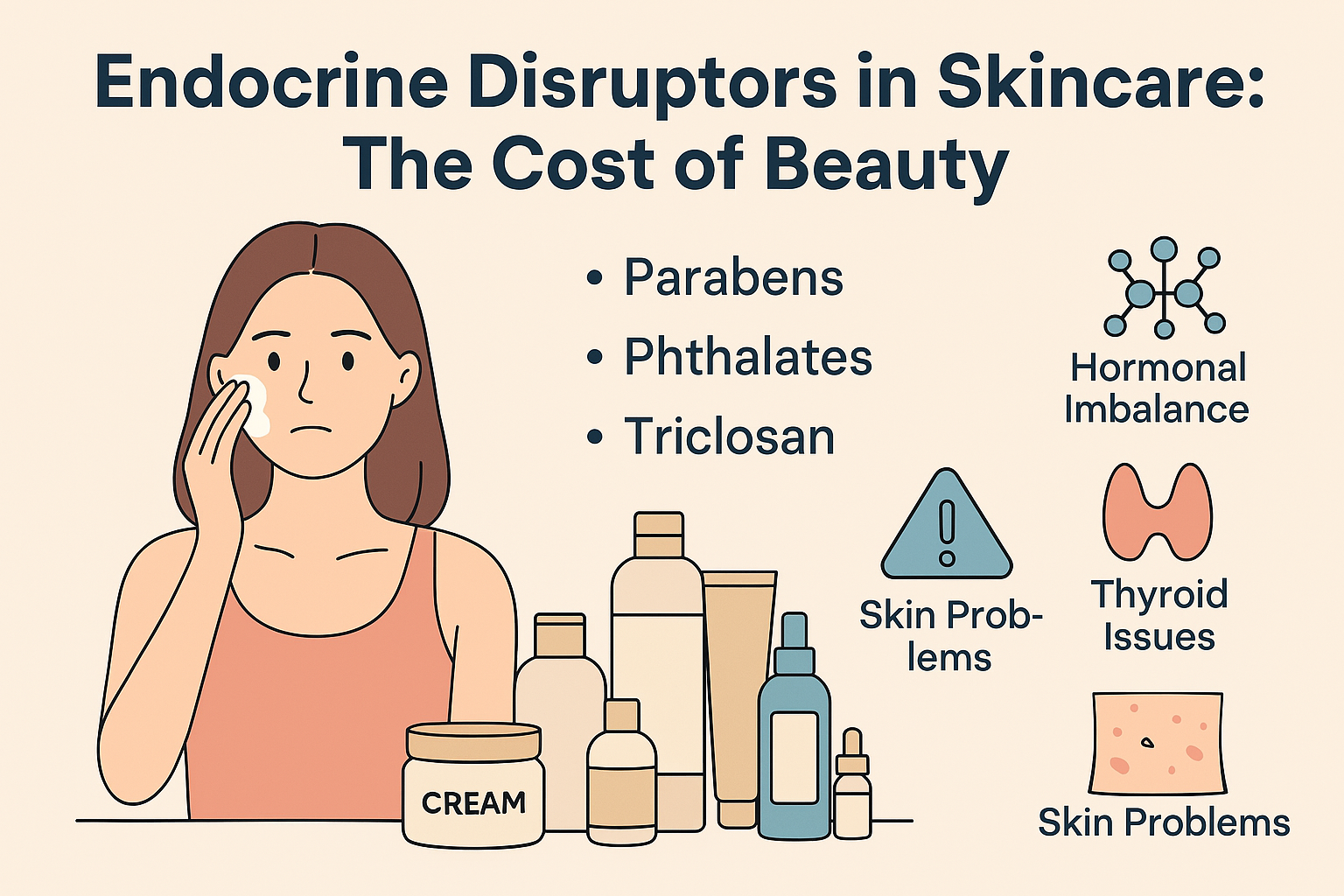
💄 Expert Dialogue: Dr. Yuna (Dermatologist) & Dr. Fraser (Endocrinologist)
Dr. Yuna: Most people assume what goes on the skin stays on the surface. But skin is permeable, and many cosmetic ingredients are absorbed into the bloodstream.
Dr. Fraser: Exactly. And what’s alarming is how common endocrine-disrupting chemicals are in everyday beauty products—parabens for preservation, phthalates for fragrance stability, and UV filters like oxybenzone in sunscreens.
Dr. Yuna: These aren’t just trace exposures. Think about layering serums, lotions, sunscreens, perfumes—daily, sometimes multiple times.
Dr. Fraser: Research shows these chemicals can alter estrogen, androgen, and thyroid hormone pathways. Even low-level exposures, especially over time, can accumulate and disrupt hormonal balance.
Dr. Yuna: And teens are especially vulnerable. Early use of makeup and skincare products with EDCs has been linked to early puberty and menstrual irregularities.
Dr. Fraser: What worries me is that many of these ingredients are still unregulated in cosmetics. The burden falls on consumers to research and avoid them.

🔬 Common EDCs in Personal Care Products
- Parabens (methyl-, propyl-, butyl-) – preservatives that mimic estrogen
- Phthalates – stabilize fragrance but disrupt testosterone
- Oxybenzone & Octinoxate – UV filters linked to thyroid dysfunction
- Triclosan – antimicrobial agent that interferes with endocrine signaling
- Formaldehyde releasers – preservatives linked to cancer and hormone disruption
Scientific Insights:
- A 2021 Journal of Clinical Endocrinology & Metabolism study linked urinary paraben levels to delayed fertility and menstrual cycle changes.
- A 2019 Environmental Research article noted that oxybenzone accumulates in adipose tissue and crosses the placenta.
- Research in JAMA Pediatrics found that girls exposed to higher levels of phthalates had an earlier onset of puberty.

🧍 Real-Life Case: Beauty and the Imbalance
Case: Natalie, 28, developed persistent acne, irregular cycles, and fatigue. Endocrine tests showed imbalanced estrogen dominance.
Intervention: She eliminated all conventional skincare products and replaced them with EWG-verified clean brands. After 4 months, her symptoms noticeably reduced, and hormone levels stabilized.
Lesson: What we apply topically can quietly disrupt our internal hormonal ecosystem.
🧴 How to Detox Your Beauty Routine
🧪 Is Your Skincare Routine Disrupting Your Hormones?
🧪 EDC Exposure Risk Assessment
Answer the following 7 questions to assess your potential exposure to endocrine-disrupting chemicals (EDCs) through personal care products.
🧠 Hormone-Disruptor Risk Self-Assessment Quiz
- Avoid “Fragrance” – Look for fragrance-free or naturally scented products
- Choose EWG Verified or MADE SAFE certified products
- Simplify your routine – Fewer products = fewer exposures
- Read ingredient lists – Learn common EDC names
- Use mineral sunscreens – Zinc oxide or titanium dioxide only
- Limit aerosol sprays – Higher inhalation risk with body mists and dry shampoos

❓ FAQ (Frequently Asked Questions)
1. Are natural products always better? Not always. Natural doesn’t mean safe or non-irritating. Look for verified labels (EWG, USDA Organic, MADE SAFE) and review ingredients.
2. Do EDCs in cosmetics really reach hormone levels? Yes. Blood and urine studies confirm EDC absorption through the skin. Some, like parabens, are measurable within hours of use.
3. How can I find safe products without being a chemist? Use apps like EWG’s Skin Deep or Think Dirty. These platforms rank safety levels of thousands of products.
4. Are men affected too? Absolutely. EDCs in aftershave, hair gel, and cologne can impact sperm quality and testosterone levels.
5. Is it expensive to go toxin-free? Not necessarily. Many affordable brands now offer non-toxic alternatives. Simplifying your routine also saves money.
6. Can I reverse the damage? While some disruptions may be temporary, consistent avoidance can allow your body to detox naturally. Support your liver, gut, and endocrine system with clean living practices.
✅ Conclusion
The beauty industry is often driven by trends, not safety. But real beauty supports—not sabotages—your health. Shifting to clean, hormone-safe products empowers you to protect your endocrine system without sacrificing self-care.
💬 What’s in Your Skincare Routine?
Have you made the switch to clean beauty? What challenges or benefits did you notice? Share your experience—we’re learning together.


