Sleep Reset-part 4
TL;DR
📵 Your brain was never built for 24/7 pings, scrolls, and screens.
🧠 From dopamine spikes to sleep loss, constant tech use rewires your attention and emotion systems.
🔌 This post shows the science of digital disruption—and how to reclaim mental clarity.
🧪 Self-Check: Are You Digitally Overloaded?
🧠 Expert Dialogue – "Is My Phone Rewiring My Brain?"
Jordan (Reader): "Dr. Vega, why do I feel mentally fried even if I haven't done anything stressful?"
Dr. Vega (Neuroscientist): "Because your brain has been working nonstop. Notifications, background scrolling, even passive content—it all stimulates your prefrontal cortex."
Jordan: "But it’s just Instagram and YouTube..."
Dr. Vega: "That’s exactly it. Those platforms trigger a dopamine response similar to gambling. Micro-doses of stimulation, all day long."
Jordan: "Is it changing my brain?"
Dr. Vega: "Yes. It’s not just distraction. It alters how you regulate emotion, focus, even memory consolidation."
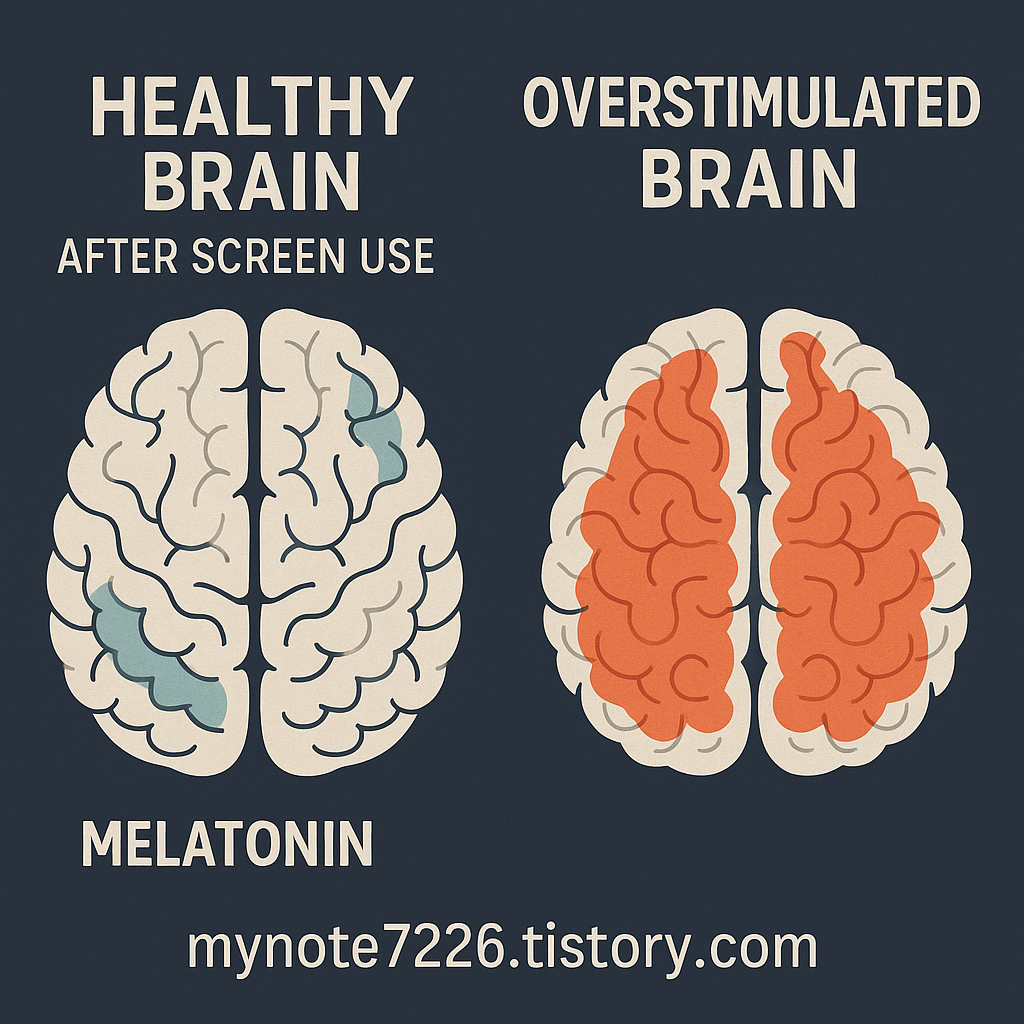
Alt Text: "Side-by-side brain scan showing healthy vs overstimulated brain after screen use. Blog address: mynote7226.tistory.com"
🔬 The Science of Disruption – 4 Key Principles
1️⃣ Dopamine Hijack
- Frequent screen use releases frequent dopamine spikes.
- This trains the brain to crave short-term rewards over sustained effort (Lembke, 2021).
2️⃣ Sleep Interference
- Blue light from devices suppresses melatonin.
- Screen exposure within 2 hours of bedtime delays REM sleep and reduces total sleep time (Harvard Health, 2018).
3️⃣ Cognitive Overload
- Constant multitasking (email, messages, tabs) impairs working memory and decision-making (Ophir et al., 2009).
- Brain scans show reduced gray matter in chronic multitaskers (Stanford, 2014).
4️⃣ Emotional Dysregulation
- Social media feedback loops heighten stress, anxiety, and comparison (Twenge et al., 2019).
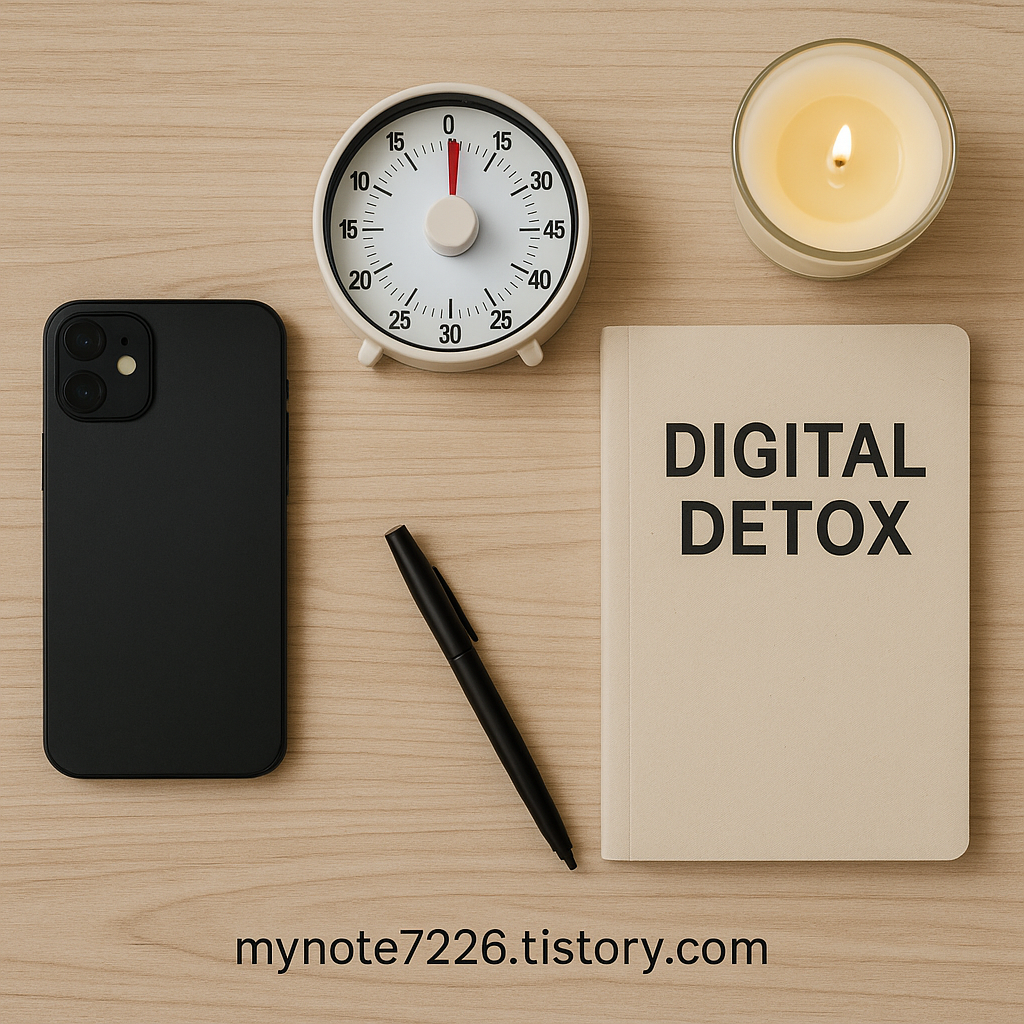
Alt Text: "Flat lay of digital detox tools: phone face down, analog timer, journal, candle – Blog: mynote7226.tistory.com"
📖 Reader Story – "How I Got My Mind Back"
"I didn’t think I had a problem. I was just a 'busy' student with five tabs open. But I couldn’t read a book anymore. I checked my phone every 5 minutes, and my sleep was garbage. A 7-day digital detox—starting with no screens an hour before bed—changed everything. Now I feel present. It’s like my brain can breathe again."

Alt Text: "Dopamine spike comparison chart: tech, sugar, exercise, caffeine, and narcotics – Blog: mynote7226.tistory.com"
❓ FAQ – Digital Disruption Explained 📵🧠📶
1. How much screen time is too much?
There’s no one-size-fits-all, but over 3 hours of non-work screen time a day has been linked to reduced focus and sleep quality.
2. Is blue light the main issue?
It’s one factor. The bigger issue is when and how we engage with screens—especially before bed.
3. Can digital detox improve mental health?
Yes. Studies show that even 3 days of digital reduction improve mood, focus, and sleep (Hadar et al., 2020).
4. Do kids and teens experience more disruption?
Yes. Their brains are still developing and more sensitive to overstimulation.
5. What's the simplest fix?
Start with screen-free mornings and no screens 1 hour before bed.
🔗 Internal Links
🔗 External Link
🧭 Navigation
🔙 Previous: Stages of Sleep
🏠 Series Home
🔜 N e x t : Bedroom Biology
💬 CTA – Reclaim Your Mind 🧘♂️🧘♀️📵
You don’t have to quit tech—you just need to use it intentionally.
Even small boundaries make a big difference: no-scroll mornings, sunlight before screens, notifications off after 8pm.
✨ Your mind is your greatest asset. Let’s protect it—on purpose.
💬 What helps you unplug? Share your experience in the comments below.
🔗 Discover more insights at https://wellpal.blogspot.com


