Sleep Reset-part - 6
TL;DR
🥗 What and when you eat affects your sleep quality more than you think. ⏰ Late meals can delay melatonin and raise nighttime cortisol. 🌙 Learn how to optimize your meal timing to fall asleep faster and stay asleep longer.
🧑⚕️ Expert Dialogue – "Is Your Dinner Keeping You Awake?"
Reader: "I’ve been eating healthy, but I still have trouble falling asleep. What gives?"
Dr. Lopez (Integrative Sleep & Nutrition Specialist): "You may be eating the right foods—but at the wrong time. Timing can disrupt hormonal signals, especially melatonin."
Reader: "Even if I avoid caffeine and sugar?"
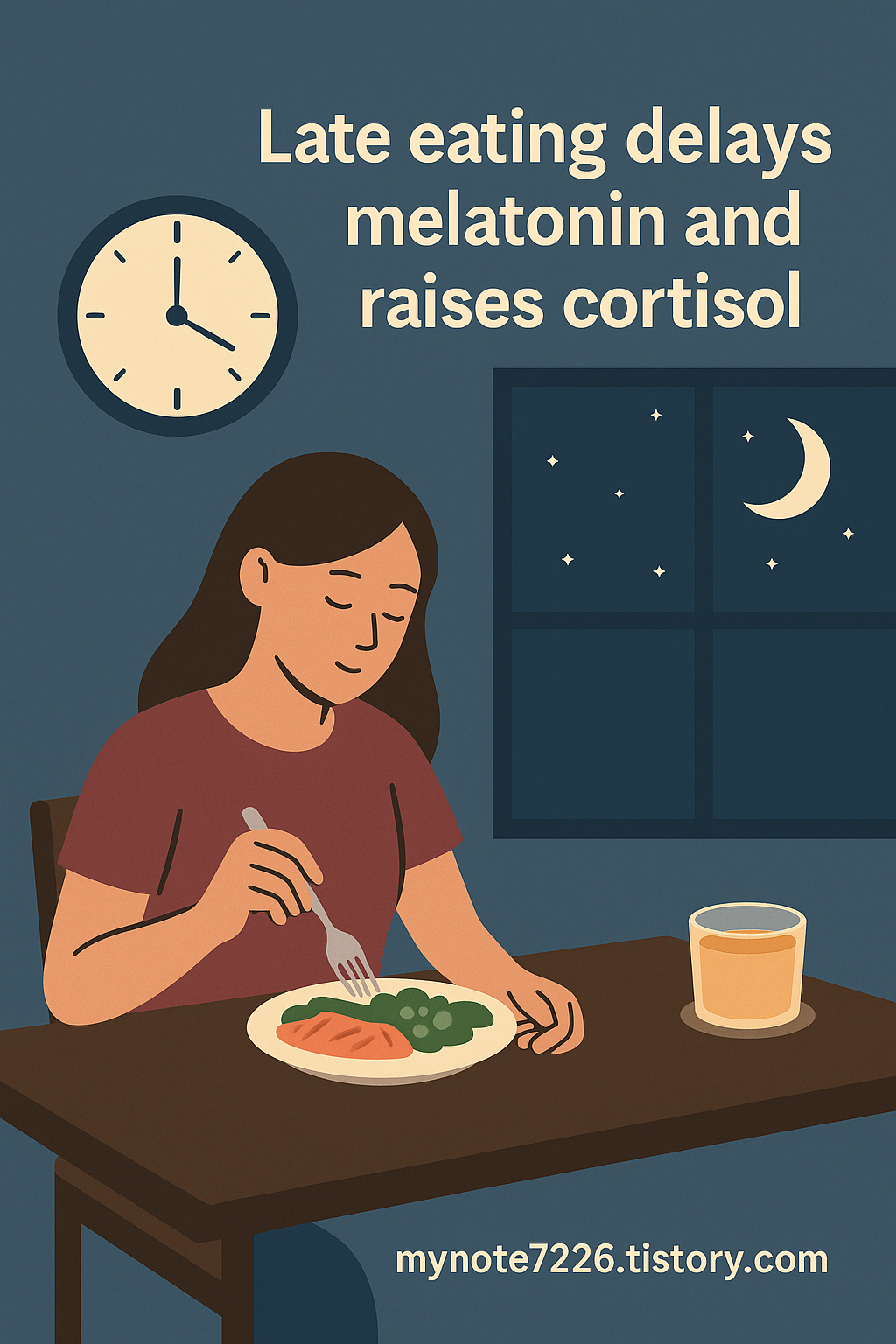
Dr. Lopez: "Yes, because late eating elevates insulin and cortisol, both of which block melatonin. Your body sees food intake as a signal to stay awake."
Reader: "So when should I stop eating?"
Dr. Lopez: "Aim for your last meal 2–3 hours before bed. And watch those late-night snacks—especially carb-heavy ones."
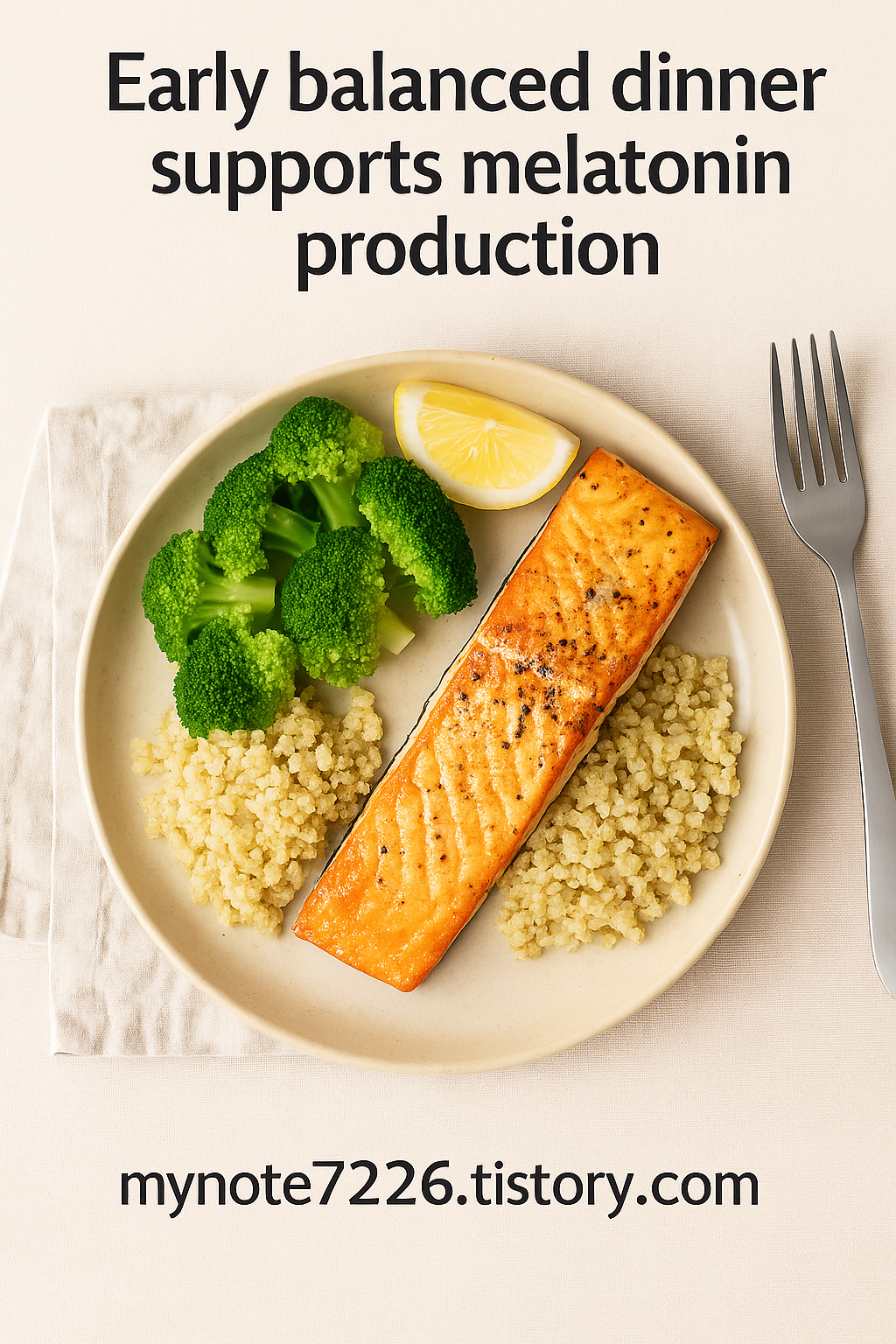
Alt Text: "Early balanced dinner supports melatonin production. Blog: mynote7226.tistory.com"
🔬 The Science Behind Meal Timing and Sleep Hormones
1️⃣ Melatonin Disruption by Late Eating
Melatonin is suppressed by both light and insulin. When you eat late, your blood sugar rises, followed by insulin, which delays melatonin release (American Journal of Clinical Nutrition, 2019).
2️⃣ Cortisol Peaks from Nighttime Meals
Normally, cortisol declines in the evening. But nighttime eating—especially high-fat meals—increases nighttime cortisol, keeping you wired (Frontiers in Endocrinology, 2020).
3️⃣ Tryptophan & Serotonin Pathway
Tryptophan (from turkey, eggs, dairy) is a precursor to serotonin → melatonin. Balanced meals with protein and slow carbs support this conversion.
4️⃣ Circadian Alignment of Digestion
Your gut has its own circadian rhythm. Nighttime digestion is sluggish, increasing the risk of reflux, indigestion, and sleep fragmentation (Cell Reports, 2017).
Alt Text: "Late eating delays melatonin and raises cortisol. Blog: mynote7226.tistory.com"
📖 Reader Story – "I Thought My Food Was Healthy, Until It Wasn't (For Sleep)"
“I always ate nutritious meals—whole grains, lean proteins, greens. But I used to eat dinner at 9 PM. I’d be bloated, tossing in bed by midnight. After learning about melatonin suppression from late insulin spikes, I moved dinner to 6:30 PM. Within a week, I was falling asleep faster and waking up refreshed. Timing wasn’t just a tip—it was the missing piece.”

Alt Text: "Foods that promote sleep: turkey, nuts, herbal tea, kiwi – Blog: mynote7226.tistory.com"
❓ FAQ – Food & Sleep Hormones Explained 🍽️🧠😴
1. Why does late-night eating affect my dreams?
Late meals disrupt REM sleep, which is dream-heavy. High insulin before bed reduces deep sleep and increases night awakenings.
2. Are carbs bad before bed?
Not necessarily. Slow carbs (e.g., sweet potato, oats) can help serotonin release, but fast carbs spike insulin, harming melatonin.
3. Is it okay to drink protein shakes at night?
Only if they’re light and 2+ hours before bed. Heavy protein near sleep raises cortisol and delays digestion.
4. How does caffeine in food affect sleep?
Chocolate, green tea, and energy bars may contain hidden caffeine. Even small amounts can delay sleep onset.
5. What’s the best pre-sleep snack?
Try 1 kiwi, a handful of almonds, or chamomile tea. These support melatonin and magnesium balance.
🔗 Internal Links
🔗 External Link
🧭 Navigation
🔙 Previous: Bedroom Biology
🏠 Series Home
🔜 Next: Sleep Nutrition Deep Dive – Micronutrients & Timing
🌟 CTA – Eat for the Sleep You Deserve 🌘🥗💤
Your dinner plate could be the reason you’re not sleeping well.
Tonight, try eating earlier and gentler. Let your biology wind down, not ramp up.
💬 Share your favorite sleep-friendly meal in the comments.
📚 Explore more science-backed strategies at https://wellpal.blogspot.com


