Sleep Reset-part 5
TL;DR
🌡️ Your bedroom environment deeply influences your sleep quality.
🌬️ Light, air, temperature, and noise work with—or against—your body’s biology.
🛏️ Learn how to optimize your sleep sanctuary for deeper, longer, and more refreshing rest.
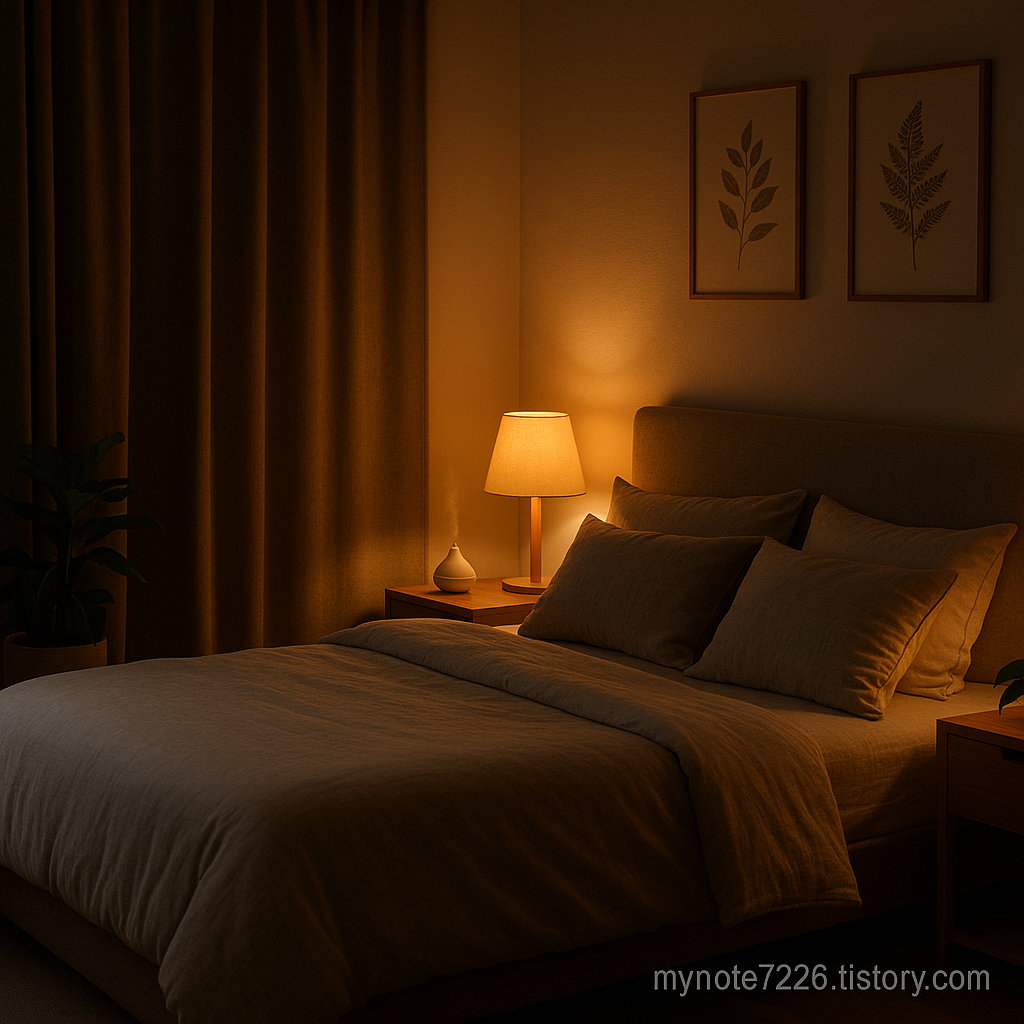
Alt Text: "Sleep-friendly bedroom setup: blackout curtains, amber lighting, no screens. Blog address: mynote7226.tistory.com"
🧪 Self-Check: Is Your Bedroom Helping or Hurting Your Sleep?
👩⚕️ Expert Dialogue – "Why Your Room Might Be Keeping You Awake"
Reader: "Dr. Nina, I sleep 8 hours, but I still wake up tired. Could it be my room?"
Dr. Nina (Sleep Physician): "Absolutely. People often focus on sleep duration but overlook sleep quality, which is heavily influenced by your bedroom environment."
Reader: "So it's not just about comfy mattresses?"
Dr. Nina: "Exactly. Light leakage, poor air quality, temperature fluctuations, and noise all disrupt your natural sleep architecture."
Reader: "What’s the most overlooked factor?"
Dr. Nina: "Air quality. A stuffy, CO2-filled room can reduce oxygen saturation, leading to shallow, unrestorative sleep."
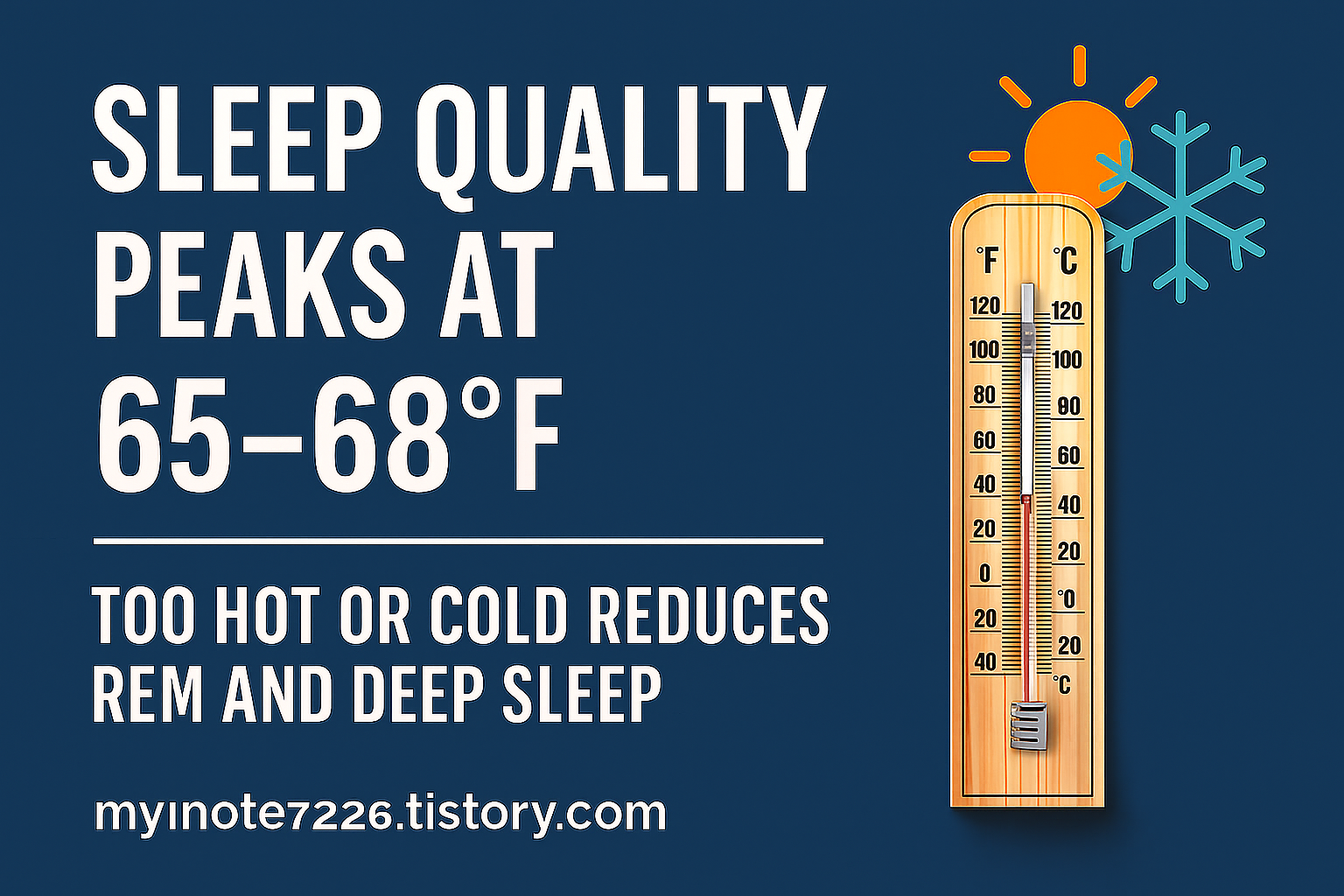
Alt Text: "Sleep quality peaks at 65–68°F. Too hot or cold reduces REM and deep sleep. Blog: mynote7226.tistory.com"
🔬 Science Behind the Sleep Sanctuary – 4 Key Environmental Factors
1️⃣ Light – The Master Clock Trigger
- Exposure to artificial light at night (ALAN) delays melatonin release.
- Even dim lighting (<30 lux) can shift your circadian rhythm by over an hour (Harvard Health, 2020).
- Blackout curtains, warm-tone bulbs, and screen filters after sunset promote melatonin production.
2️⃣ Temperature – Cool for REM Sleep
- The ideal bedroom temperature is around 18°C to 20°C (65°F to 68°F).
- Your core temperature naturally drops to initiate sleep. A hot room interferes with this process (NIH, 2019).
- Use breathable sheets, light pajamas, and thermal-regulating blankets.
3️⃣ Air Quality – Invisible But Critical
- CO2 levels over 1000 ppm disrupt deep sleep (Frontiers in Psychology, 2021).
- HEPA filters, air-purifying plants, and slightly opened windows can refresh oxygen levels.
4️⃣ Noise – The Subtle Saboteur
- Even sounds below waking threshold (e.g., 40–60 dB) can cause micro-arousals.
- White noise machines or earplugs help block environmental disturbances.
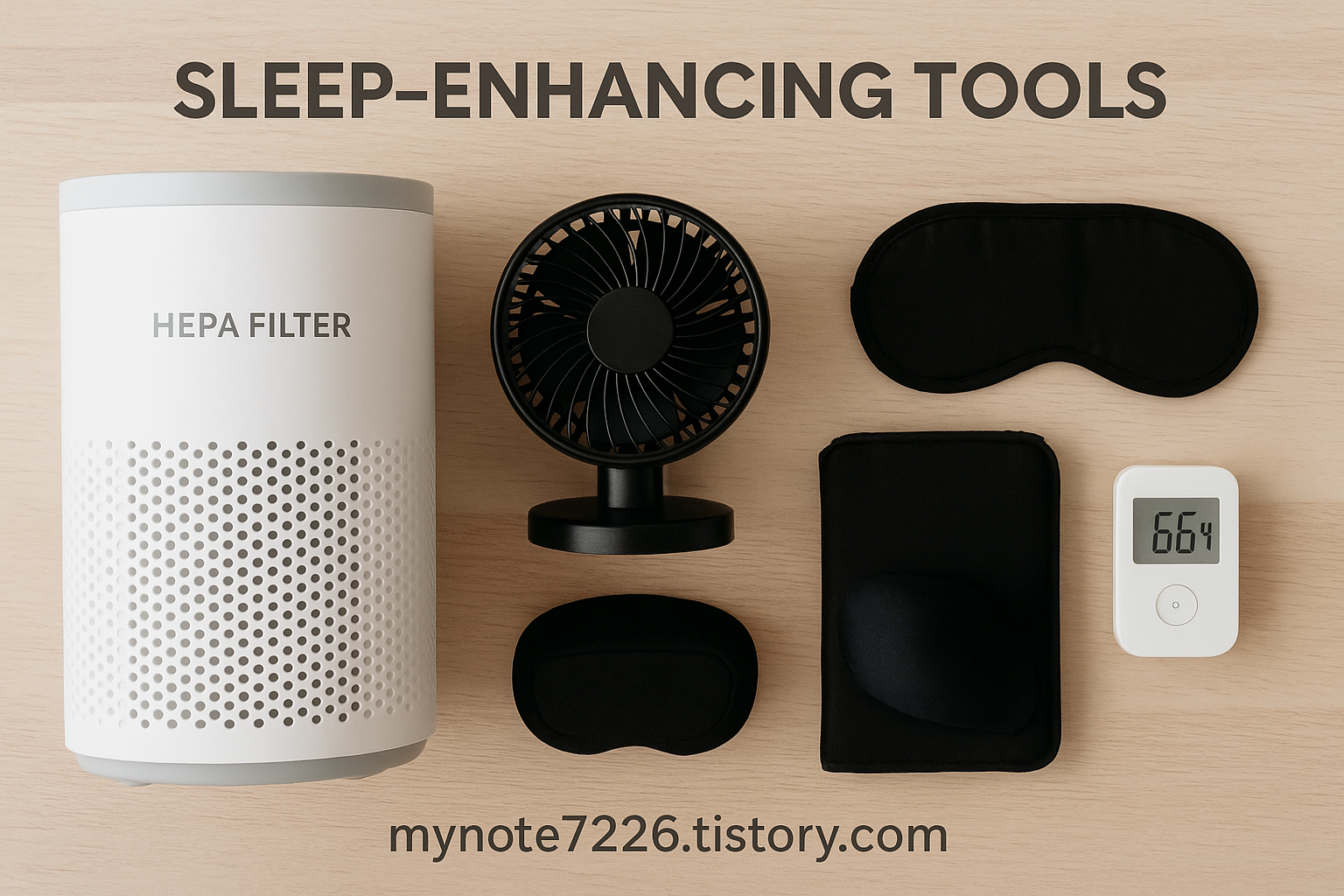
Alt Text: "Sleep-enhancing tools: HEPA filter, fan, eye mask, thermometer – Blog: mynote7226.tistory.com"
📖 Reader Story – "From Chaos to Calm: My Room Reset"
“I never thought the sound of my neighbor’s TV or my glowing router could impact my sleep. After reading about bedroom biology, I went on a mission: blackout curtains, a $20 air filter, unplugged electronics, and a soft fan for white noise. In 3 days, I felt a difference. By week two, my dreams returned. It's like I turned my room into a cave—and my sleep became sacred again.”
❓ FAQ – Bedroom Biology Questions You’re Not Alone In Asking 🌙💤🍃
1. Does light from a clock or charger really matter?
Yes. Even 5 lux of light can reduce melatonin by 50%. Cover LED indicators or use blackout stickers.
2. What’s the best air purifier for sleep?
Look for HEPA-certified units with quiet mode (<30 dB). No ozone emission.
3. Can noise-canceling headphones help sleep?
They can—but passive methods like white noise are better for long-term comfort.
4. Is sleeping with a fan bad?
No, unless it’s too strong or dries out the air. Moderate airflow supports better oxygen circulation.
5. What’s the fastest way to upgrade my sleep space?
Unplug electronics, lower lights after sunset, and crack a window for fresh air.
🔗 Internal Links
🔗 External Link
🧭 Navigation
🔙 Previous: Digital Disruption
🏠 Series Home
🔜 Next: Eat, Sleep, Repeat
🌟 CTA – Make Your Room Your Sanctuary Tonight 🛏️🌬️🕯️
You don’t need a $10,000 mattress to sleep well—you need a biologically aligned environment.
Start with one simple shift tonight: unplug, dim the lights, crack a window.
✨ Your best rest begins with your bedroom.
💬 What change made the biggest difference for your sleep? Share your tips in the comments.
🔗 Read more at https://wellpal.blogspot.com


