Sleep Reset-part - 7
TL;DR
😵 Anxiety and poor sleep feed off each other in a vicious cycle.
💤 Stress hormones like cortisol disrupt deep and REM sleep.
🧘 Break the loop with daily habits, timing, and nervous system regulation.
🧪 Self-Check: Are You in the Anxiety-Sleep Loop?
👩⚕️ Expert Dialogue – "When Your Mind Won't Shut Off at Night"
Reader: "Why does my anxiety get worse at bedtime? It’s like everything I didn’t worry about during the day comes rushing in."
Dr. Claire Nguyen, MD (Neuropsychiatrist): "That’s actually common. When external stimulation fades, your brain becomes a mirror—reflecting unchecked thoughts. But also, biologically, your cortisol levels may still be high when they should be winding down."
Reader: "So it’s not just in my head?"
Dr. Nguyen: "Not at all. Anxiety activates the sympathetic nervous system—the 'fight-or-flight' mode. That system is incompatible with deep sleep."
Reader: "How do I calm it down before bed?"
Dr. Nguyen: "You need to trigger the parasympathetic response—the 'rest-and-digest' mode. Breathwork, gentle stretching, magnesium, and blue-light reduction are all effective tools."
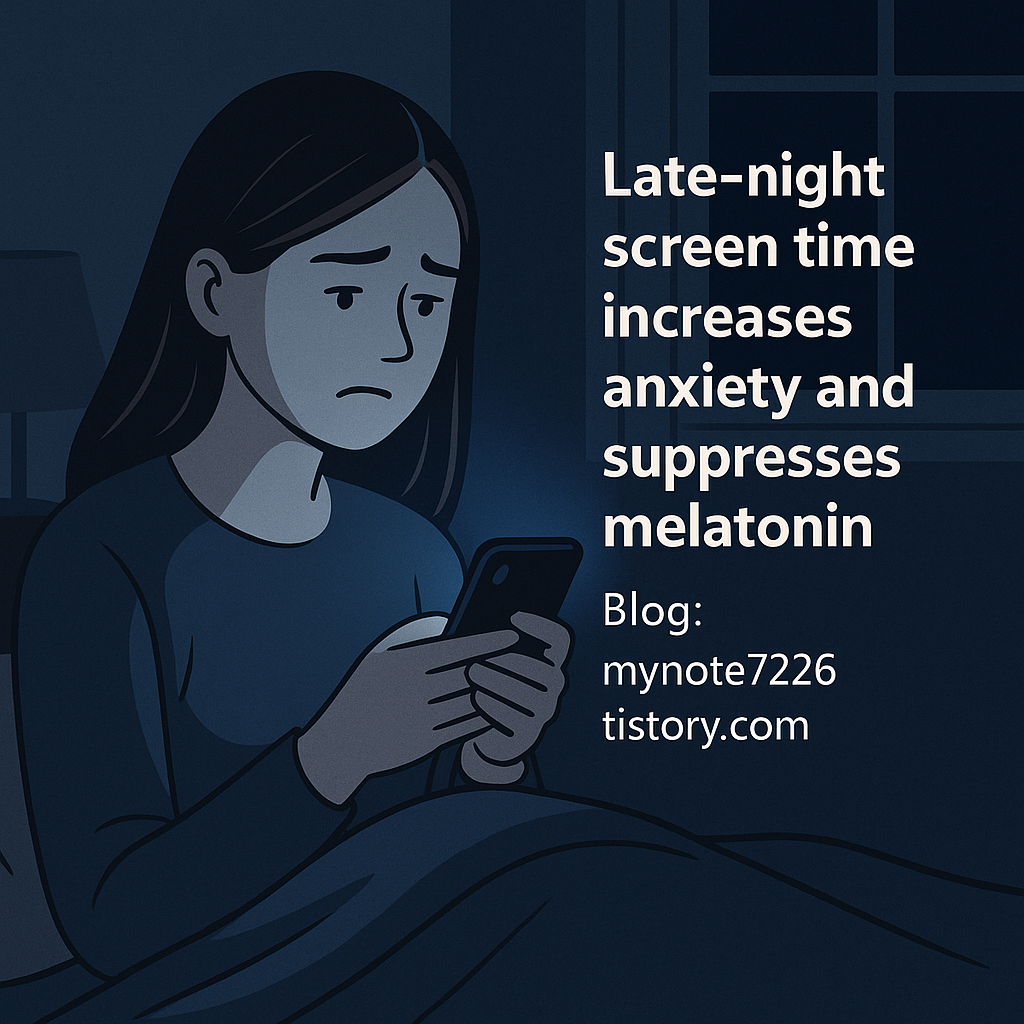
Alt Text: "Late-night screen time increases anxiety and suppresses melatonin – Blog: mynote7226.tistory.com"
🔬 The Science of the Anxiety-Sleep Feedback Loop
1️⃣ Cortisol Curve Disruption
In a healthy sleep cycle, cortisol should drop after sunset. But with anxiety, cortisol stays elevated, making it hard to fall—and stay—asleep (Psychoneuroendocrinology, 2016).
2️⃣ Reduced GABA and Overactive Amygdala
GABA is the brain’s calming neurotransmitter. Anxiety lowers GABA while ramping up amygdala activity, increasing hypervigilance and dream disturbance (Nature Reviews Neuroscience, 2015).
3️⃣ REM Fragmentation
REM sleep is critical for emotional regulation. Anxiety causes fragmented REM patterns, making you feel emotionally drained and foggy the next day (Sleep Medicine Reviews, 2019).
4️⃣ Sympathetic Dominance
Chronic stress tilts the nervous system toward sympathetic dominance—high heart rate, racing thoughts, muscle tension. This state delays sleep onset and causes frequent nighttime waking (Harvard Health, 2020).
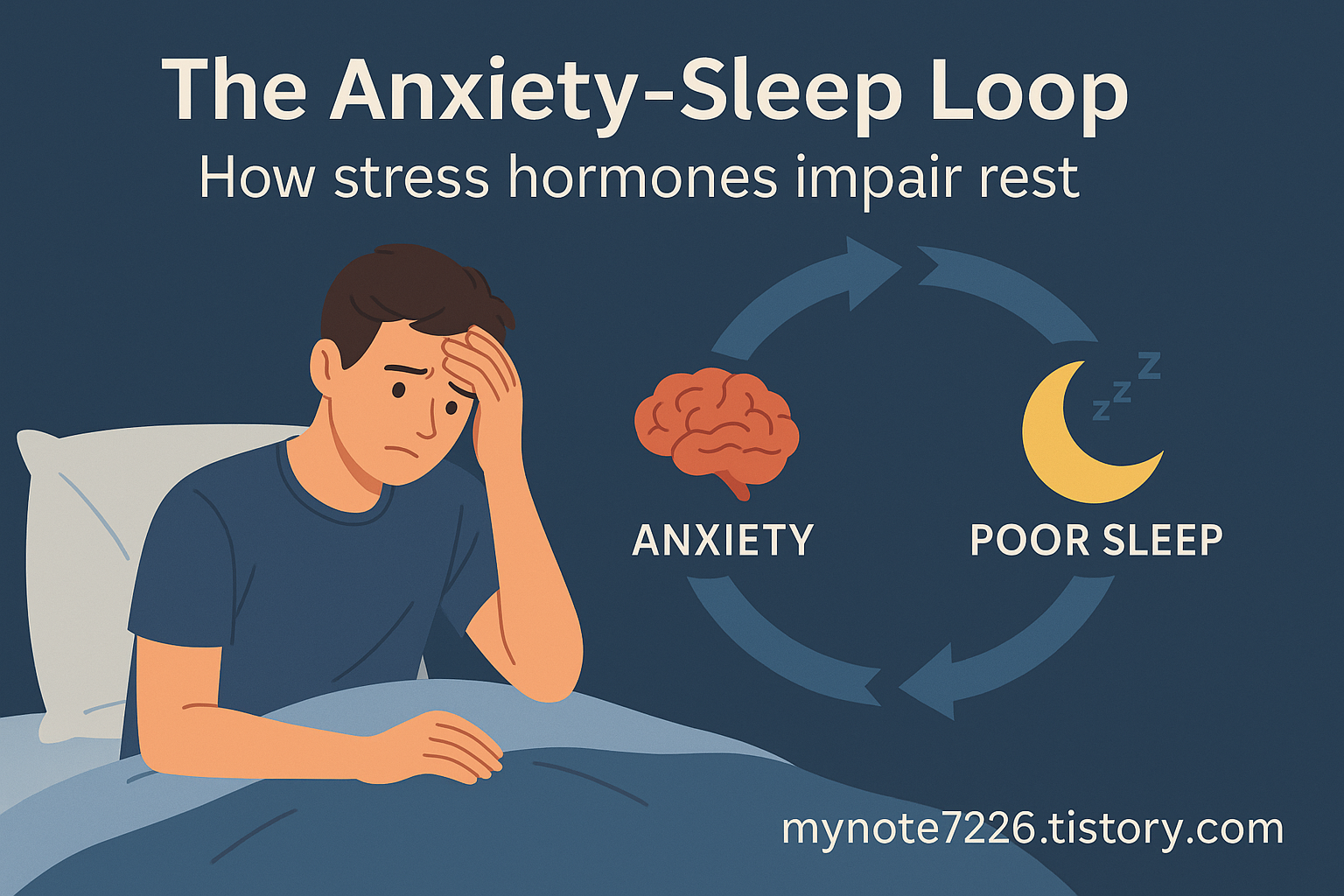
Alt Text: "The anxiety-sleep loop: how stress hormones impair rest – Blog: mynote7226.tistory.com"
📖 Reader Story – "Anxious Nights, Foggy Mornings"
“I didn’t realize my sleep problems were tied to anxiety until I tracked both. I’d lie in bed with my heart racing, reviewing everything I said during the day. I’d fall asleep at 2 or 3 AM and wake up exhausted. A therapist helped me create a wind-down ritual: dim lights, magnesium, journaling. I now sleep by 10:30. I didn’t cure anxiety overnight—but I stopped letting it rule my nights.”
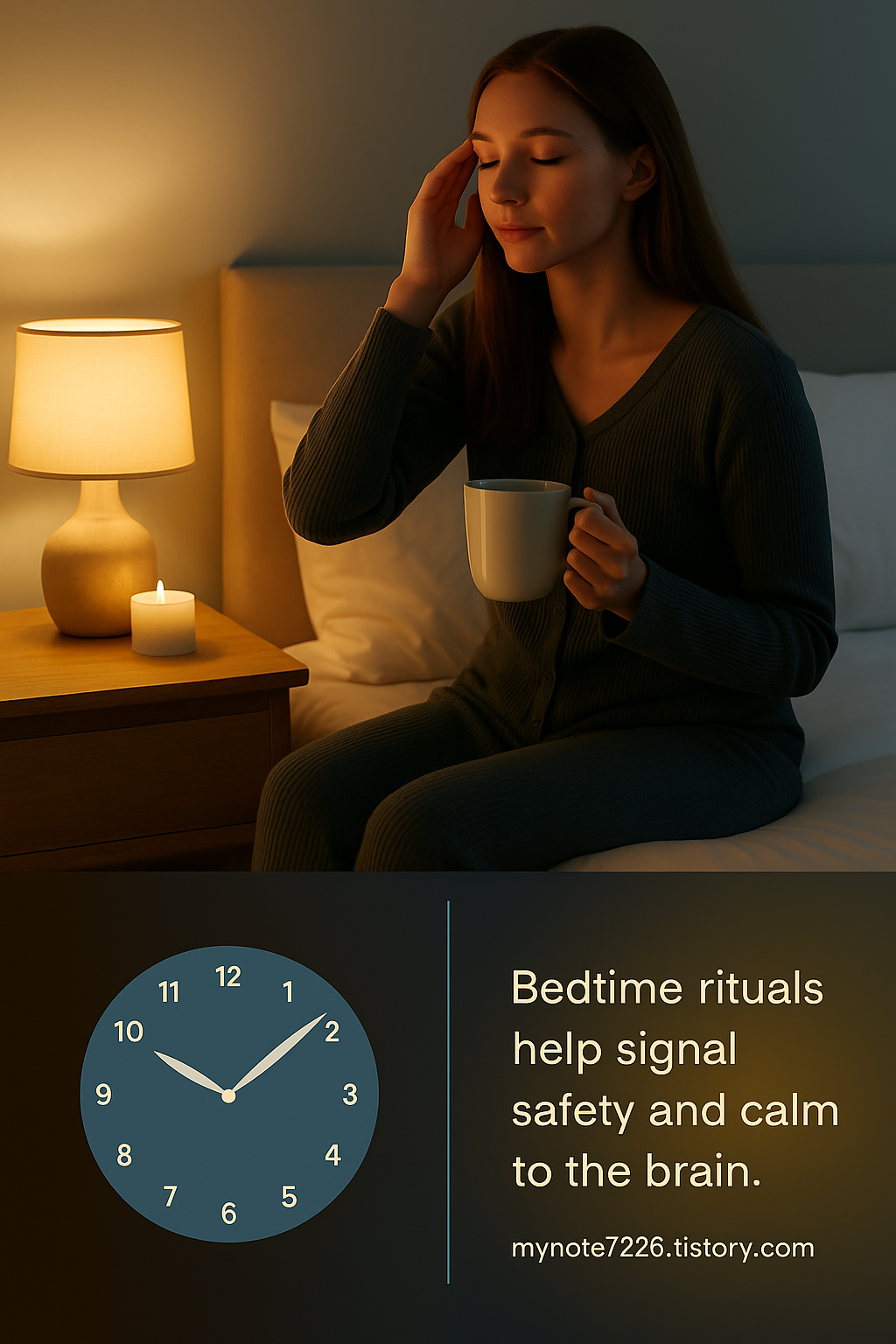
Alt Text: "Bedtime rituals help signal safety and calm to the brain – Blog: mynote7226.tistory.com"
❓ FAQ – Sleep, Anxiety, and the Brain 🧠🌙😟
1. Why do I feel more anxious at night?
Because your brain has fewer distractions. Plus, elevated cortisol and an overactive amygdala make your body feel 'on alert.'
2. Can poor sleep cause anxiety the next day?
Yes. Fragmented REM sleep reduces emotional resilience, making your brain more sensitive to stress.
3. Does screen time really affect anxiety and sleep?
Absolutely. Blue light suppresses melatonin and keeps your nervous system active. Aim to turn off devices 1 hour before bed.
4. Are naps okay if I have anxiety?
Short naps (under 30 minutes) can help, but too much daytime sleep can disrupt circadian rhythms and worsen nighttime insomnia.
5. What’s the first thing I should try to fix this loop?
Build a 30-minute nightly routine: dim lights, stretch, breathwork, and journaling. This helps rewire your nervous system for rest.
🔗 Links
Internal:
- Eat, Sleep, Repeat – How Meals Affect Sleep Hormones
- Bedroom Biology – How to Design Your Sleep Sanctuary
External:
🧭 Navigation
🔙 Previous: Eat, Sleep, Repeat
🏠 Series Home
🔜 Next: Sleep Nutrition: Micronutrients & Mood Regulation
🌟 CTA – You Deserve Deep Rest 😌💤
Anxiety doesn't have to own your nights.
With a few changes, you can teach your brain it's safe to rest.
💬 What part of your nighttime routine do you want to improve first?
📥 Drop a comment below or explore more at https://wellpal.blogspot.com


