🔍 TL;DR (3-Sentence Summary)
- Teen mental health issues have surged dramatically in recent years, with anxiety, depression, and suicide rates reaching alarming levels.
- Schools are uniquely positioned to offer early detection, emotional support, and structured mental health interventions — but many are underprepared.
- A combination of trauma-informed care, peer support, trained school counselors, and community partnerships can turn schools into safe havens for adolescent mental well-being.
🎙️ Moderator (Rachel Kim, Child & Adolescent Mental Health Writer):
Welcome to Mind on the Margin, a series exploring vulnerable mental health populations. Today, we face one of the most urgent challenges of our time: Teen Mental Health as a Public Crisis.
Joining us are two leading experts:
- Dr. Selena Moore, PsyD, school psychologist and youth trauma specialist
- Dr. James Patel, MD, child psychiatrist and consultant for school-based mental health programs
📈 Topic 1: The Scope of the Crisis
Rachel: Dr. Moore, what are we seeing in the current data on teen mental health?
Dr. Moore:
The numbers are staggering. In the United States, over 30% of teens report persistent feelings of sadness or hopelessness. Suicide is now the second leading cause of death among adolescents aged 10–24. Rates of self-harm, eating disorders, and panic attacks have risen significantly — especially since the pandemic.
Dr. Patel:
And these numbers aren’t just statistical anomalies. They're symptoms of a broader, chronic dysfunction in how we address emotional health — both at home and in institutional settings like schools. Social media, academic pressure, economic stress, and isolation all compound the issue.
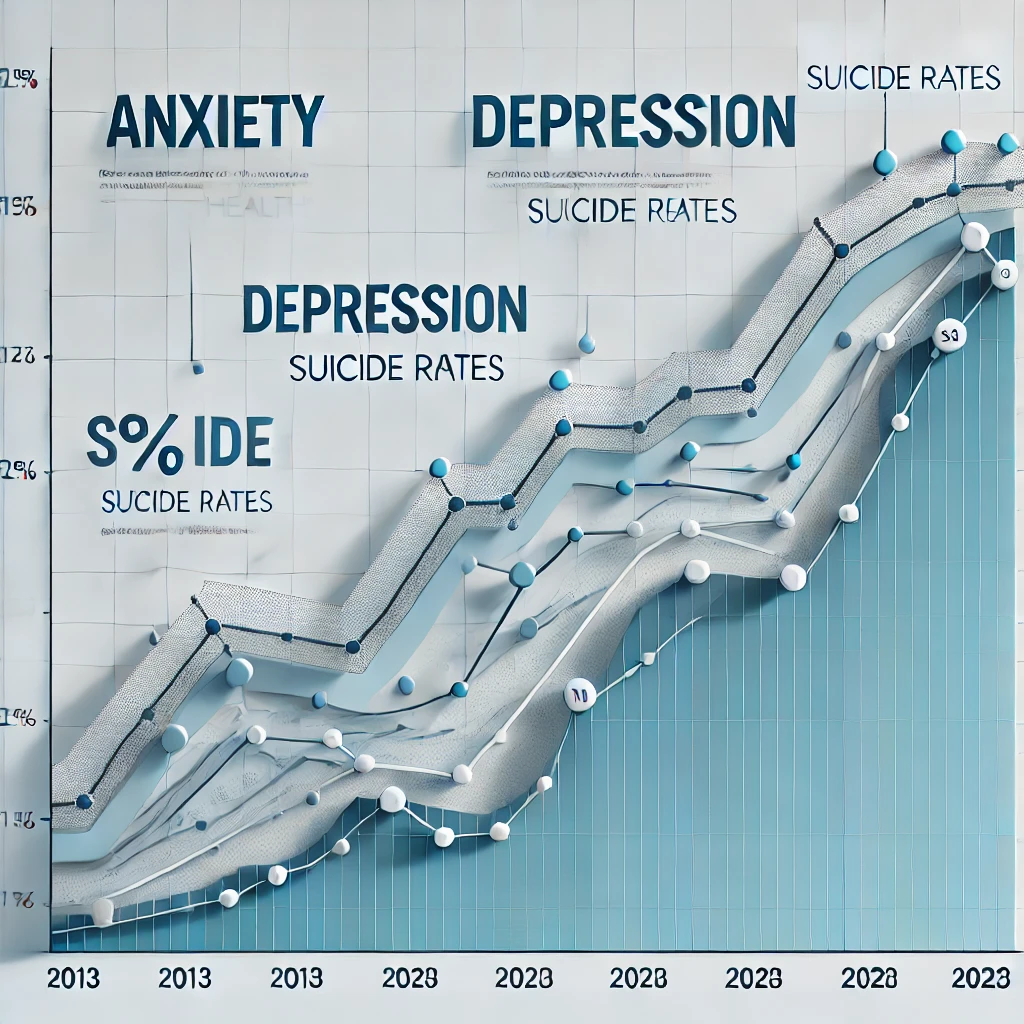
Alt text: “Graph showing rise in teen anxiety, depression, and suicide rates over the past decade”
🧠 Topic 2: What’s Driving the Surge?
Rachel: Let’s go deeper. Why now? Why is this happening to teens in particular?
Dr. Moore:
Teenagers today are growing up in a high-stimulus, low-support environment. They’re bombarded by social comparison, world crises, and a pressure to perform — often without safe, consistent emotional anchors.
Dr. Patel:
From a neurobiological standpoint, adolescents have hypersensitive limbic systems and still-developing prefrontal cortices. That means they feel emotions more intensely but struggle with impulse control and emotional regulation — a dangerous mix when exposed to chronic stress.
Dr. Moore:
And for many marginalized students, there’s the added layer of racial trauma, food insecurity, and community violence. Their stress isn’t theoretical — it’s lived, daily.
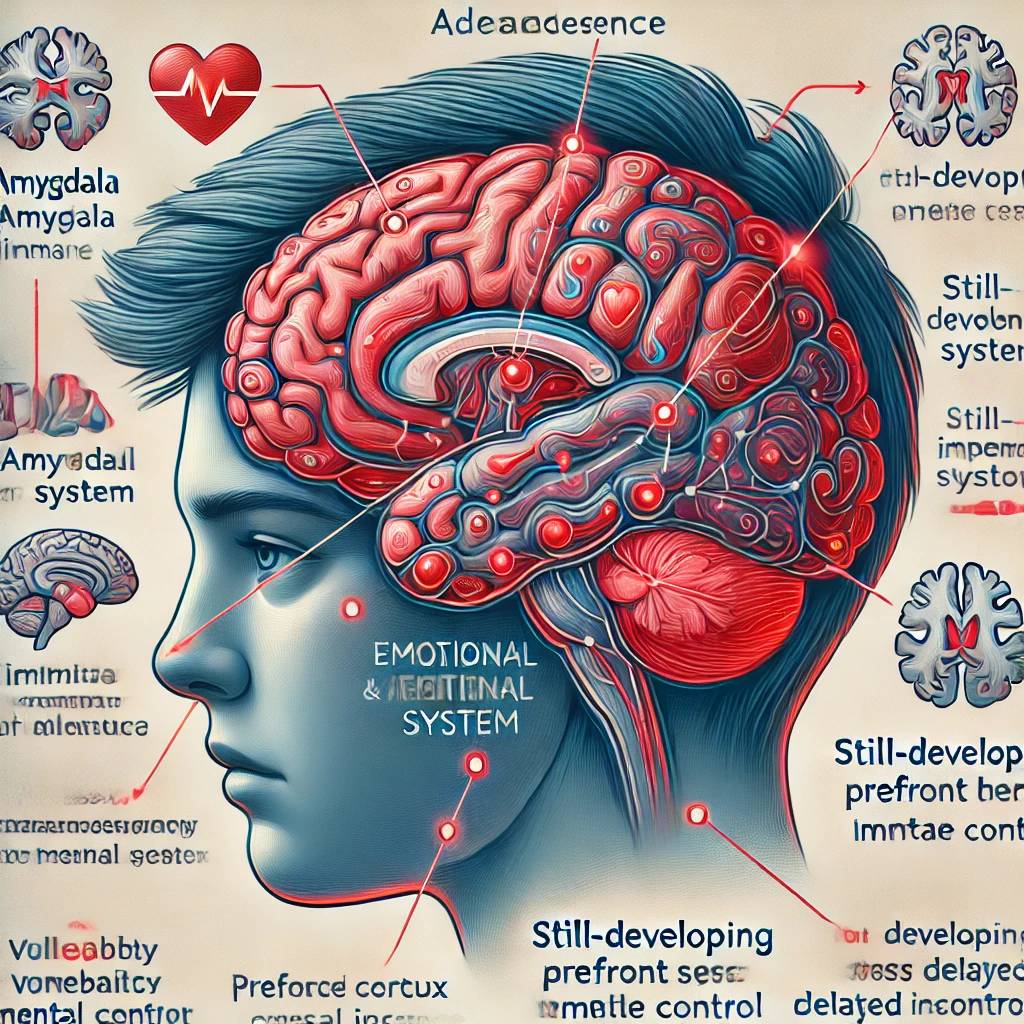
Alt text: Alt text: "Diagram of a teenage brain highlighting the imbalance between the emotional limbic system and the still-developing prefrontal cortex. Visual shows heightened emotional reactivity alongside immature impulse control, emphasizing adolescent vulnerability to mental health challenges."
🏫 Topic 3: Why Schools Matter
Rachel: So where do schools come in? Why should they be involved in this mental health crisis?
Dr. Patel:
Because schools are where teens spend most of their waking hours. They are the frontline of emotional observation — where early signs like withdrawal, irritability, or falling grades first appear.
Dr. Moore:
Unfortunately, many schools aren’t equipped. The student-to-counselor ratio in the U.S. is 408 to 1, far above the recommended 250 to 1. Many school counselors are overburdened with administrative work, leaving little time for meaningful mental health interventions.
Dr. Patel:
Still, we’ve seen success in schools that adopt trauma-informed models, where staff are trained to recognize emotional cues, de-escalate crises, and build supportive environments. Some schools have added quiet rooms, peer mentoring programs, and embedded therapists.
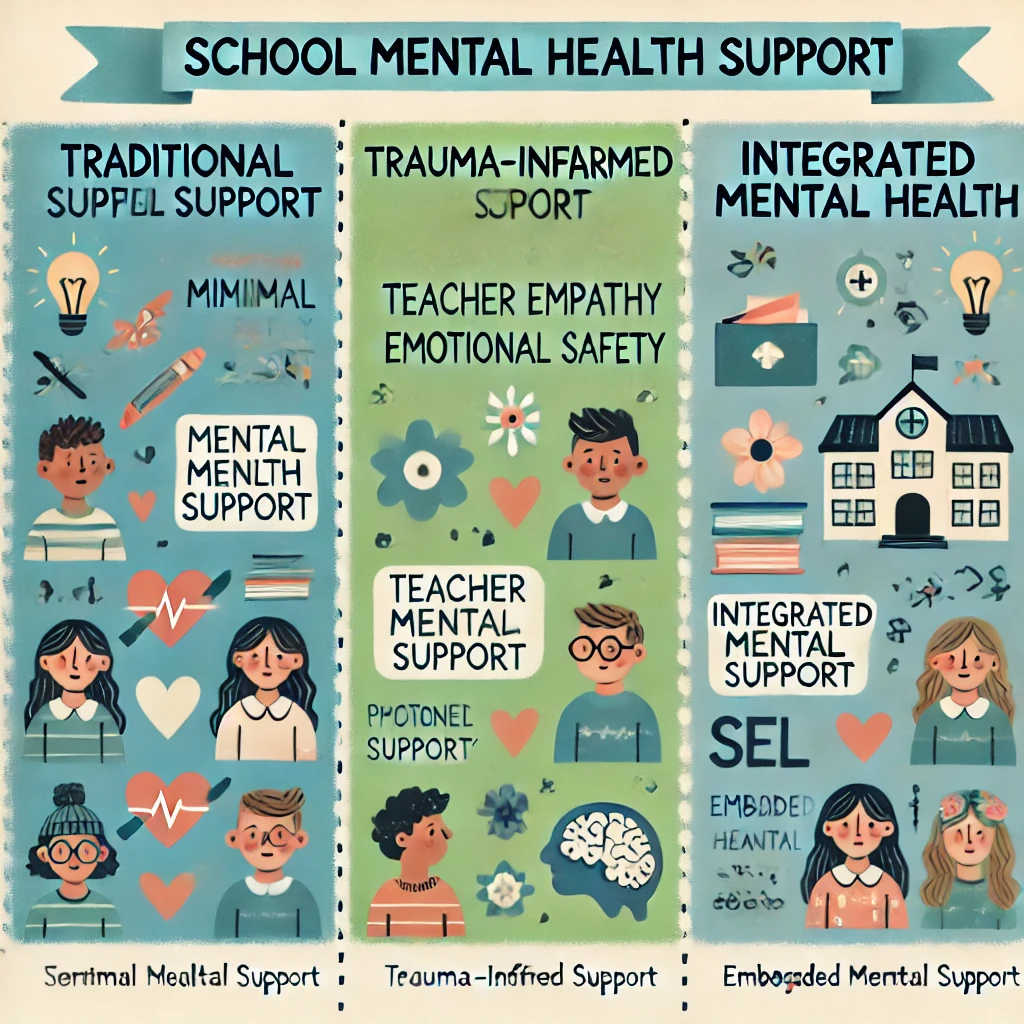
Alt text: "Infographic comparing three school mental health support models: Traditional (minimal mental health focus), Trauma-Informed (staff trained in emotional safety), and Integrated Mental Health (counselors, peer support, and SEL embedded). Designed to visually contrast school environments and outcomes."
🛠️ Topic 4: What Actually Works — Real Solutions in Real Schools
Rachel: What are schools doing that’s actually working?
Dr. Moore:
Here are some promising approaches:
- Mental health literacy curriculum embedded in health or advisory classes
- Peer support programs like Teen Mental Health First Aid
- On-site school-based health centers (SBHCs) with access to therapists
- Mindfulness and SEL (Social Emotional Learning) integration
Dr. Patel:
Don’t underestimate the impact of community partnerships either. Local clinics, nonprofits, and even mobile mental health vans can extend the reach of care.
Dr. Moore:
One middle school I work with added a “Wellness Wednesday” — a no-homework day where students participate in mental health activities, journaling, and group check-ins. Attendance and morale improved within 6 weeks.
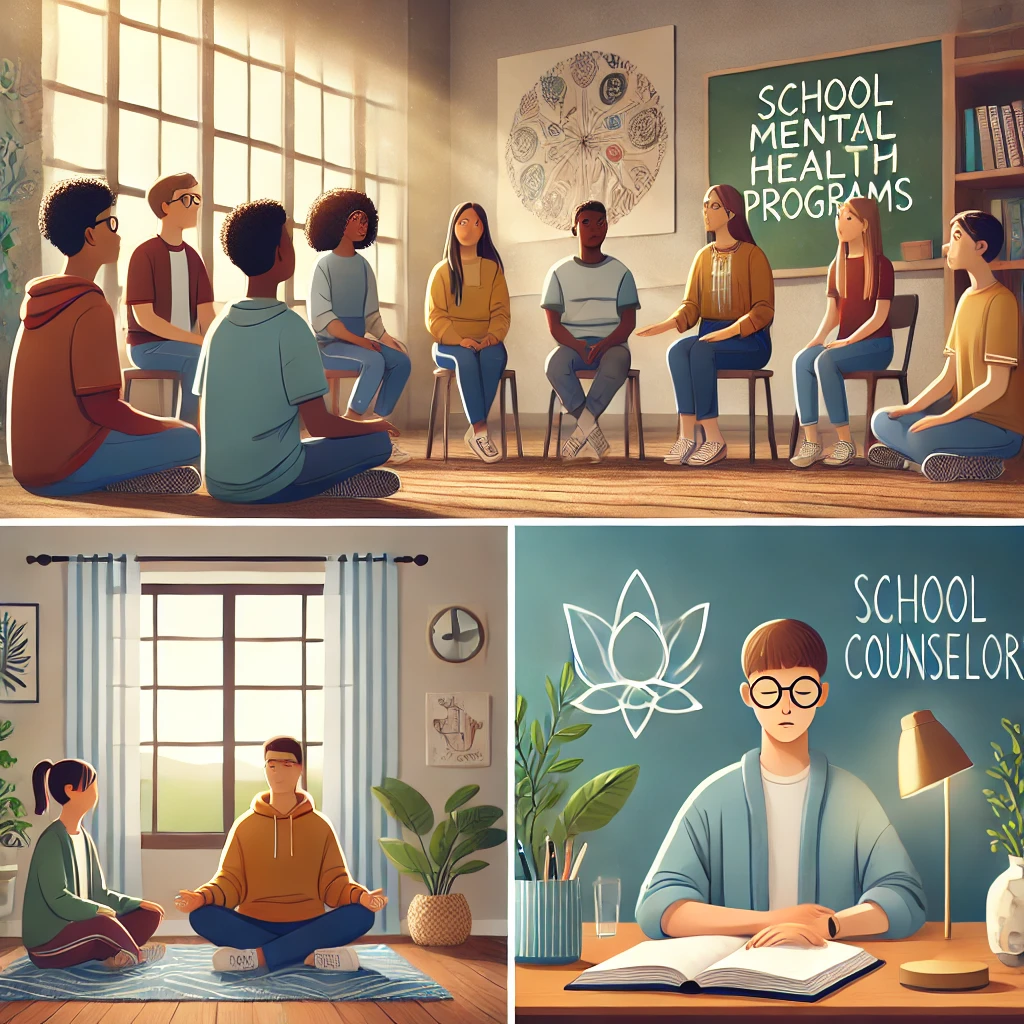
Alt text: “Photos of real school mental health programs: peer group, mindfulness class, and counselor office”
💬 Topic 5: What Parents and Educators Can Do — Starting Now
Rachel: What if a school doesn’t have all these resources? What can individual adults do?
Dr. Patel:
Start with listening without fixing. Teens don’t always need solutions — they need safe, consistent, emotionally available adults.
Dr. Moore:
Normalize emotions. Don’t treat anxiety or sadness like weakness. Say things like: “It’s okay to feel this. Let’s figure it out together.”
Dr. Patel:
Also:
- Encourage daily movement and outdoor time
- Model good screen boundaries
- Advocate for more counselors or SEL funding at school board meetings
Rachel: In short — small actions matter. They add up to cultural change.
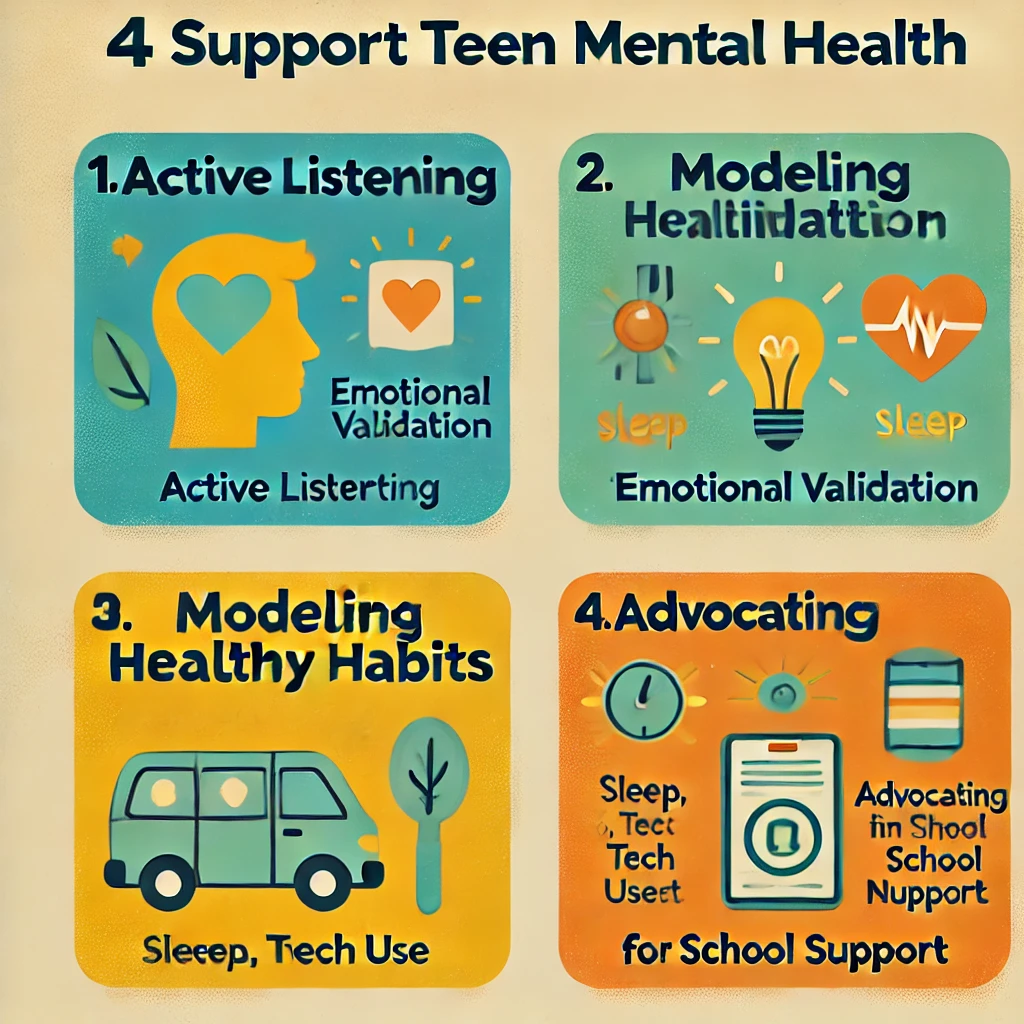
Alt text: Alt text: "Checklist illustration for parents and teachers featuring four key actions: active listening, emotional validation, modeling of healthy routines (like sleep, nutrition, and tech use), and school-based mental health advocacy. Designed in a friendly visual format to encourage proactive adult involvement."
❓ FAQ: Teen Mental Health & School Response
🧠 Q1: How can I tell if a teen is struggling emotionally?
A: Look for changes in behavior: withdrawal, irritability, loss of interest, appetite/sleep shifts, or risky behavior. Trust your instincts and open a line of non-judgmental communication.
📉 Q2: Are school counselors qualified to handle serious mental illness?
A: Some are, but many aren’t trained clinicians. That’s why referral systems and partnerships with external providers are essential for high-need cases.
🧑🏫 Q3: What’s a trauma-informed school?
A: It’s a school where all staff are trained to recognize trauma responses and avoid re-traumatization. It emphasizes empathy, safety, and relationship-building over punishment.
⏳ Q4: Isn’t this taking away from academic time?
A: Actually, addressing mental health improves academic outcomes. Emotionally regulated students learn better, focus more, and attend school consistently.
🤝 Q5: What role can peer support play?
A: A big one. Teens often turn to friends first. Trained peer mentors can provide early help, reduce stigma, and refer others to adults when needed.
📣 Q6: How can I advocate for mental health support in my school?
A: Start local: PTA meetings, school boards, social media. Share stories, data, and resources. The louder the demand, the stronger the response.
💬 How has your school or community responded to teen mental health challenges? Share what’s working — and what you wish was different. Let’s build a better system together.


