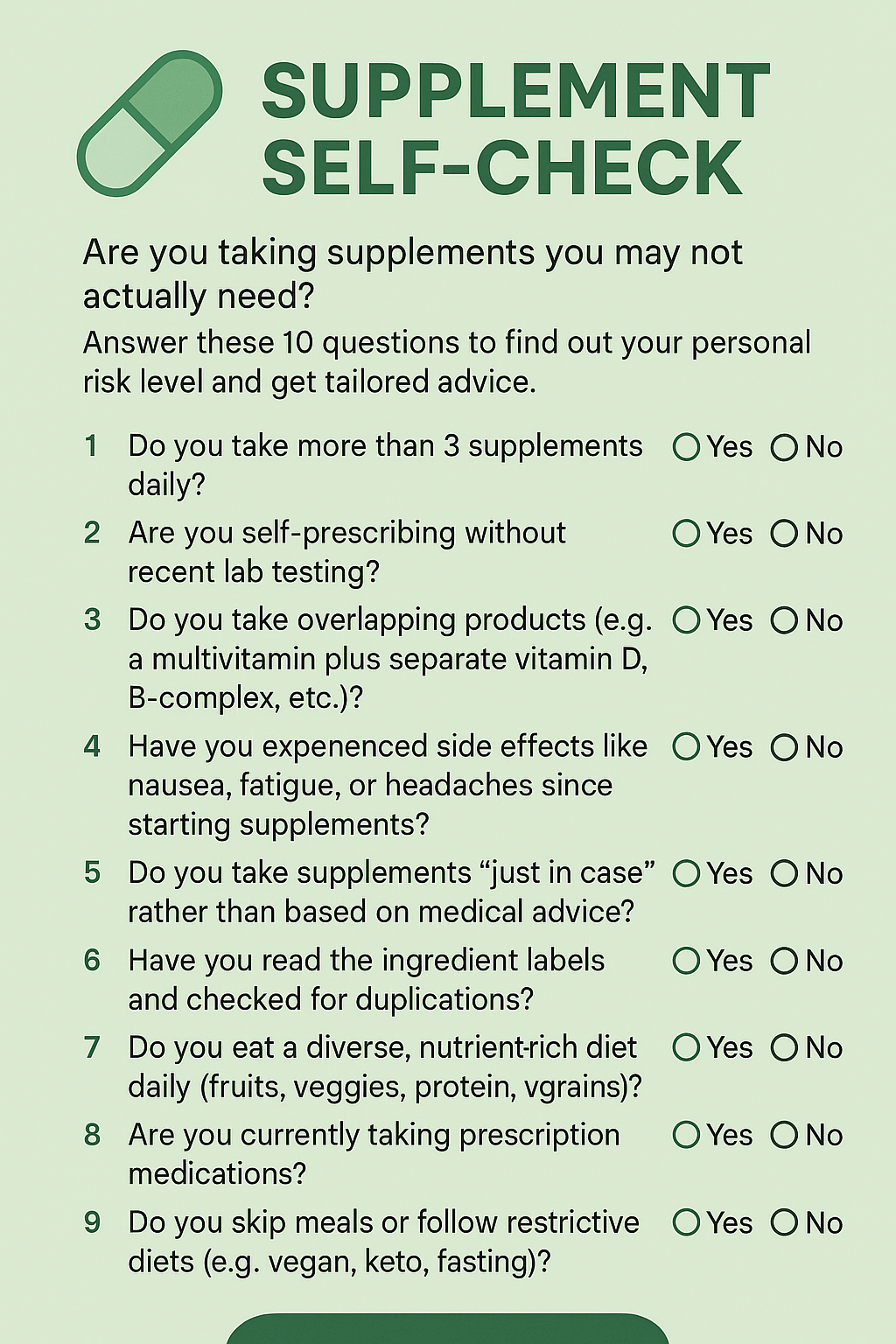
Alt Text :"Infographic titled 'Supplement Self-Check' showing 10 yes/no quiz questions to evaluate supplement habits, including use without lab testing, overlapping products, and dietary diversity. Designed with a clean green background and a pill icon."
🔎 TL;DR (3-Line Summary)
- Many people take supplements without knowing if they actually need them.
- This blog provides a 7-question self-check to evaluate your personal need for supplementation.
- Learn how to interpret your results and make safe, informed choices.
👨⚕️ Expert Dialogue: Emma & Dr. Reyes (Integrative Health MD)
Emma: I’ve been taking a multivitamin, vitamin D, magnesium, and omega-3s every day. But how do I know if I even need all of these?
Dr. Reyes: Great question. Many people take supplements based on trends or vague advice. But your needs depend on diet, lifestyle, lab markers, and even genetics.
Emma: What’s the risk in just taking them “just in case”?
Dr. Reyes: Over-supplementation can cause issues. For example, too much vitamin D can raise calcium levels dangerously. Iron, if not needed, can oxidize and harm cells. Some nutrients compete with each other—for example, zinc can block copper absorption.
Emma: So how can someone figure out what’s right for them?
Dr. Reyes: A structured self-check is a great place to start. Then, ideally, a blood test or professional review. We’ve built a 7-question tool to help readers like you assess if you’re at low, moderate, or high need for supplementation.
💊 Supplement Need Self-Check
Are you taking supplements you may not actually need?
Answer these 10 questions to find out your personal risk level and get tailored advice.
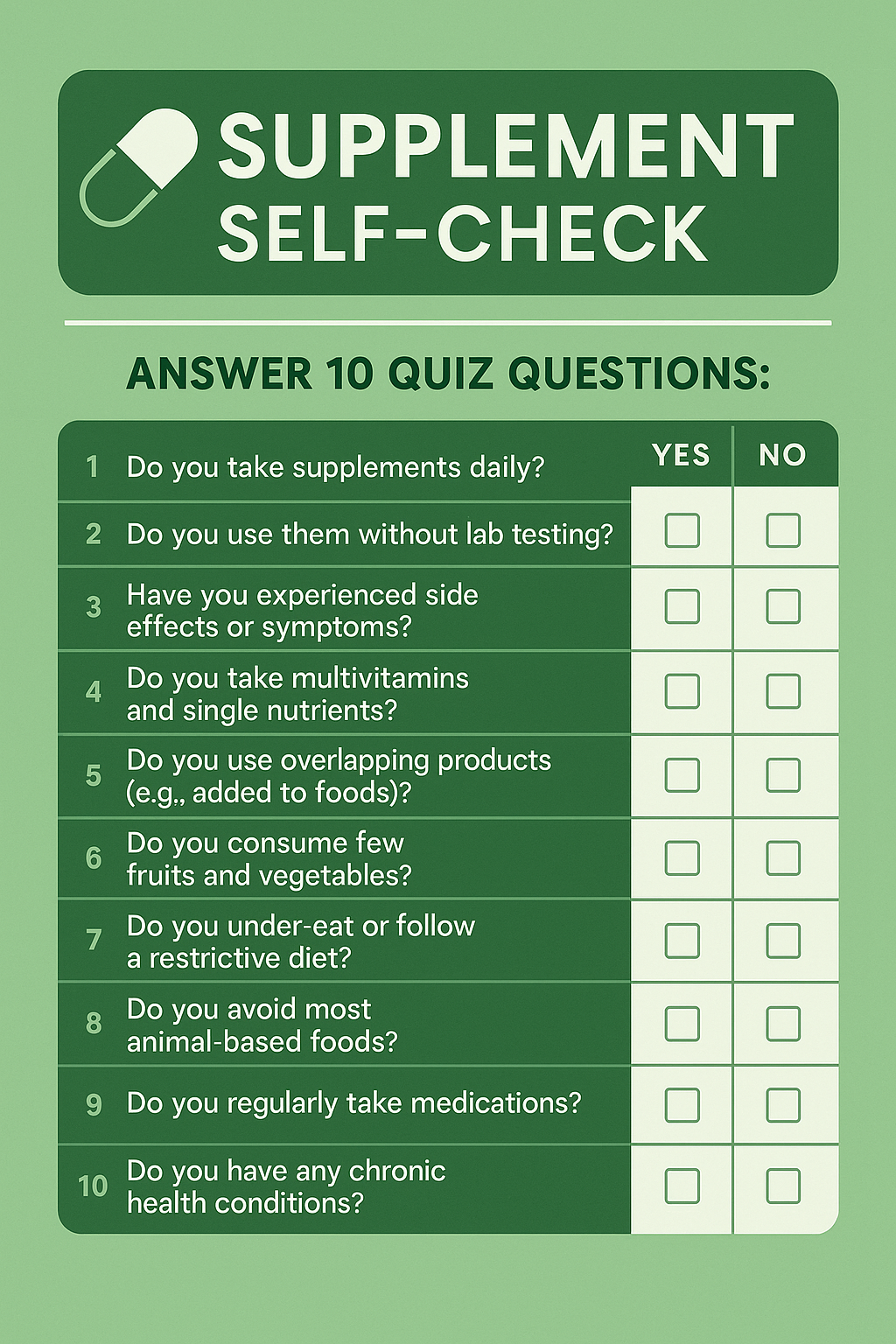
Alt Text: "Visual checklist-style infographic for a supplement self-check quiz, featuring questions about supplement use frequency, side effects, diet, and medication interactions. The layout emphasizes clarity with readable text and health-themed design."
❓ Frequently Asked Questions (FAQ)
Q1: Is it safe to take multiple supplements daily?
A: It depends on the type and dosage. Taking multiple supplements with overlapping ingredients can lead to toxicity. For example, many multivitamins already contain vitamin D, so adding more could exceed the safe upper limit (4,000 IU/day for adults).
Q2: When is the best time to take supplements?
A: Fat-soluble vitamins (A, D, E, K) are best taken with meals. Probiotics are often recommended on an empty stomach. Minerals like magnesium may be better at night due to their calming effect.
Q3: Can supplements interact with medications?
A: Absolutely. For instance, calcium can interfere with thyroid medication. St. John’s Wort can reduce the effectiveness of birth control. Always disclose supplements to your doctor or pharmacist.
Q4: What are signs of supplement overdose?
A: Symptoms may include nausea, headaches, nerve pain, fatigue, or even organ stress (especially liver/kidney). If you experience these, stop all non-essential supplements and seek advice.
Q5: Should children and seniors take the same supplements?
A: No. Children require specific dosages and forms (e.g., gummies or liquids). Seniors may need more B12 or vitamin D but should avoid iron unless anemic.
📢 Call to Action
Think twice before swallowing another capsule. Take our 7-question self-check, review your habits, and make evidence-based decisions for your health.


