🔎 TL;DR (3-Line Summary)
- Over-the-counter (OTC) products may seem harmless, but misuse and stacking can lead to liver damage, drug interactions, and chronic side effects.
- Smart OTC use starts with label literacy, rotation planning, and age-specific precautions.
- This guide unpacks how to declutter your medicine cabinet, make better buying choices, and protect your health long-term.
👩🎓 Expert Dialogue: Reader & Pharmacist Q&A
Emily (Health-Conscious Reader): I’ve got a cabinet full of OTC meds. Some are expired, some I use now and then. How do I know what’s still safe or useful?
Dr. Liam Chen (PharmD): Great question. First, check expiration dates and discard anything older than 2 years or discolored. But beyond that, a lot of people unknowingly stock duplicate ingredients.
Emily: Like?
Dr. Chen: For example, Tylenol PM, Excedrin, and NyQuil all contain acetaminophen. If you take them in close succession, you can exceed the liver-safe threshold of 3,000 mg per day without realizing it.
Emily: Yikes. So what should I be looking for on the label?
Dr. Chen: You need to focus on the active ingredients and not just the brand. Each label lists them at the top. Also, check for drug class: antihistamines, NSAIDs, expectorants, etc.
Emily: What about rotation? I heard you shouldn’t use the same thing for more than a few days.
Dr. Chen: Correct. Continuous use of one type of OTC—like daily NSAIDs—can raise risks like GI bleeding or kidney strain. It's best to rotate or take breaks and use symptom-specific alternatives.
Emily: That makes sense. Any tips for families?
Dr. Chen: Absolutely. Avoid adult meds for kids unless specifically dosed. Use a shared checklist to track who took what and when. And beware of combo packs—they may not suit every age or health condition.
Alt Text: "Infographic titled 'Smart OTC Use' illustrating how to read over-the-counter drug labels, including active ingredients, dosage, warning signs, and expiration tips."
📊 How to Read an OTC Label
- Active Ingredient: This is the compound that does the work. Don’t double dose with similar drugs.
- Purpose/Use: Know if it's for pain, allergy, congestion, etc.
- Warnings: Especially for those with liver, kidney, heart, or mental health conditions.
- Directions: Stick to the age-based dose and frequency.
- Other Info: Storage instructions, inactive ingredients (especially if allergic).
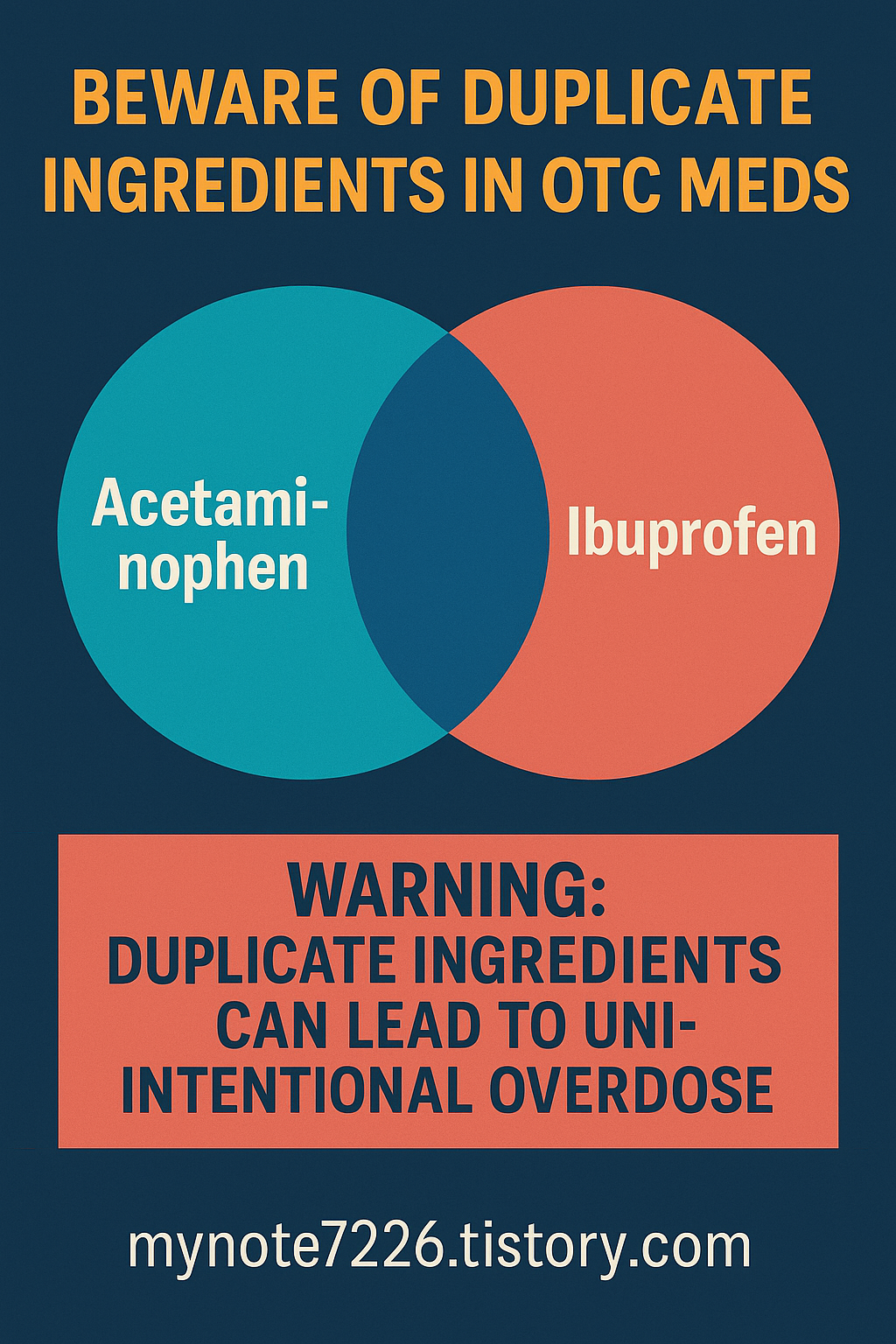
Alt Text: "Digital graphic comparing common overlapping ingredients in OTC medications like acetaminophen and ibuprofen, highlighting risks of unintentional overdose."
⚠️ OTC Rotation: When and Why
- NSAIDs (e.g., ibuprofen, naproxen): Avoid for more than 10 days in a row.
- Antihistamines: Switch between sedating and non-sedating options.
- Decongestants: Use max 3 days to prevent rebound congestion.
- Sleep aids: Avoid nightly use to prevent dependency.
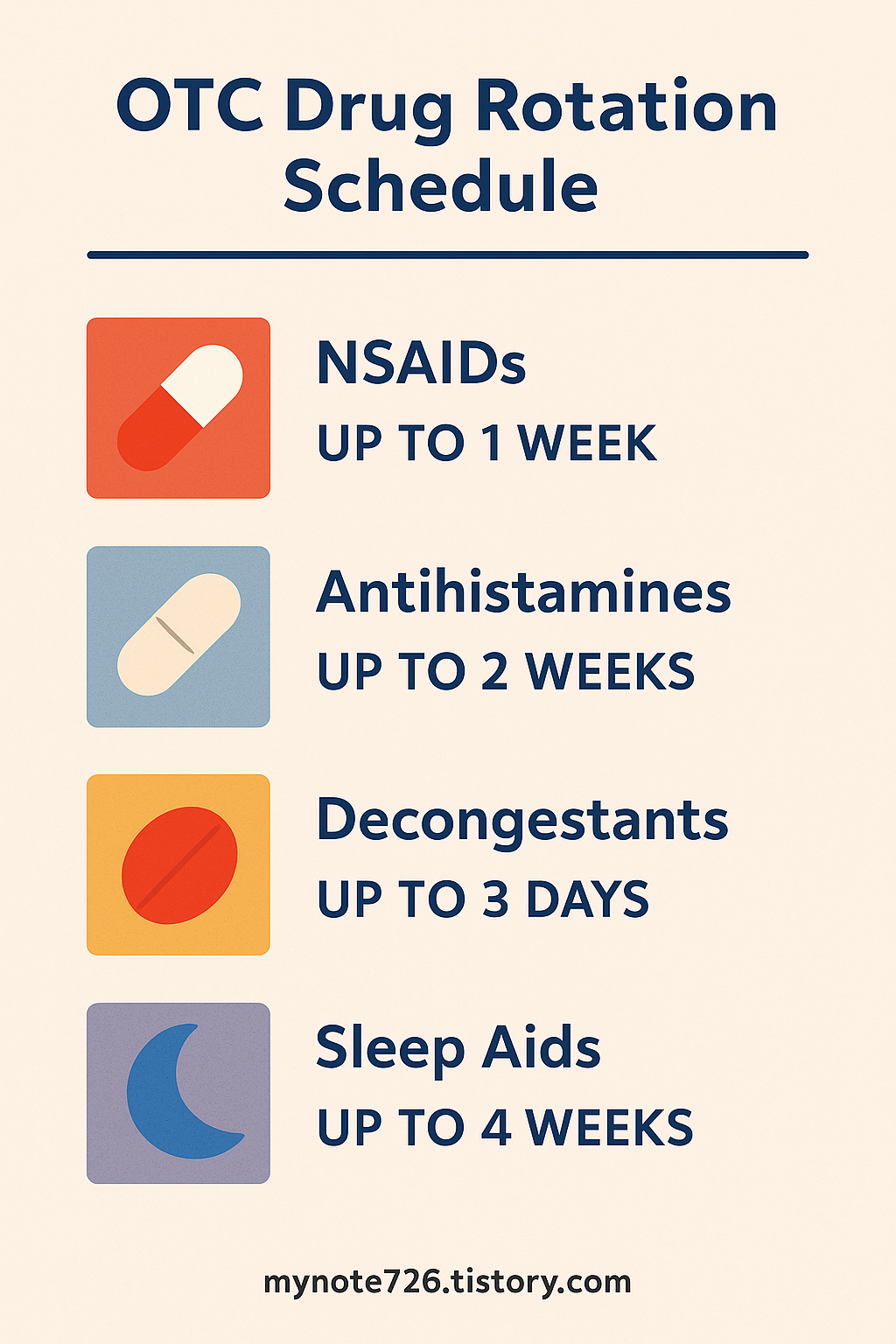
Alt Text: "Infographic showing OTC drug rotation schedule with safe usage timelines for NSAIDs, antihistamines, decongestants, and sleep aids."
📂 Age-Specific OTC Considerations
Age GroupCaution/Advice
| Children (0–12) | Only use pediatric formulas; dose by weight |
| Teens (13–17) | Monitor for misuse, especially for mood-related OTCs |
| Adults (18–64) | Watch for overlap and mixing with alcohol |
| Seniors (65+) | Avoid sedating antihistamines, NSAIDs can raise fall risk |

Alt Text: "Table graphic detailing age-specific risks of OTC medications, including liver toxicity in children, sedation in seniors, and kidney impact in adults."
🔍 OTC Usage Risk Self-Check
❓ FAQ: OTC Safety Questions
Q1: Can I keep taking Tylenol and ibuprofen together?
A: Only with proper spacing and for short-term use. Tylenol every 6 hours, ibuprofen every 8 hours. Never exceed daily max for either.
Q2: What if my child accidentally takes an adult dose?
A: Call poison control immediately. Have the label and amount ready to report.
Q3: Can OTCs interact with supplements?
A: Yes. For example, St. John’s Wort may reduce drug effectiveness, and magnesium can alter absorption.
Q4: What is the safest painkiller for seniors?
A: Acetaminophen is generally safer than NSAIDs for those with high blood pressure, kidney, or GI issues—but dosing must be cautious.
Q5: How do I track my OTC use?
A: Use a simple notebook, app, or shared family spreadsheet. Include dosage, timing, and any side effects.
👥 Reader Story: "I Didn’t Realize I Was Overdosing"
"I was taking a cold and flu combo pill, plus my regular Tylenol for joint pain. After weeks of feeling sluggish, I learned I was exceeding the daily acetaminophen limit. I now keep a med log and double-check every label."
🧰 Sticky CTA
Think OTC drugs are automatically safe? Think again. Reclaim control over your health shelf. Read the label, rotate your meds, and respect the risks.


