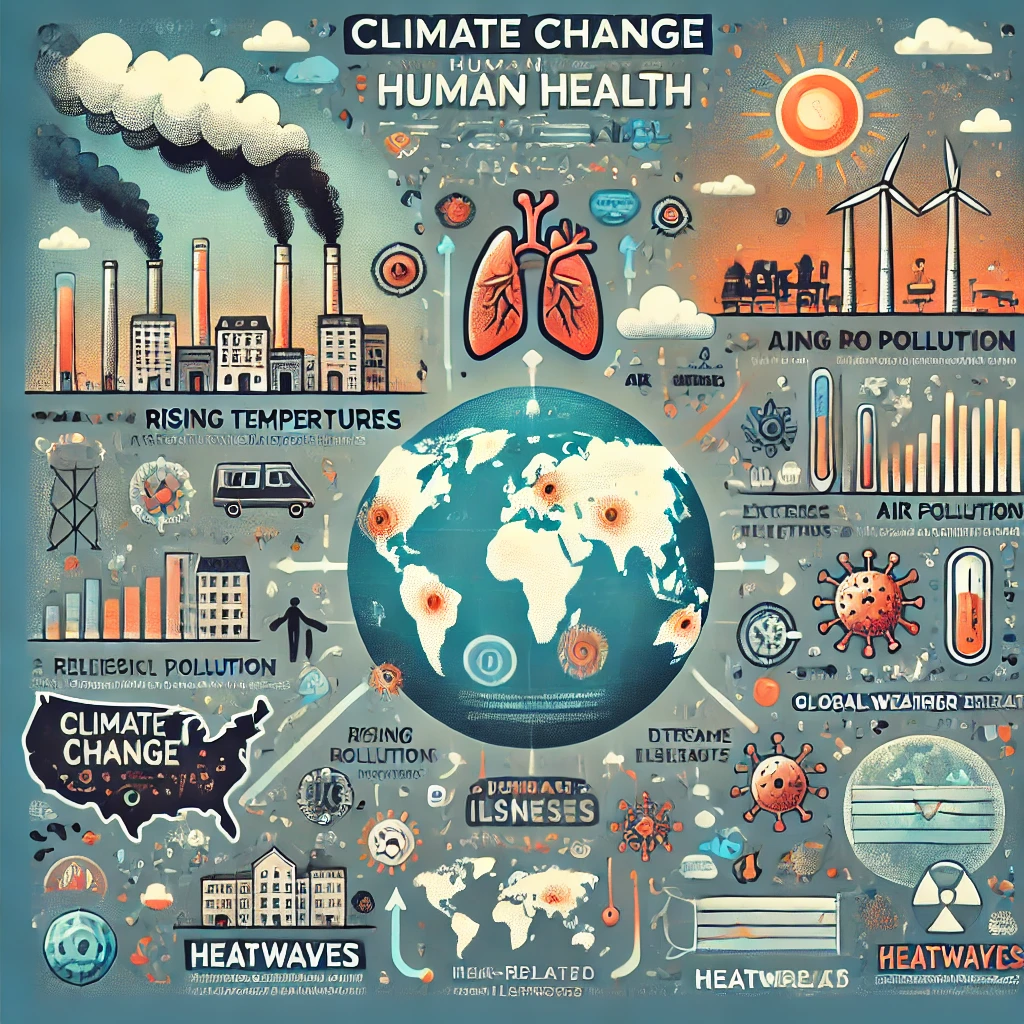
Climate change is no longer just an environmental issue—it’s a health crisis. Rising temperatures, air pollution, and extreme weather events are impacting physical and mental health worldwide. But how exactly does climate change affect our well-being, and what can we do to protect ourselves? Let’s explore this pressing issue through a conversation!
💬 A Conversation on Climate Change and Health
Emma:
Jake, have you noticed how extreme the weather has become lately? It feels like summers are hotter, and allergy seasons are worse than ever!
Jake:
Yeah, I read that climate change is making allergies worse because of longer pollen seasons. But I didn’t realize it could actually affect overall health.
Emma:
It’s a serious issue! Rising temperatures increase heat-related illnesses, air pollution worsens respiratory diseases, and natural disasters cause mental health stress. It’s all connected.
Jake:
That’s scary! So, does this mean we’ll see more diseases related to climate change?
Emma:
Exactly! Research shows that climate change increases the spread of infectious diseases like malaria and dengue fever. Plus, poor air quality is linked to heart disease and lung cancer.
Jake:
Wow, I had no idea climate change had such direct effects on health. What can we do to protect ourselves?
Emma:
There are small but effective ways to stay safe—monitor air quality, stay hydrated in extreme heat, and support eco-friendly policies. But we also need global action to reduce emissions and slow these effects.
🔍 The Science Behind Climate Change and Health
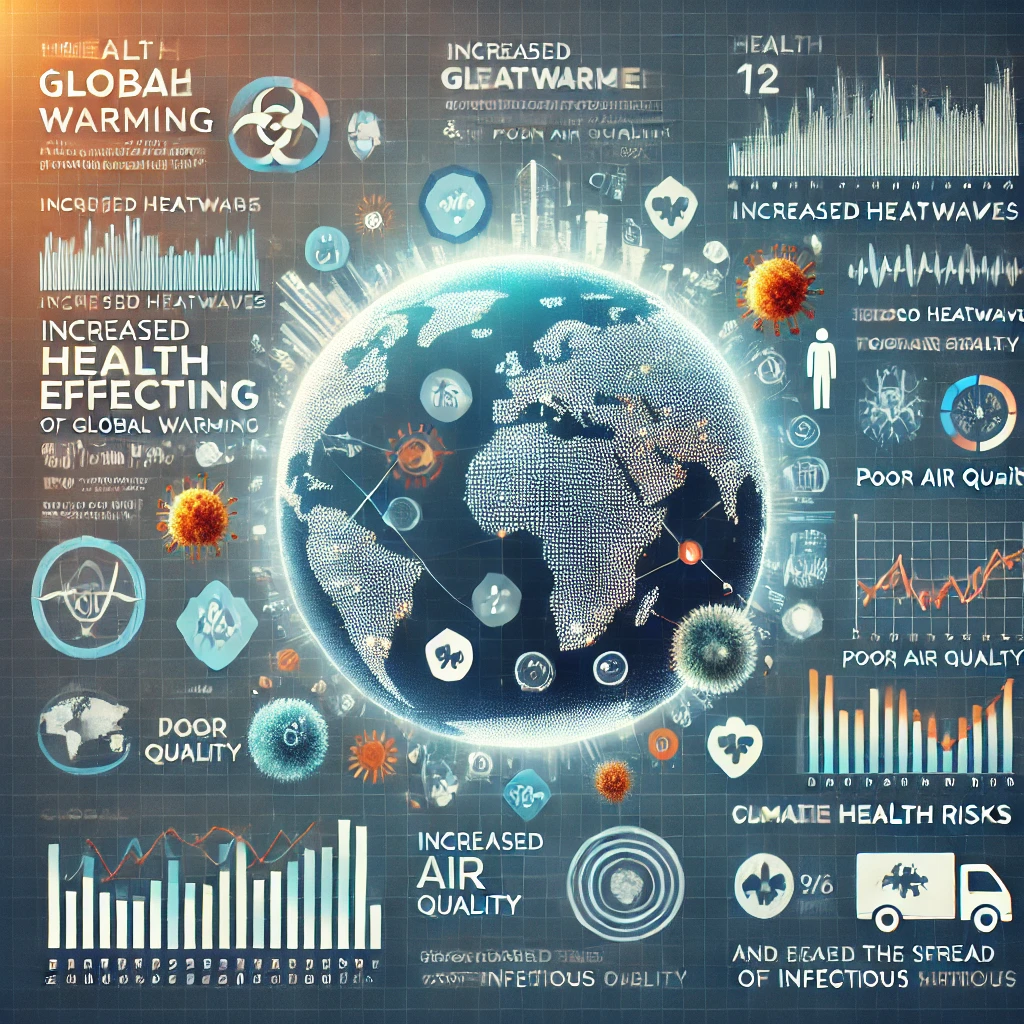
1. Heat Waves and Heat-Related Illnesses
- Increased temperatures lead to heat exhaustion, dehydration, and heatstroke.
- The elderly, children, and outdoor workers are at the highest risk.
- Prevention: Stay hydrated, avoid direct sunlight during peak hours, and use cooling techniques.
2. Air Pollution and Respiratory Diseases
- Higher CO₂ levels contribute to poor air quality, worsening asthma, lung disease, and cardiovascular conditions.
- Wildfires, industrial emissions, and urban pollution all play a role.
- Prevention: Monitor air quality, use air purifiers, and wear masks in highly polluted areas.
3. Infectious Diseases on the Rise
- Warmer climates create ideal conditions for mosquito-borne diseases like malaria and dengue fever.
- Water contamination due to floods can increase outbreaks of cholera and other infections.
- Prevention: Mosquito control, access to clean water, and climate-responsive healthcare.
🌍 Climate Health Impact Self-Check
Answer these questions to assess how climate change might be impacting your health and what actions you can take.
🌟 How to Take Action for a Healthier Future

Jake:
Okay, so beyond personal habits, how can we really make a difference?
Emma:
It starts with awareness and action! Here’s what we can do:
1️⃣ Reduce carbon footprint—use public transport, minimize waste, and switch to sustainable energy sources. 2️⃣ Support climate policies—vote for leaders who prioritize environmental and health initiatives. 3️⃣ Improve community resilience—advocate for better healthcare infrastructure and disaster preparedness. 4️⃣ Stay informed and spread awareness—share knowledge with others to inspire collective action.
Jake:
That makes sense! Small actions add up, and if more people get involved, real change can happen.
Emma:
Exactly! We may not be able to stop climate change overnight, but we can protect our health and push for a more sustainable future.
🔥 Conclusion: Climate Change and Health Are Inseparable
Climate change is not just an environmental problem—it’s a health crisis affecting millions globally. By understanding the risks and taking action, we can protect ourselves and future generations.
💬 How has climate change affected your daily life? Do you experience more heat waves, allergies, or air pollution issues? Let’s discuss below!
'Environmental Health' 카테고리의 다른 글
| Mycotoxins in Food: Invisible Enemies or Overblown Hype? (0) | 2025.03.23 |
|---|---|
| 🌍 Microplastics and Human Health: The Hidden Crisis (0) | 2025.03.17 |
| ☣️ The Hidden Health Dangers of 'Forever Chemicals' (PFAS) (0) | 2025.03.16 |
| ♻️ Microplastic Contamination: Are We Eating & Breathing Plastic? (0) | 2025.03.11 |
| 🌍 The Hidden Dangers of Environmental Toxins: How to Reduce Everyday Exposure (0) | 2025.03.10 |


